Hofstra USA, commonly known as HofUSA, is a late-night dining establishment on Hofstra University’s campus, perfect for anyone in need of a midnight munch. With plenty of available seating and a charming game room area, HofUSA is a popular hangout spot after a study session or club meeting to dine and chill.
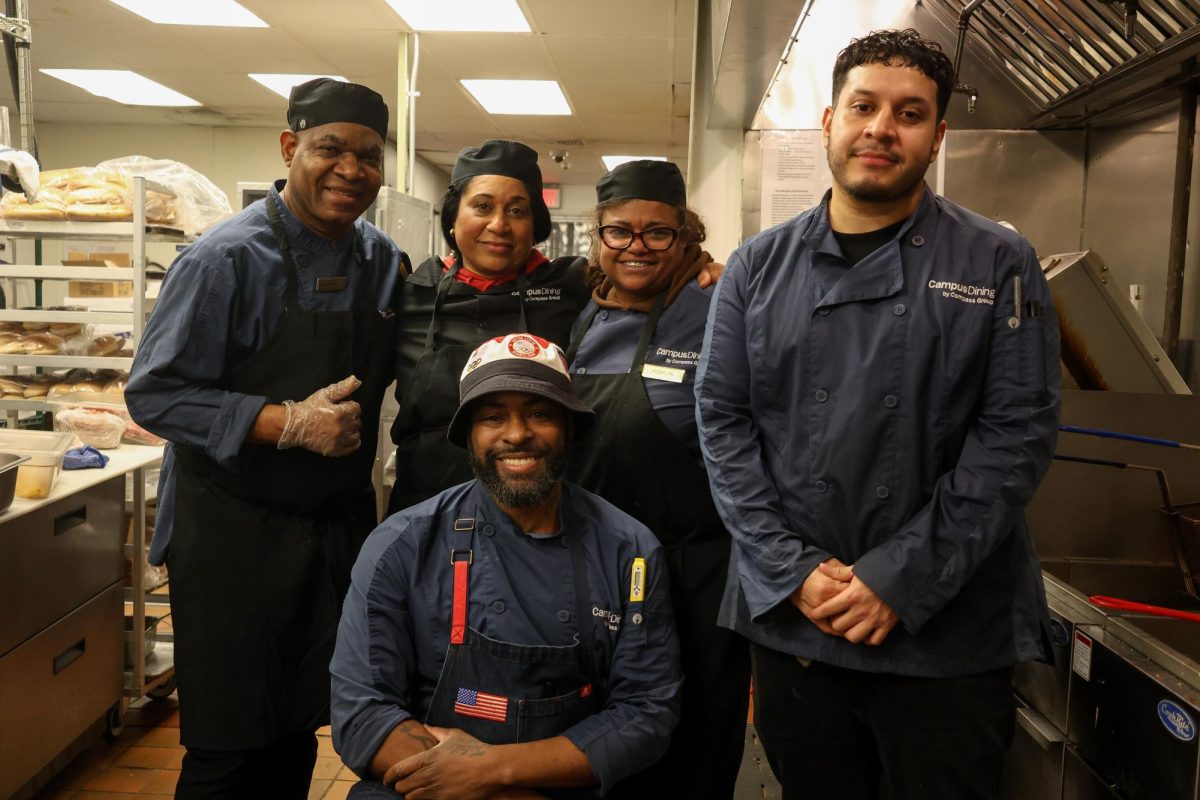
Behind the pick-up counter stands a team of dedicated chefs whose hard work should not go unnoticed.
Forty-five-year-old David Stanford started off as a senior cook in the Sondra and David S. Mack Student Center, working his way up to junior sous-chef. He then moved to HofUSA as Chef Graham Beck’s supervisor chef.
Stanford pursued culinary practice and got his associates degree at Johnson & Wales University. Before his career at Hofstra, he had gained experience working in various restaurants.
“[I worked at] a lot of restaurants in old Manhattan. I know the pressure, and it sounds crazy, but I liked it,” Stanford said. “You understand when the chef really takes interest in you – he wants to see you shine, but he’s gonna beat you up to make you stronger.”
This kind of strength can only be learned through experience and dedication to the culinary arts.
Open from the hours of 6 p.m. to 3 a.m., the HofUSA menu offers a variety of fun appetizers, quesadillas, burgers, sandwiches, salads, pastas, desserts, milkshakes, dirty sodas and soft drinks. From the hours of midnight to close, the menu reduces slightly.
Each day, the team communicates with one another so that all tasks and responsibilities are accounted for.
“[When] I come in and say hello to my chef, he gives me the information I need to know because he’s usually the first one in,” Stanford said. “We do recaps every night. I make sure there’s no issues. I check the stations. [I] make sure I check the email, texts and voicemails.”
Working in a restaurant or any kitchen setting requires planning ahead and adequate preparation.
“As a supervisor chef of Hofstra USA, I have to make sure the night before that they’re ready to open with enough product,” Stanford said. “I leave here at four in the morning, and before that, I’m thinking, ‘They’re not gonna have enough pasta.’ I still punch out on time and make pasta for [the next day’s] service.”
HofUSA’s kitchen crew works tirelessly, giving up their evenings to prepare and serve warm meals to the Hofstra community.
“You just learn to stay on your feet for 10 to 15 hours. It’s not that bad, it’s just the frustration of a ticket order or somebody calling out and finding coverage. It all backs stuff up,” Stanford said.
To help streamline operations during these long shifts, HofUSA allows mobile orders to be placed through the Boost app. HofUSA staff receive an order five minutes before a student’s pick-up time.
“The Boost system only gives us five to 10 orders at a time, and it won’t push the next batch in until you complete those,” Stanford said. “There’s always room for growth. There’s always hiccups in the computer part of the ticket system. We all have to be trained to put out fires basically, it’s a growing process.”
Many students express concern when the HofUSA kitchen gets behind with orders. Alyssa Forgione, a freshman forensic science major, commented on the matter.
“Sometimes they get really backed up which isn’t really their fault, but it happens a lot which can be annoying,” Forgione said. “There’s been times where it’s taken 45 minutes to an hour regardless of whether you Boost it or not.”
These worries are not ignored and are consistently being taken into consideration.
While students notice the delays, staff members say they are working under constant pressure to keep orders moving quickly. “It should not take longer than three or four minutes to put out fried food. It has to be fast,” Stanford said. “You jump through hoops with this. It’s about the students; nobody wants to wait long for their food. The faster it’s out, the less tickets pile up.”
A possible reason for long wait times could be potential understaffing issues that they’ve been facing.
“We used to get in people from different locations in Hofstra just to help us out because a lot of people want a job and then quit in a week, Stanford said. “Coverage is hard.”
Most people find the hours to be unmanageable – working during the night and squeezing in a few hours of sleep during the day. Somehow, the HofUSA staff is able to find a way to make it work for them.
“I like working these hours because I’m not a morning person,” Stanford said. “I have five kids total. I have two of them [living] with me; I’ve got to get my 7-year-old ready for school. Yesterday, I went to sleep at 1:30 [p.m.] and had to be back here at 5:30 [p.m.] that same day.”
Even with a full schedule and children to take care of, Stanford sacrifices a “normal” sleep schedule to provide for his family. These efforts are admirable and deserve recognition.
“When I left college, my first restaurant job was more of a militant type of vibe,” Stanford said. “I played a lot of sports, so I listen to my coaches like my head chef. ‘Do what you gotta do, keep your head down and just don’t piss them off.’”
Stanford and the rest of his team demonstrate an unimaginable amount of discipline.
When it comes to the student-staff relationship, respect is a two-way street.
“One student was like, ‘It’s about time,’” Stanford said. “But a lot of the students, no matter where they come from, say, ‘Thank you. Have a good night,’ and appreciate it. I show them love. They respect me and I respect them. They do make it worth it.”