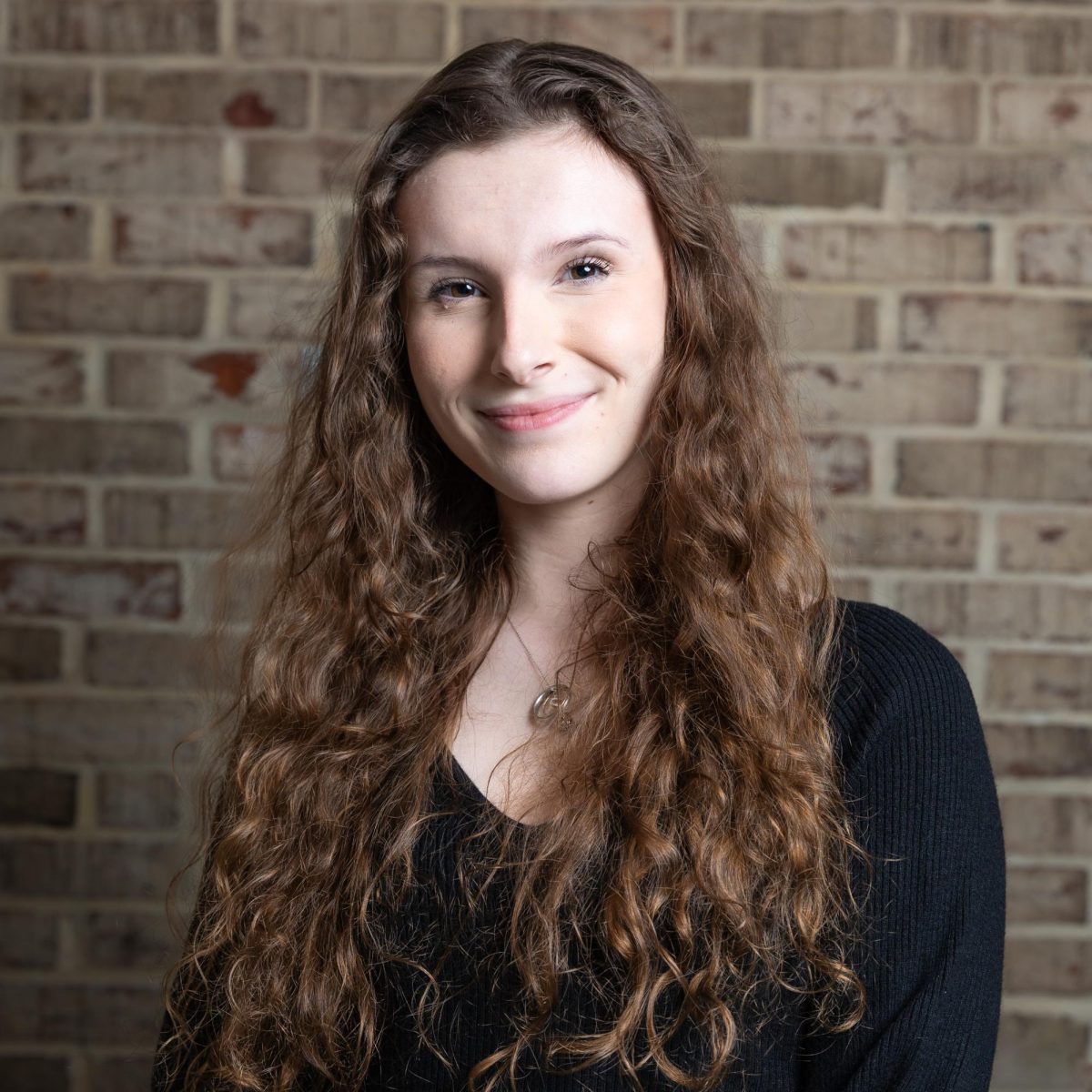

“What drives me is the desire and the want to see people strive in different ways,” said senior dance and speech-language-hearing sciences double major Saskia Laurié. “I think that diversity and equity is very important, as well as having faith and the right tools to be successful in your career field. I kind of wanted to be that person to give back to my community that way.”
Laurié is president of three clubs on Hofstra University’s campus: Hofstra’s chapter of National Association for the Advancement of Colored People (NAACP), Hofstra Gospel Ensemble and Melanin Movers.
“My role as president is mainly to ensure that all tasks are getting done and being able to advocate for the club and its members by creating events that tailor to their needs and wants and support the mission statement of each club,” Laurié said.
For NAACP, the mission is to provide justice and equity within the Hofstra community, to create a safe space for students of color and to ensure that all students on campus and faculty feel seen and heard.
“Hofstra Gospel Ensemble is more so to bring people together who are either finding their faith or have their faith and creating a sense of ministry and ensemble through songs, dance and events,” Laurié said.
In the spring of 2025, Laurié created Melanin Movers to provide a safe space for dancers of color to be able to gain knowledge on what it takes to be a professional dancer in the field.
Laurié expressed that identity-based organizations create spaces where people can be around others who look like them, who are culturally bound to them or who are related to them in ways that are harder to find outside of these spaces.
“It’s very important to have identity-based clubs on campus because I feel like, as college students, sometimes we’re in the sense of finding ourselves, and sometimes we need people to help us find who we are,” Laurié said.
In addition to her multiple president roles, Laurié is a resident assistant (RA) for the first-year housing in the Netherlands Complex, which is full of students who are adjusting to a new space.
“The reason why I decided to be an RA is because I like to assure people that they have a space here,” Laurié said. “I like to make sure everyone is okay – safety wise, health wise, mentally, physically – and create programs that tailor to helping people feel that they’re at home.”
She said that her role as an RA is to ensure that her residents are in a safe, home-like community to create programming and to check in with residents to help them seek a sense of guidance.
Laurié is also a part of Hofstra’s Student Diversity Advisory Board.
“The Student Diversity Advisory Board is a board full of students to have that sense of call-to-action,” Laurié said. “We hold a lot of fireside chats. We’ve been working on podcasts, touching base on issues that are either happening in the world or on campus and our perspective on it.”
Laurié said that it’s important to have students of color in leadership positions to be role models and examples to others.
“In this society, we’re kind of seen as the people who are held to low expectations, that we don’t do enough work, but we’re so much more than that,” Laurié said. “I feel like being a student of color on its own holds so much power, and seeing people like us in a role kind of gives everyone else this extra push like ‘I could be that too.’”
In addition to her leadership positions, Laurié is on Hofstra’s Pride Court. She said that this position has allowed her to have conversations with people from different cultures and different clubs and to be a helping hand for more than just her people.
“Being a student leader of color sometimes seems to take more work because I feel like I have to show up a certain way in order to be heard,” Laurié said. “It’s very important that myself and other student leaders of color are heard because we have a lot of opinions that we know can change the culture of Hofstra and can enhance [its] values and mission statement.”