
“There’s no shortage of coverage you can find about the political instability, about the gang violence [or] about all these different ‘-isms’ that come into play when looking at geopolitics in Haiti,” said Vania André, professor at Hofstra University’s Lawrence Herbert School of Communication. “For us, we’re always thinking about what we can cover that nobody else is covering.”
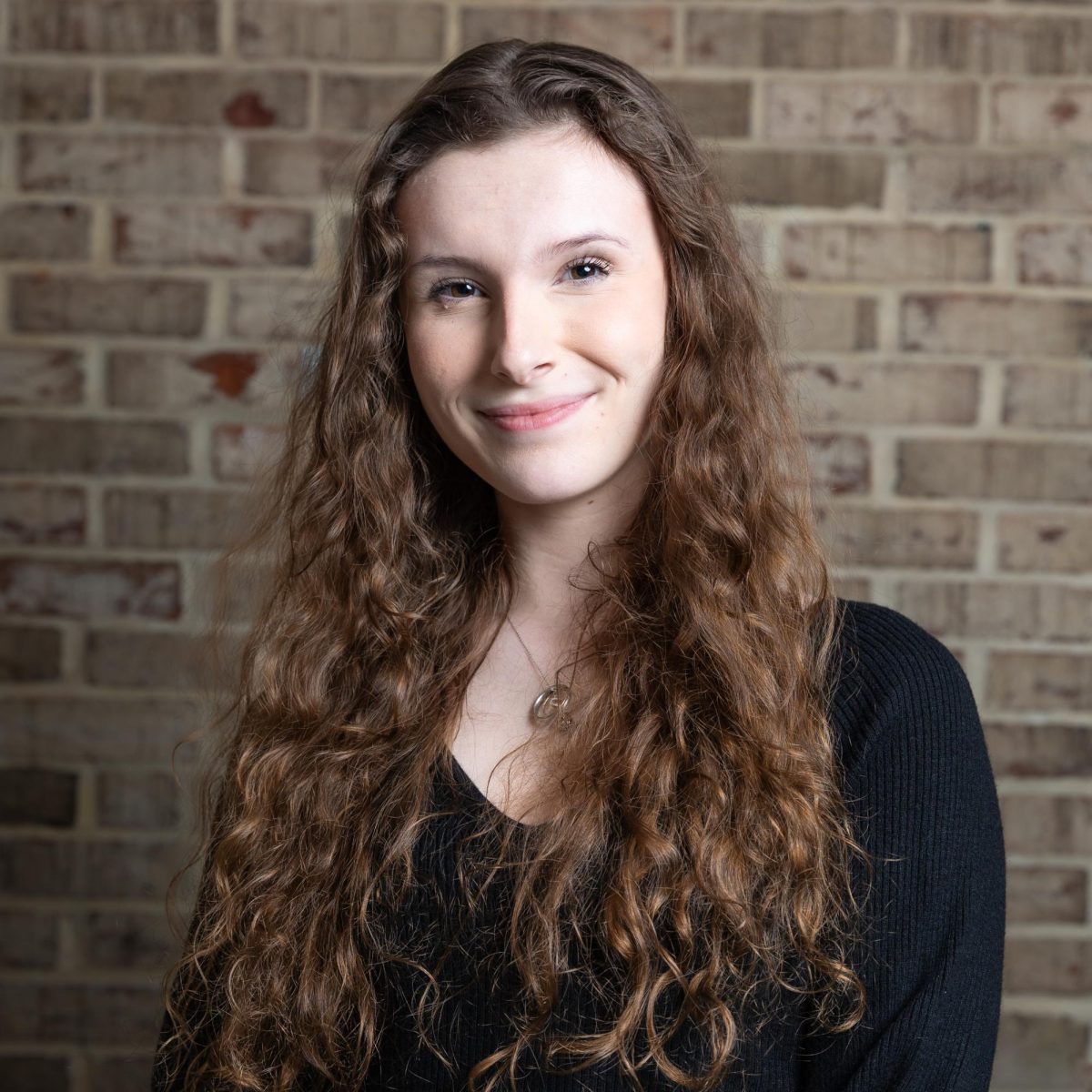
André has spent the last 14 years serving as editor-in-chief of the Haitian Times, alongside her current role as an assistant professor of journalism, media studies and public relations at Hofstra, where she teaches in the same classrooms she sat in as a student not so long ago.
Initially coming to Hofstra with the intention of studying print journalism, André was guided into a double major in public relations and psychology by the notion of better career opportunities. While she took a focus on storytelling, writing and the study of relationships through her coursework, André maintained her proximity to print journalism through “journalism-adjacent” extracurricular activities.
Upon receiving her undergraduate degree in 2010, André jumped into the field with her first job at the NBC News Media Desk. She also worked as a reporter for a hyperlocal news site, All Media NY Inc. With early career opportunities in journalism, the idea of returning to journalism school began creeping into André’s mind. She was further encouraged by Professor Kristal Zook, with whom she had worked with as an undergraduate research assistant.
“I took it as a divine sign from God, and I came back for [a master’s in] journalism,” André said.
When the former editor-in-chief of the Haitian Times stepped down and faced the possibility of closing the newspaper’s doors in 2012, due to declining advertising and rising economic concerns stemming from the 2008 stock market crash, André’s name was floated by a mutual friend.
That friend made the introduction, hinting to the outgoing management of the Haitian Times, “This may be an answer to your problems.”
What followed was a rejuvenation of the Haitian Times with André at the helm. Now fully digital, the Haitian Times has continued local coverage while expanding to international markets, covering Haitian news and the Haitian diaspora in several localities across the United States and Canada.
With a focus on the representation and informational needs of the Haitian community, André stressed the importance of trust in the Haitian Times as a community institution.
“There’s a lot of conversation and research about how people don’t trust the media,” André said. “I think it’s really important for folks to make the distinction between national media and their community media outlets in terms of who values trust and why.”
Without the trust of their communities, newspapers like the Haitian Times would not have the support needed to continue, she noted.
“People very much trust their small community, local papers [and] that trust is important for people to communicate amongst their peers because that’s how we stay sustainable,” André said.
While many news outlets prioritize eye-catching headlines that often relate to crime and disaster, the Haitian Times has a clear focus on human interest and community engagement.
“We prioritize stories that have a strong human-interest element that speaks to how the Haitian community is impacted, whether locally or as a diaspora at large,” André said.
By keeping this targeted focus, the Haitian Times is able to build a relationship with the community, serving their specific informational needs.
While the Haitian Times covers the news in Haiti for immigrants who want to keep up with their country of origin, much of the Haitian Times’ coverage focuses on news relating to the Haitian diaspora stateside.
“The Haitian diaspora is a really unique one in the sense that we have a very broad footprint,” André said. “Haitians go everywhere. Haitians are assimilating to the cultures that they’re in, but then still bringing their culture with them. We’re creating ‘third culture’ children.”
In the context of Haiti, the term “third culture” children refers to the children of Haitian immigrants growing up in a new culture while being raised by parents who represent a different one. For Haitian immigrants and children of immigrants, the Haitian Times can serve as a relevant cultural news source that helps readers maintain their cultural identity in new environments.
Throughout her time at the Haitian Times, André has grappled with the difficulties of running an ethnic media outlet in a fragmented media and political landscape.
“We’re taught that our role as reporters and folks in the media is to be unbiased,” André said. “I push back, and I say our role is not to be unbiased, but our role is to be fair. By the nature of the angle, you’re taking on a story; you’re already exposing an innate bias.”
While André strives to ensure editorial objectivity rather than veering into advocacy, she acknowledges that representing the perspectives of the Haitian community often makes neutrality impossible.
“I think it’s because of the nature of the coverage that our stories are naturally going to take because of where the Haitian community is in the whole immigrant and immigration conversation,” André said.
In 2025, the Haitian Times was approached about the possibility of publishing an open letter to President Donald Trump written by a representative from the organization Haitians for Trump.
“Haitians for Trump [is] a very divisive community within the Haitian community,” André said. “A lot of people are like, ‘How can you be Black, Haitian, immigrant and support Trump?’”
While any perspectives published by a pro-Trump organization might be widely unpopular among the Haitian Times’ editorial staff and readership, André saw it as a reminder of the diverse perspectives among the Haitian community.
“If we are following the tenets of journalism and being fair, there’s no reason why we should not publish their op-ed,” André said.
Similar to the New York Times, the Haitian Times frames itself as a newspaper of record.
“It’s about us showing what is happening in public discourse, and if [Haitians for Trump] is part of it, I don’t think it’s our role as editors to not highlight that,” André said. “We need to document what’s happening, and this is a part of the conversation.”
One of the ways André has increased editorial transparency is through the implementation of the “Inside the Haitian Times” blog, where editors can explain certain editorial decisions, such as deviations from the newspaper-standard AP style.
“We have these conversations around our coverage.” André said. “[There are] things that our editors feel really strongly about, and I’m like, ‘This is your personal perspective.’ There wasn’t a neat place to reflect that in the story, and so out of that came the blog where we can have an opportunity to explain outright some of the decisions that we’ve made.”
André takes these lessons into the classroom, where she primarily teaches public relations. Being in the field, she can complement theory with real-world experience.
“People are pitching [to] me, I’m bringing it into the class and showing, ‘This is a pitch I wouldn’t take because of xyz,’” André said. “I have a lot of current examples literally every day that I can pull from to help my public relations students think about how a reporter, editor or publisher would be thinking about something.”