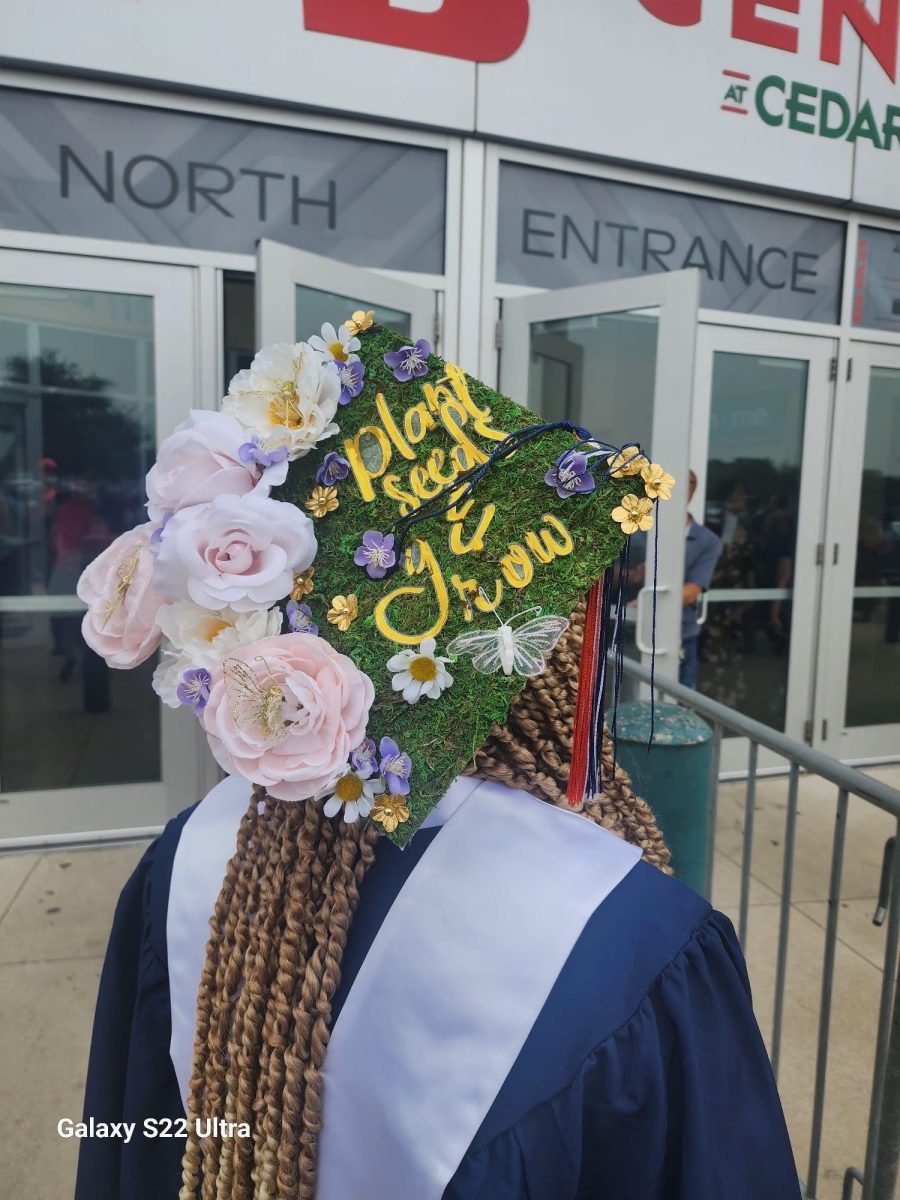
A year and a half ago I graduated high school wearing a cap that said, “plant seeds and grow,” then gave a speech to my class of 400 people and our families about the skill of growth. I opened the speech by giving inspiration to the current senior representative, my successor, for her speech. I told her to write from the heart. A month ago, feeling nostalgic, I opened my high school Google Docs account and saw my graduation speech floating at the top. While reading through it and thinking about my current bout of college loneliness, I realized I wrote that speech for present me.
“Think about your time these past few years but particularly the terribles of it all: the challenges you faced in high school, the failed grades and lost friendships – all of it,” I wrote.
The speech came at a good point in my life, summer was on the horizon and I was finally leaving the school that I was itching to be free of. My time in that town, though, came with its terribles.
My family and I moved to Leander, Texas, from The Gambia when I was 15 years old. My knowledge of Texas before I moved was that it shut down because of a couple inches of snow the previous year. Safe to say, I would have chosen another state.
Central Texas felt flat compared to the rolling mountains of Washington, where I grew up, and dry in comparison to always being 30 minutes from a beach in The Gambia. My aunties in Washington practically raised me along with my own parents, and my cousins were like siblings. I was at my grandma’s house every weekend in The Gambia. My whole life I had been surrounded by an abundance of family to the point of annoyance. But in Texas, my extroverted self ached in the comparingly-empty space.
An Airbnb was our shelter for June and July, and so I spent hours of my time in bed, bored out of my mind. School was not for another couple months and I had no friends. My “best friend” from The Gambia began ghosting me for weeks on end.
I got a drawing kick for a few days and portrayed how all the severances in my life came from change. When my auntie and cousins came to visit in August, I felt at home for the first time. My barely used diary was marked with how I would wait for Leander to feel like home on its own.
The speech continued, “And now I want you to think of how you overcame those challenges and grew as a person as a result.”
After months of teenage loneliness, I began making friends. Moving across the world twice forced me to take a deeper look at my friendship-making skills. I learned to take a little extra effort to engage with people whose company I enjoyed, rather than just the ones who happened to be in the hallway that day, as I had done in Washington. I had to balance out the inverse and understand when to stop pouring my efforts into people who did not appreciate them, like I did in The Gambia. Changing environments pulled the safety net out from under my feet and revealed my flaws that I didn’t know existed, thus giving me an opportunity to work on them. Change felt less like a severance and more like water to me – a necessity.
So, I did it again. Off on a mission to discover who I was, I set off – like many others – to New York. Soon, the idea of it all began to terrify me.
“In the months leading up to [graduation] the realization set in that these friends I made, routines I created and this way I had of being, I would have to find all over again,” I wrote on. “And what really terrified me was the idea that I wouldn’t be able to.”
Here I am, a year and a half later, and I find myself craving warm blue skies, sweet tea and a queen-size bed. This feeling of loneliness, like the water in a bowl after washing it, sits almost constantly in my chest. I have never been surrounded by so many people, yet I feel this fractural isolation. My closest friends are in Texas, and they are first in line for my crash-out recaps, but my friends here actually understand my day-to-day. The only person who knows both is me, and it is heavy to rely only on myself to carry the weight of who I am and what I am going through all the time.
This reminds me of sleeping until 3 p.m. because I had nothing to do that first summer in Texas or crying before bed – not just because I was sad, but because I had no one to talk to about being sad. It brings a weird sense of comfort. The idea that I’ve been through periods of loneliness followed by periods of social abundance or comfort in the emptiness shows me that if I figured it out once before, I could do that again. The bowl always dries; it just needs time.
“Here’s the thing about skills, they’re second nature,” the speech continued, “like how you learned to read, you learned to grow and that’s a part of you now. And if there was growth, there will be growth. If you adapted, you will adapt. If you evolved, you will evolve. If you overcame those challenges, you will overcome again.”
Sometimes I forget my age. I assume that because at one time I was younger, I must have it all figured out now. In reality, I am only 20. But in a way, I already have figured it out.