
*SPOILER WARNING*
Netflix’s hit show, “Bridgerton,” received mixed reviews following its third season. Many viewers felt it was losing its Regency-era charm. Modern dialogue, certain beauty choices and other small details felt out of place. As a result, Season 4 arrived with lower expectations and a lot more to prove.
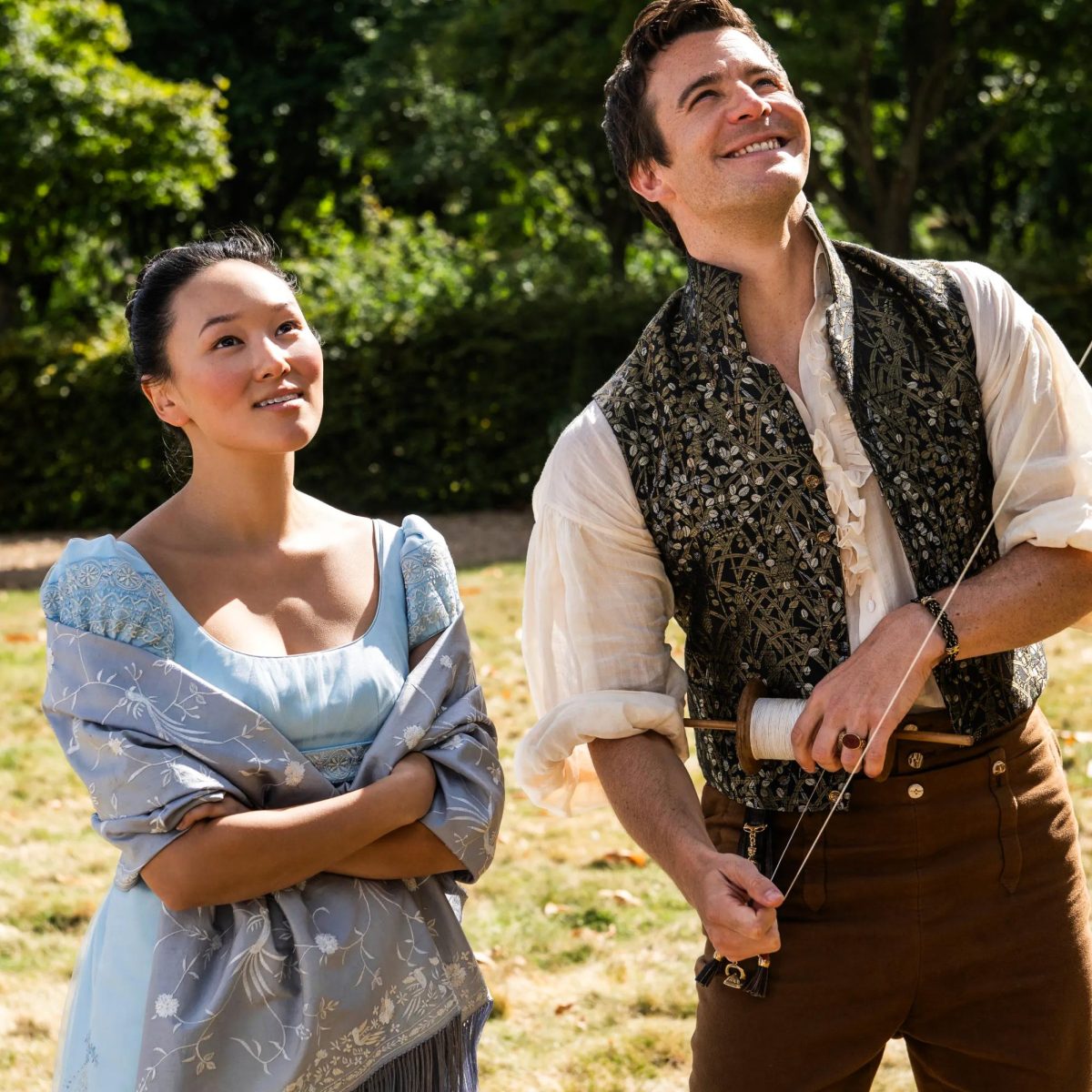
Season 4 follows Benedict Bridgerton (Luke Thompson) and his love story with Sophie Baek (Yerin Ha). Similar to previous seasons, it centers on a specific romantic trope. Season 1 focused on fake dating, Season 2 on enemies-to-lovers and Season 3 on friends-to-lovers. This season takes on the “Cinderella” storyline with a side of forbidden love. While the trope can feel overused, the show adapts it in a way that feels personal to Benedict and Sophie.
The fallout from Lady Whistledown’s reveal in Season 3 made the first half of Season 4 feel slightly uneven. Since Penelope publicly exposed herself as Lady Whistledown earlier than she does in the books, this season shows her struggling with criticism and pressure, ultimately leading to her putting down her quill for Whistledown. However, by the finale, a new anonymous Lady Whistledown appears, leaving viewers wondering why her identity was revealed as soon as it was. Although the change was meant to show Penelope stepping into her power, it sometimes distracted from the main story.
Benedict and Sophie’s romance is the strongest part of the new season. Their love story stands out as it directly challenges class status. Benedict openly says he would give up his wealth and title to be with Sophie, even when his family warns him of the consequences. This shows real growth for Benedict, who seemed unsure of his place in the world earlier in the series.
His passion for the arts also reflects his growth. Early in the season, he admits that he has never finished a painting. But in the final episode, he completes a portrait of Sophie as the Lady in Silver, creating that full circle moment. The woman he admired from afar and the woman he fell in love with are the same, just as he finally finds clarity in both love and art.
Sophie’s storyline adds further depth to the season. She confronts her stepmother for stealing her inheritance and forcing her to live as a maid. In the end, she agrees to present herself as legitimate so she can be accepted by society and marry Benedict. Even the Queen, aware that the story is not entirely truthful, chooses to go along with it for the sake of drama and entertainment.
Outside of Benedict and Sophie’s romance, the season sets up storylines for the future of the show. John’s death is one of the most emotional moments. His loss deeply affects Francesca and quietly paves the way for her connection with Michaela in her upcoming season. The show handles this shift with care, allowing grief to shape what is to come.
Eloise also shows noticeable growth. Once strongly against marriage, she begins to reconsider her views. In a conversation with Hyacinth, she admits that marriage might not be so bad if it is built on the right partnership. In the end-credit scene, Eloise even says she loves weddings, hinting that her season may be coming next.
Overall, Season 4 feels more grounded and sincere than the last. By focusing on emotional growth and meaningful change, it brings back the Regency-era charm of the earlier seasons. Production on Season 5 is expected to begin soon, giving viewers plenty to look forward to as the remaining Bridgerton siblings’ stories continue to unfold.