They call it March Madness for a reason. Sixty-eight teams from colleges and universities across the United States, competing in a crazy three-week thrill ride of upsets, heartbreaks and buzzer beaters. It is reality television at its best and, arguably, the most exciting sporting event in the country.
The NCAA Division I men’s basketball tournament is raw, on-the-edge-of-your-seat sports entertainment. It is the Big Dance, and it never disappoints.
An invitation to the dance is special. For a mid-major like Hofstra University, you only punch your ticket by winning a conference championship.
A trip to the NCAA tournament, alone, can be a defining moment for the program. When mid-majors are granted an invitation to a national stage, they reap the benefits of the madness.
For Hofstra, it’s about something more unifying than a trophy. The real significance of this year’s electrifying run goes far beyond the bracket.
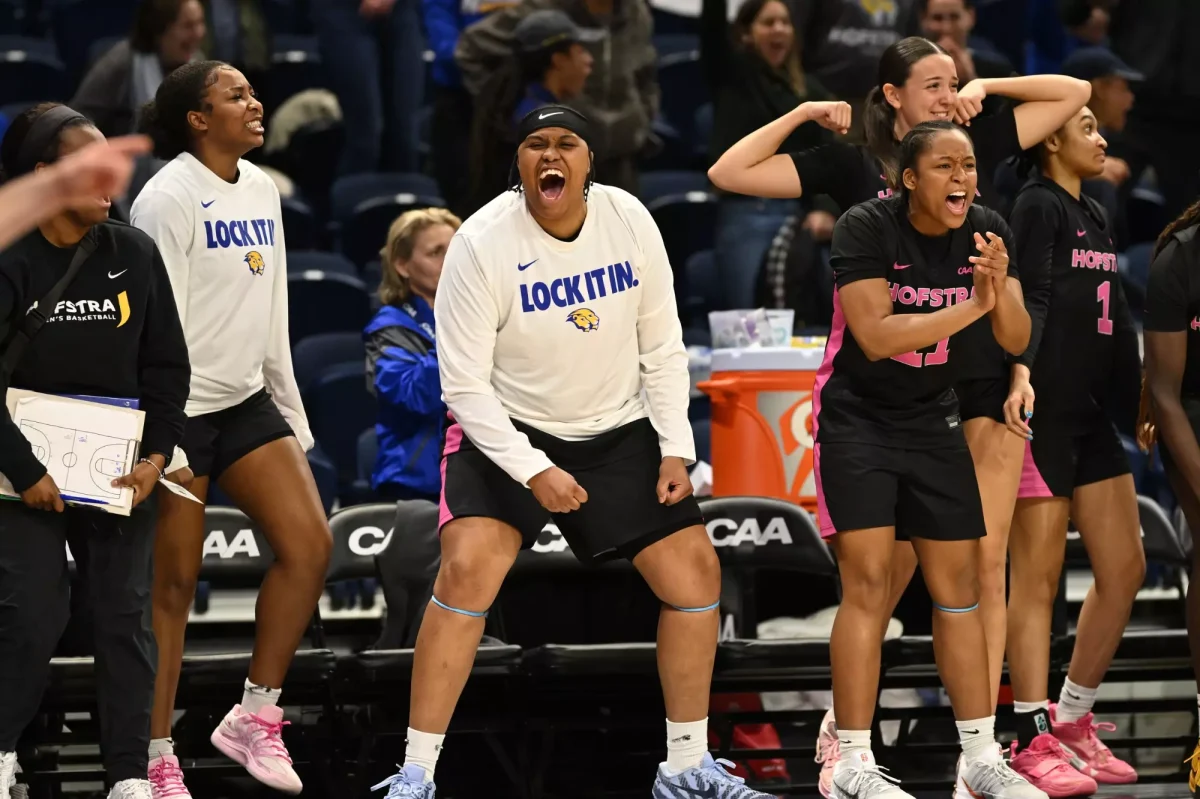
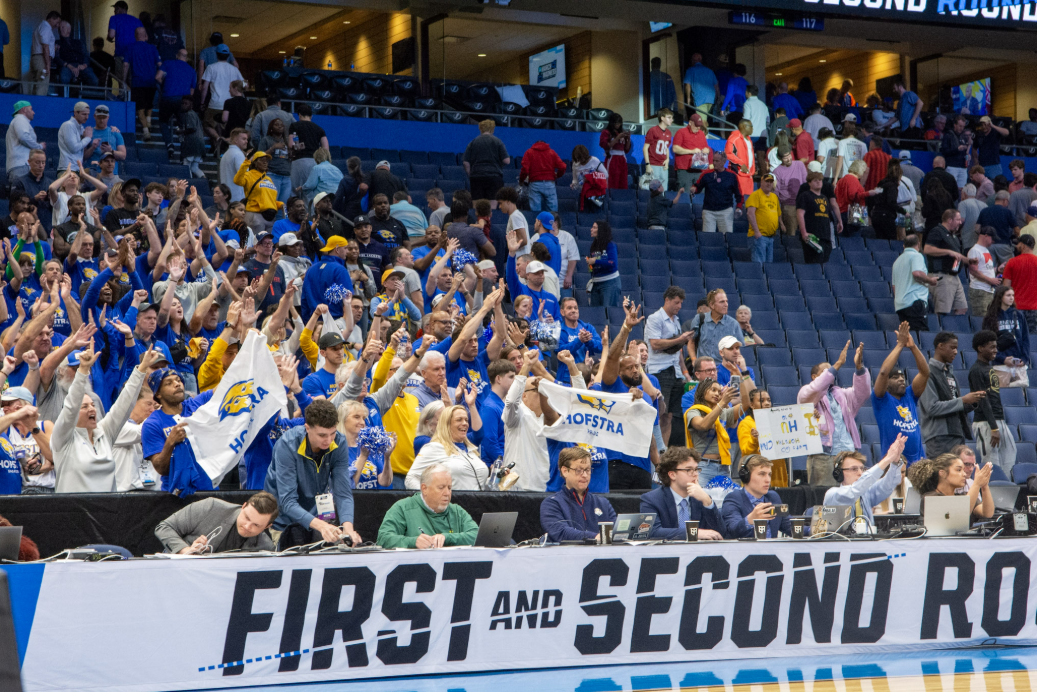
The lasting impression on the school’s return to college basketball’s biggest stage was not left on the court. It is on the campus and in the greater Hofstra community at large. Hempstead, New York, is where it all began for many Hofstra students, past and present. Watching Hofstra play in the March Madness spotlight, representing their school, it was like being back on campus. It was a thrill they will not soon forget.
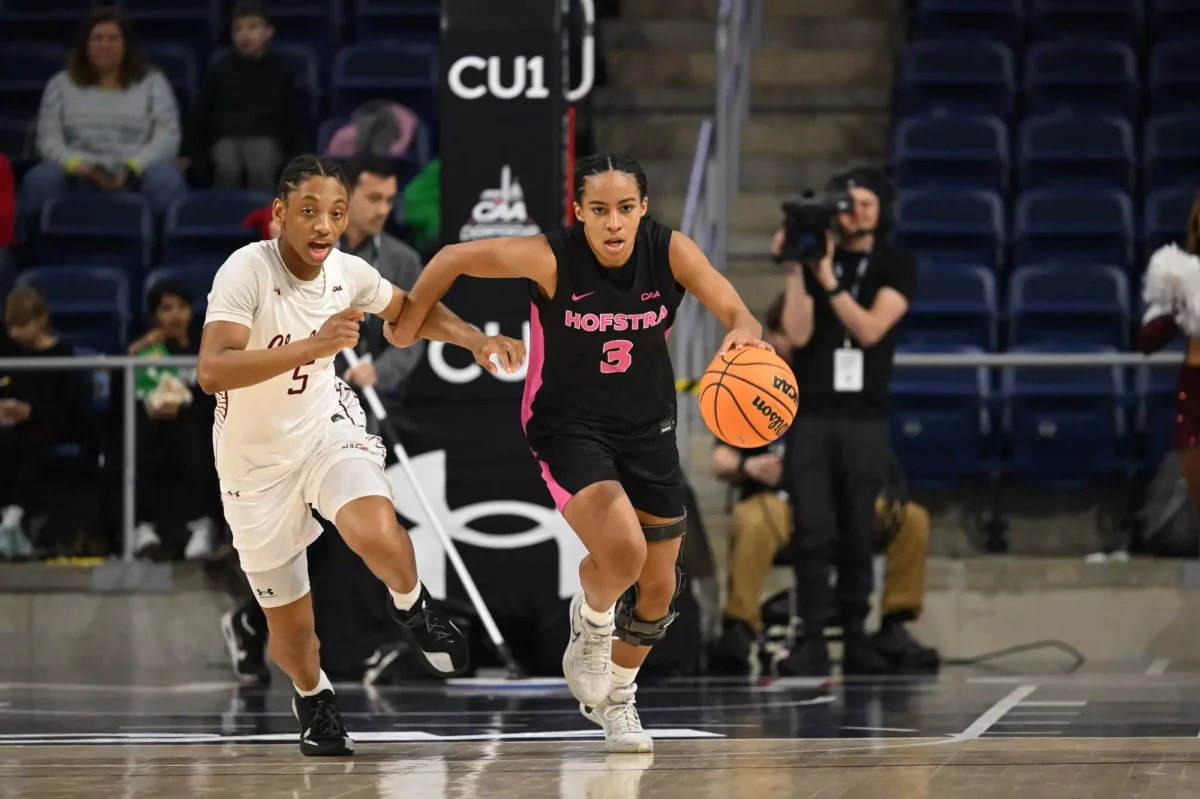
Hofstra’s appearance in the NCAA tournament not only thrust the basketball program and the university into the national spotlight, but unified a community that had been waiting for a moment like this for decades.
“It’s bringing our community together,” said Hofstra President Susan Poser. “There’s just so much excitement … We’re going to ride this wave as long as we can.”
That wave has been gathering for years.
For much of the past two decades, Hofstra men’s basketball teetered on the edge of the bracket bubble and just outside of the national spotlight. Year after year, competitive teams and strong seasons kept the program relevant within its conference, but the breakthrough moment that could put Hofstra back on a national stage remained elusive.
That breakthrough nearly came in 2020 when the Pride won the Coastal Athletic Association championship, earning an automatic bid to the NCAA Tournament. That opportunity was taken away almost immediately when the tournament was canceled due to the COVID-19 pandemic.
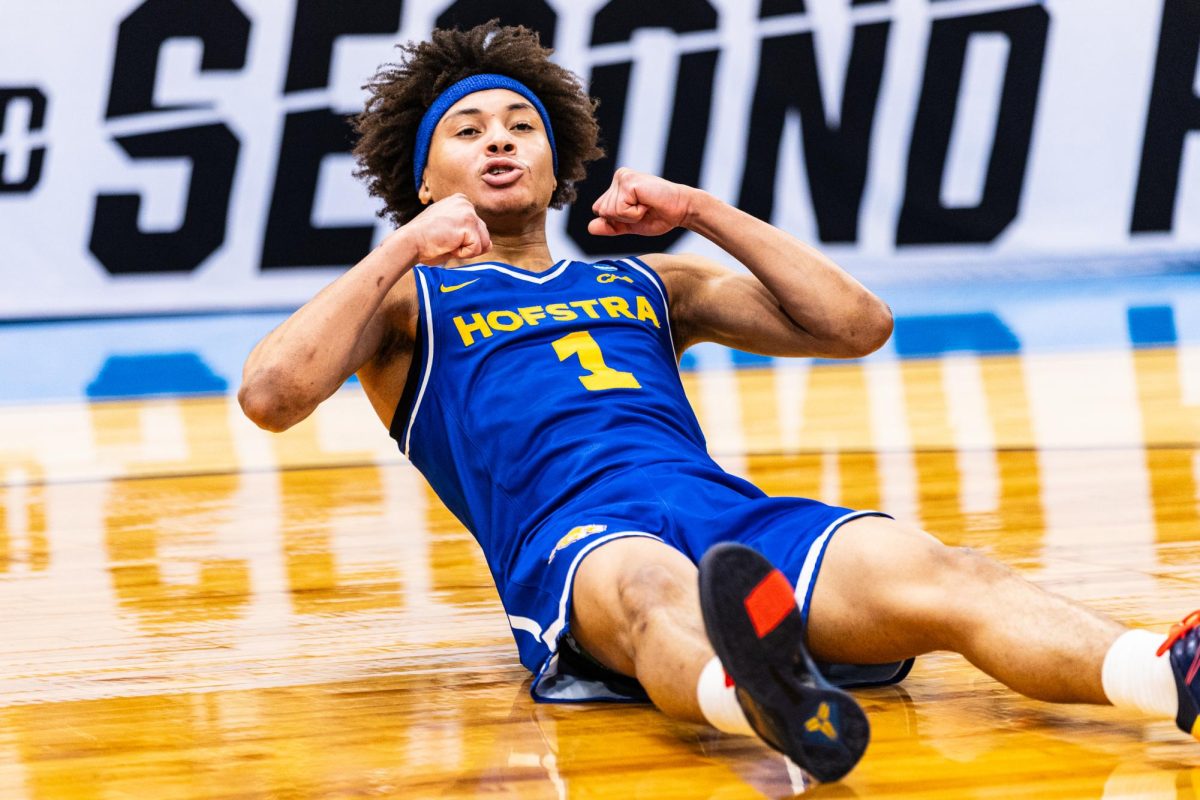
This year’s squad broke through, finally accomplishing something that past teams were never quite able to do. The team didn’t just end a 25-year tournament drought; it reclaimed something unfinished.
“Redemption, man,” said alumnus Brandon Fauci, who graduated in 2020. “When [Kyle Scher and I] were both at the school, the tournament was canceled, so this is a shot of redemption. This feels like a long time coming.”
Scher, also a member of the Class of 2020, remembers the excitement of that earlier championship and the disappointment that followed.
“We thought we were going to be able to watch them and, obviously, it didn’t happen,” Scher said. “So, it’s so sick six years later we get to do it.”
For alumni like Scher and Fauci, this year’s special run closed a chapter on a book of disappointment that had remained open for too long. As meaningful as that closure has been, the impact has extended well beyond those who experienced 2020 firsthand.
On campus, the shift has been immediate.
Senior accounting major Michael Matusiak described the moment Hofstra clinched its place in the tournament as something he had been missing throughout his college experience.
“Being a student of a school on the smaller side, I always felt I was missing out on that rowdy school pride and something to cheer for,” Matusiak said. “But, on that night, I could not have been more proud to be a Hofstra student.”
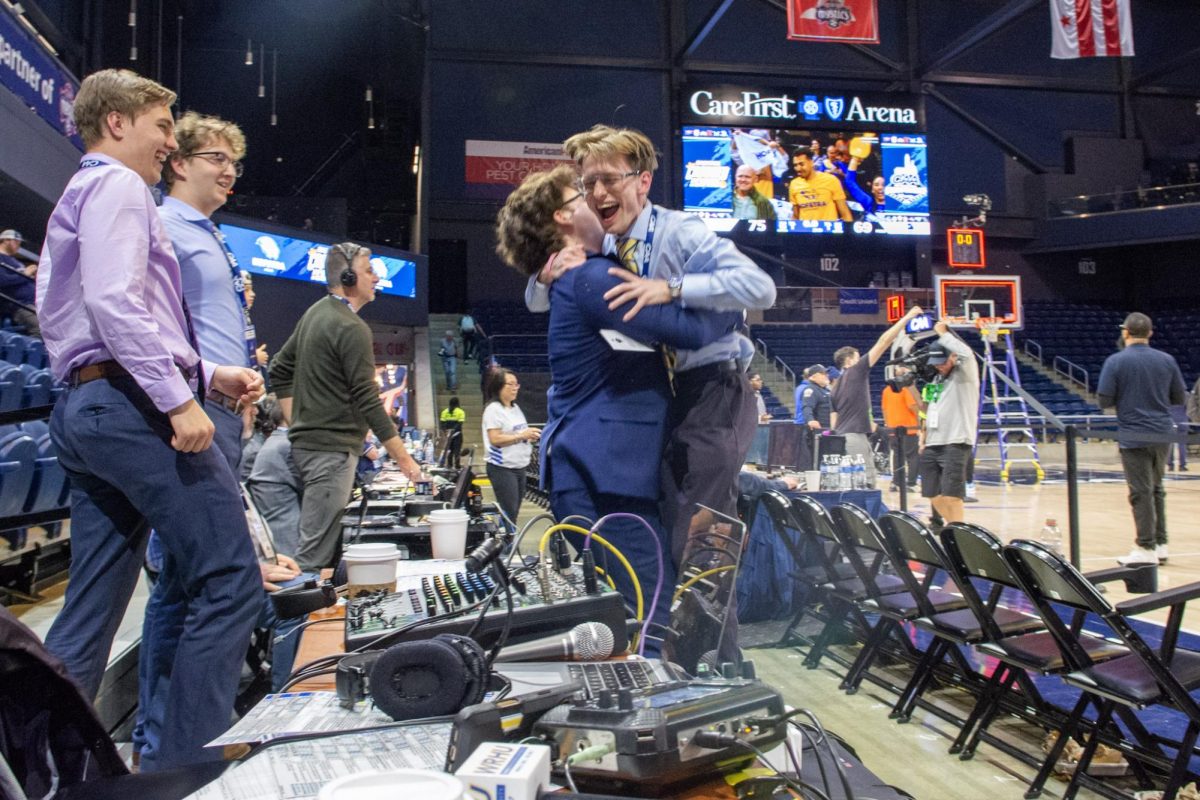
Hundreds of students and fans packed into a Selection Sunday watch party on campus, so many that it had to be relocated to a different room within Hofstra’s Sondra and David S. Mack Student Center. When Hofstra’s name appeared on the bracket, the reaction reflected more than excitement; it reflected a shift in identity.
“It’s hard to describe,” Matusiak said. “But knowing they’ll be getting national recognition, and even something as simple as everyone having to read the name ‘Hofstra’ while filling out their brackets, was so wholesome to me. It put some respect on Hofstra’s name.”
That recognition has been one of the most immediate and measurable impacts of Hofstra’s tournament appearance.
According to Hofstra Athletics, the program’s social media presence has surged dramatically since its conference championship. In February, the team generated approximately 1.2 million impressions and nearly 40,000 engagements. By Friday, March 27, those numbers had jumped to nearly eight million impressions and more than 210,000 engagements, along with over 1.1 million video views.
The audience has grown by roughly 2,000 followers in just weeks.
For athletic director Rick Cole Jr., those numbers reflect something deeper than exposure.
“It means so much, but I don’t think it’s just to the athletic department,” Cole said. “I think it’s for the entire university … the student body, our alumni, the community that we’re fortunate enough to be a part of on Long Island.”
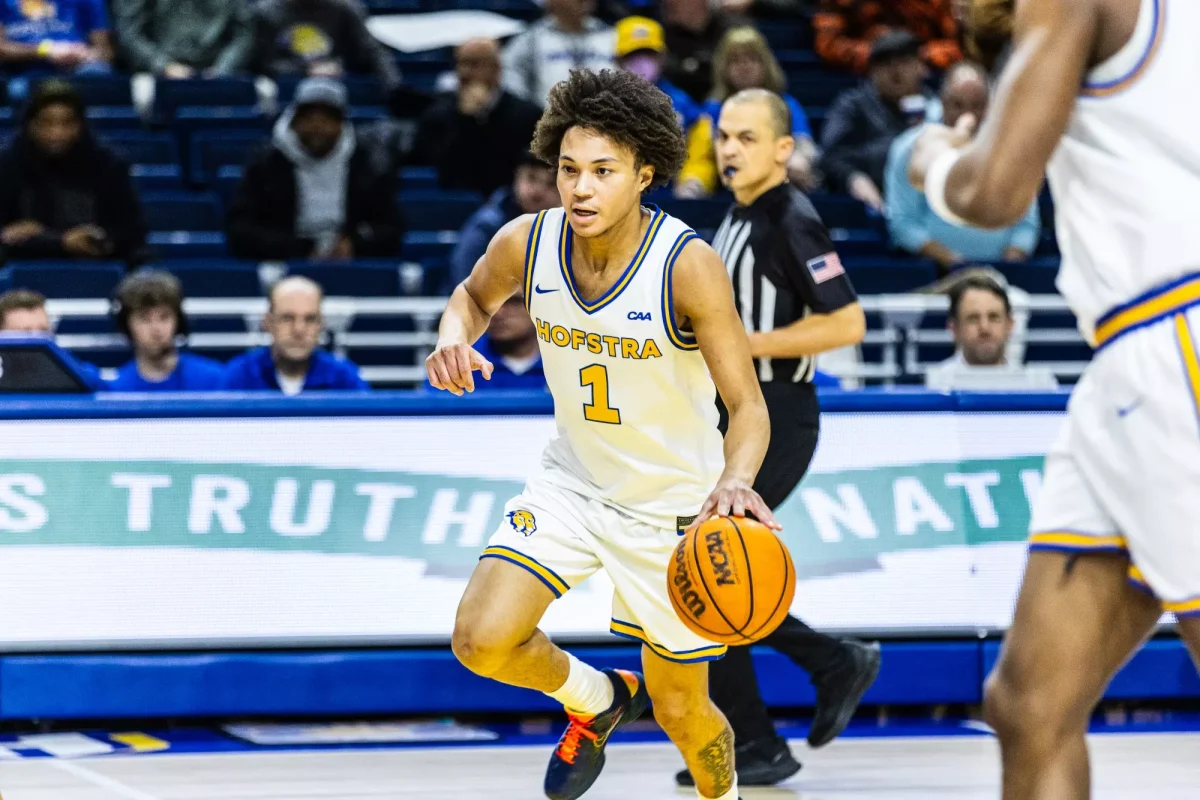
Cole credits much of that impact to the culture built by head coach Speedy Claxton, who has emphasized throughout the season that the program’s success is shared.
“You always hear [Claxton] talk about how it takes a village,” Cole said. “When it’s that kind of culture, everyone feels the benefit and the joy of when you accomplish something special … It’s so much more than just athletics.”
That idea that this moment belongs to everyone was echoed inside the locker room as well.
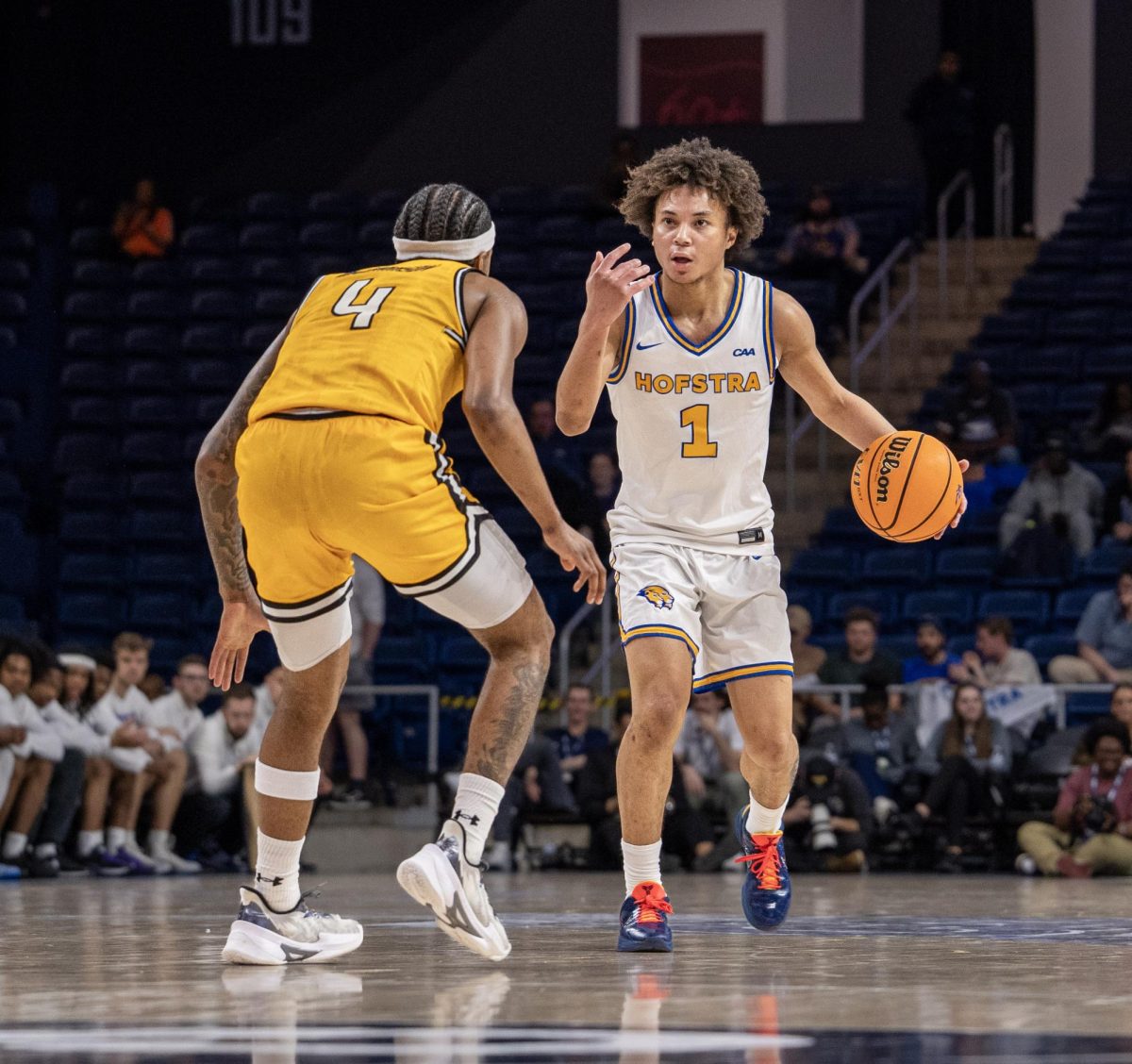
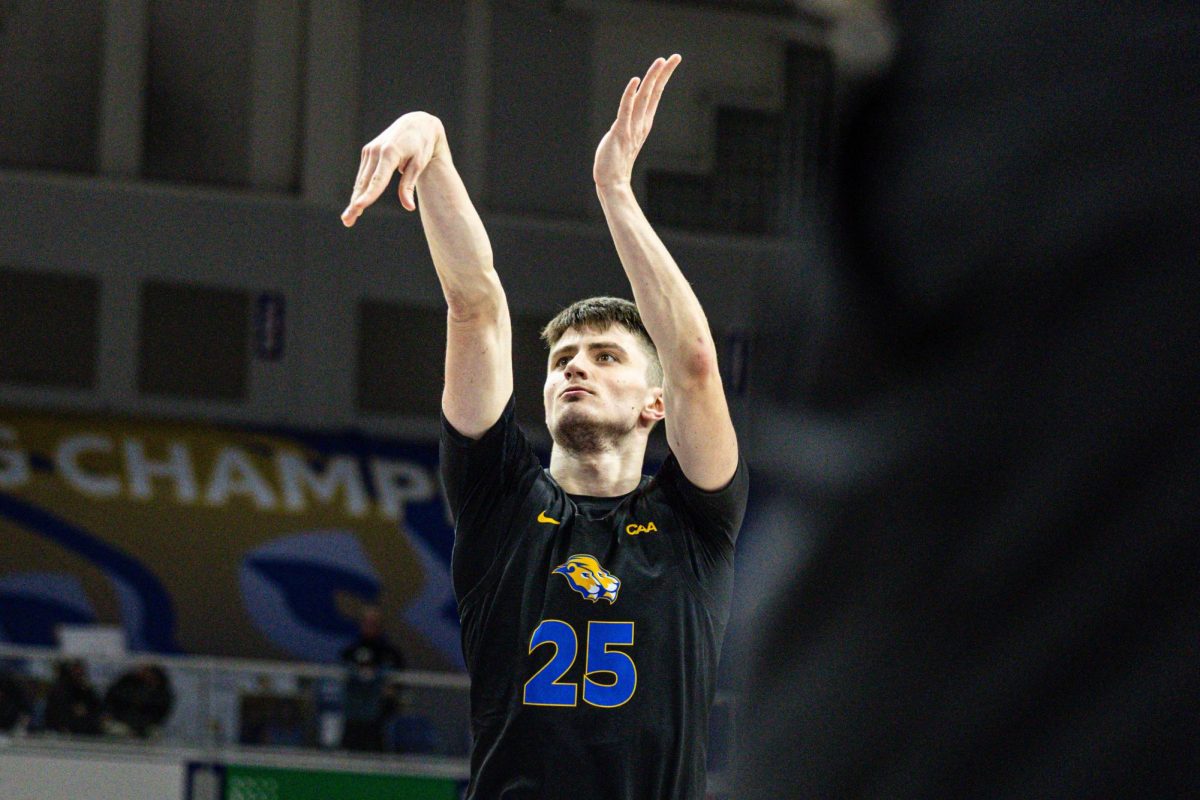
Senior guard German Plotnikov, a four-year member of the program, has witnessed the growth of both the team and its support system.
“Ever since we won the championship, I always say it’s not just us who won it,” Plotnikov said. “I’m so grateful to the whole coaching staff and the Hofstra community … It was amazing to see the Selection Sunday party. There were a lot of people who showed up. It was pretty packed.”
The packed watch party became a snapshot of the larger transformation taking place, one where a program’s success translated into a shared experience across campus.
That sense of connection has also bridged generations of Hofstra basketball.
Former head coach Joe Mihalich, who led the 2020 championship team, was invited by the program to travel with the team to the tournament, a gesture that underscored the continuity between past and present.
“It is so surreal,” Mihalich said. “I cried when the team asked me to travel with them … It’s just surreal.”
Moments like that highlight how this dance into March Madness has become more than a single-season achievement. It has tied together former players, current athletes, students, alumni and university leadership in a way that few events can.
In many ways, that is the lasting significance of Hofstra’s return to the NCAA tournament.
Yes, it brought national exposure. Yes, it elevated the basketball program. And yes, it ended a 25-year absence from the tournament. But more importantly, it created something that extended beyond the court.
It gave students a moment of pride. It gave alumni a sense of closure. It gave the university a surge in visibility. And it gave the surrounding community a reason to rally together.
For a program that had spent years knocking on the door, finally getting in felt so good.
But for Hofstra, the real story isn’t just that the door opened; it’s how many people walked through it together.