Over the weekend, I went to an early showing of Emerald Fennell’s “Wuthering Heights.” The film received plenty of attention, gaining mixed reviews from critics and viewers alike. It has a 59% rating on the Rotten Tomatoes’ “Tomatometer” and 2.9 stars out of five rating on Letterboxd. Although, the soundtrack by Charli xcx was widely liked, the only thing everyone has seemingly agreed upon is that the movie was a terribly horrific adaptation of the book.
I would like to preface this review by saying that I actually enjoyed the movie. I even found myself crying toward the end. With that being said, how did “Wuthering Heights” disappoint audiences so badly?
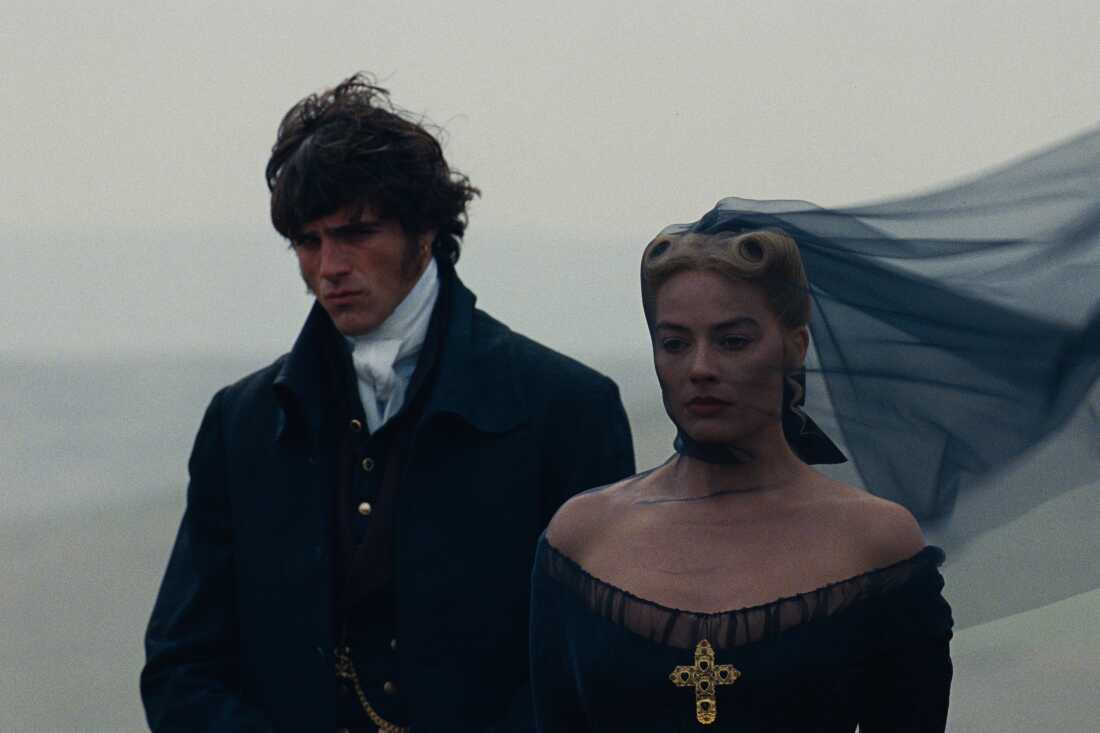
It could not have been the set, which was designed by Suzie Davies, who also worked with Fennell on “Saltburn” (2023). She did a great job designing the various scenes and representing how much wealth the Linton family had. Nor was it the costume designer, two-time Academy Award winner Jacqueline Durran, who had an incredible take on the gowns and dresses designed for Catherine (Margot Robbie). Durran’s recent and most iconic project was Greta Gerwig’s “Barbie,” in which Vogue stated, “Durran was responsible for that cultural phenomenon’s brilliant wardrobe.”
The reasoning behind the film’s failure differs, but all roads lead back to the film’s title: “Wuthering Heights.” The book “Wuthering Heights” is an English gothic tragedy. Published in 1847 by author Emily Brontë, the novel follows two vengeful young adults who are consumed by their obsessive love for one another. Since the book’s release, there have been 25 movie adaptations, the most recent being Fennell’s in 2026. Her approach was the most original that anyone has seen. As much as I liked the film and found it interesting, you cannot create a movie using your original idea and call it an adaptation. If the film had no attachments to the novel and went by another title, I can see the reactions being different. Although I have not read the source material myself, I have done much research, and the differences between the novel and the film are too big to ignore.
Fennell turned the tragedy into more of an erotic romance and completely misunderstood the characters. In the novel, Catherine and Heathcliff only kissed a few times, not holding much significance to the physical and sexual nature of their relationship. The novel relied heavily on their shared moments, spiritual connection and profound draw to one another to develop their relationship. In the film, Catherine and Heathcliff have a full-on sexual affair while she is married and pregnant. It seems that Fennell was infatuated with the idea of young love becoming something more, but couldn’t fathom that the novel, which she drew inspiration from, was actually nothing more than an ill-fated love, leaving both parties in anguish.
The film has also come under fire for its casting decisions. In the book, Heathcliff is a man of color. In the film, he is played by Jacob Elordi, a white man. Also, Elordi is 28 and Robbie is 35, making them both double the ages of the characters from the book.
Despite the negative reviews surrounding the film, it has been a box office success, grossing over $90 million globally with a budget of $80 million. It is now Elordi’s highest-grossing film. Though this adaptation does not make Fennell a bad writer or director, I hope she takes this as an opportunity to start giving herself more credit in originality.