
Photo courtesy of Hofstra Athletics
Getting to Know Nick
Nick Colleluori joined the Hofstra University men’s lacrosse program in 2005 as an overlooked and undersized defender. He was a young man from Ridley, Pennsylvania, who brought his values of hard work and dedication with him wherever he went.
Hofstra lacrosse has a culture that former players have described as blue-collar, a tradition that started with Colleluori.
“[Colleluori] was the ultimate teammate, just the ultimate Hofstra guy,” said Steven DeNapoli, who played with the Pride from 2007 to 2011. “He would take the shirt off his back for anybody.”
Colleluori, wearing No. 27, started all 16 games on defense his freshman year and played a significant role on the Pride’s man-down defense. He helped lead the Pride to an 8-8 season with wins over top-ranked programs, including Princeton University and the University of North Carolina.
Late in his freshman year, Colleluori started having trouble hearing his teammates and coaches on the field during a game against the University of Delaware. Tests soon revealed he had Diffuse Large B-cell non-Hodgkin’s Lymphoma (DLBCL), sidelining him for the 2006 season.
In 2006, Hofstra had its best season in school history, going 17-2 and finishing the year ranked second in the country. The Pride lost its first game of the season to the University of Massachusetts Amherst before winning 17 games in a row, tying the NCAA Division I record. The team was playing for Colleluori the entire year.
The Pride met UMass again in the NCAA quarterfinals. The Minutemen took out Hofstra 11-10, ending the magical 2006 run.
Seth Tierney was at the game as an assistant coach at Johns Hopkins University.
“I was there, standing in the tunnel watching. I felt their pain because I had been an assistant at Hofstra for six years before coming to Hopkins,” said Hofstra head coach Seth Tierney. “I went over to the Hofstra guys and said, ‘17-2 is a hell of a year.’ Little did I know that would be the last game I coached at Johns Hopkins.”
After the season, Hofstra’s then head coach John Danowski moved on to Duke University, leaving the Pride’s head coaching job vacant. Tierney made his return to the program as head coach in the fall of 2006 and still remembers his first move.
“When I was named the head coach at Hofstra, my first phone call was to Nick,” Tierney said. “I let him know he was my first call. I stopped by, went to Nick’s house and had dinner with his family. Knowing him certainly played a role in how I developed as a young coach.”
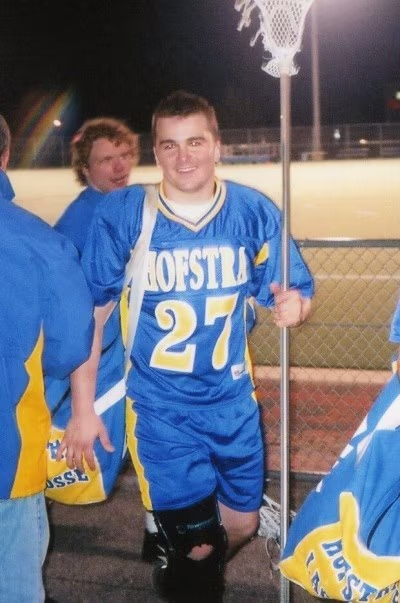
Photo courtesy of the Washington Post/The Collelouri family
Creating HEADStrong
Shortly after being diagnosed, Colleluori withdrew from Hofstra and returned to Ridley for treatment.
During that time, he noticed the lack of resources available for cancer patients and their families. Inspired, Colleluori created the HEADstrong Foundation, which raises support and funds for cancer research while empowering athletes to support his mission. “What I always remember Nick by was what a fighter he was,” DeNapoli said. “He would be going through chemotherapy and be feeling like absolute shit, and you wouldn’t know it. He refused to show his teammates and his brothers that he was letting something hurt him.”
One day, after doctors told Colleluori there was nothing they could do to prolong his life, he told his parents he had three wishes.
First, he wanted to be cremated and buried. Secondly, he wanted a scholarship at both Ridley High School and Hofstra in his name.
Finally, he said, “Mom, I want you to take the foundation to where it needs to go. Don’t question anything. The lacrosse family is my brotherhood. They won’t turn their backs on you.”
Doctors told Colleluori he had just three months to live after his initial diagnosis. Colleluori greatly surpassed that, living for over a year and watching his Hofstra Pride play an entire season in his honor, before passing away on Nov. 28, 2006
HEADStrong’s Lasting Legacies
The HEADstrong game was born shortly after Colleluori’s passing. First played in Ridley, before moving to Hofstra’s campus, the annual fall tournament brings together teams from around the country who raise money for cancer research and compete in exhibitions. Hofstra has competed in every tournament.
“I was aware of HEADstrong from an outsider’s perspective because everyone in the lacrosse world knows what the HEADstrong foundation is,” said Anthony Zappone, who played for Hofstra from 2010 to 2013. “Every outsider knows what the foundation is and what that lime green color means.”
In the wake of Colleluori’s passing, Tierney took over the reeling program for the 2007 season. The team struggled in his first season as head coach.
Nick’s brother, Michael Colleluori, joined the team in 2005 and played with Hofstra until graduating in 2008. In the years following Nick’s passing, Michael carried his fighting spirit and blue-collar attitude with him. After Michael graduated, there were concerns from the Hofstra staff that Nick’s legacy might not remain.
“We were at a crossroads of what to do,” Tierney said. “We talked about retiring the number, but then the meaning doesn’t stay with the program. Instead, we decided to reassign the number every year, which makes Nick’s story come up annually, if not more.”
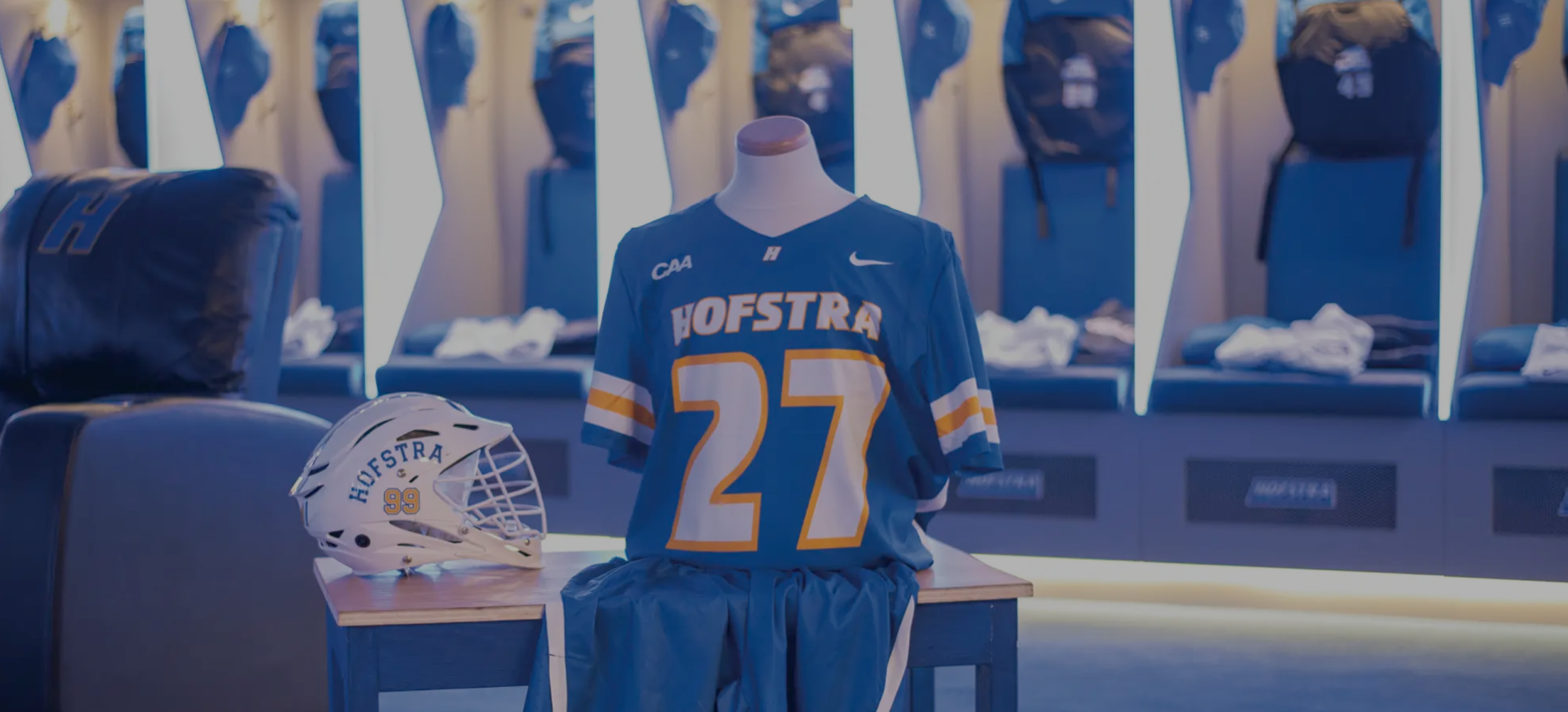
Photo courtesy of Hofstra Athletics
Wearing No. 27 Their Own Way
“To be No. 27, a guy has to be an overachiever,” Tierney said. “He is totally bought into the team. He has to do the right things in the classroom, on the field, and have a strong presence in the community. Just a prototype of what we would want in a Hofstra lacrosse player.”
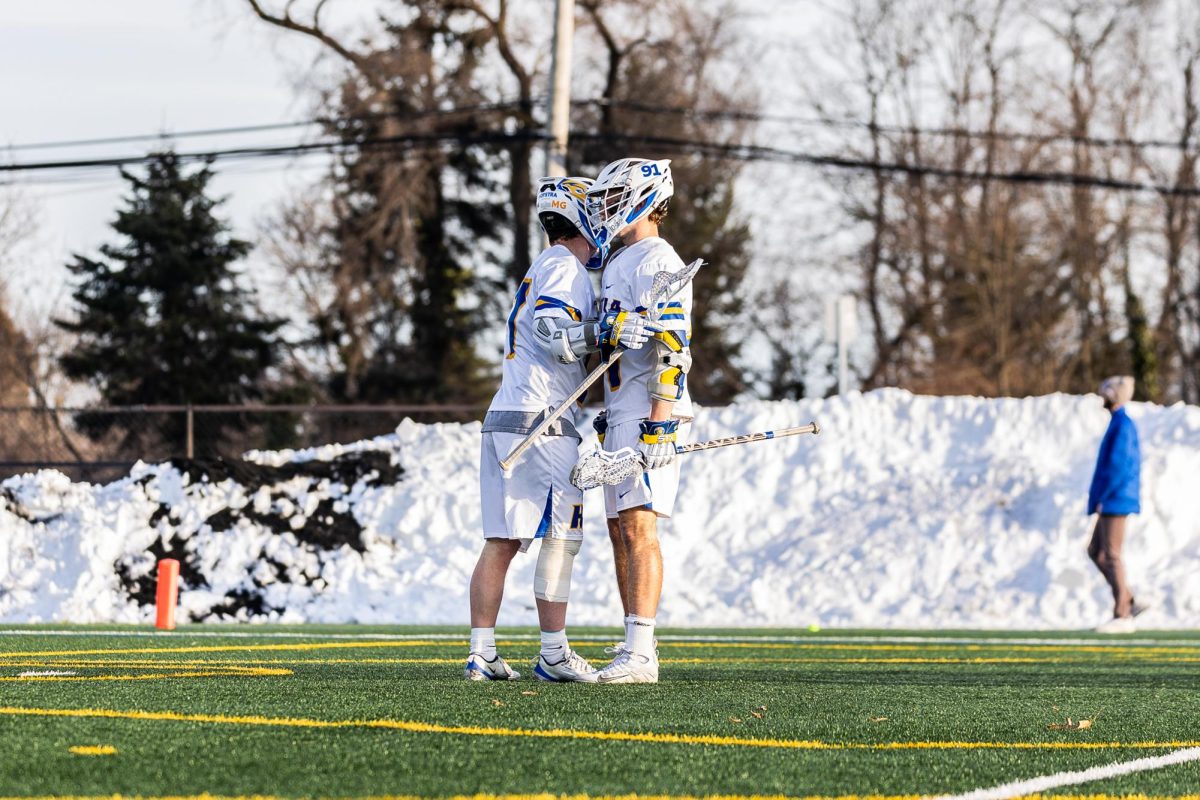
The process of selecting the next No. 27 is a special one: At the end of a season, all the seniors sit on the steps of the locker room and address the returning players, signaling a changing of the guard. Even though the players are leaving, they urge the underclassmen to uphold the values of Hofstra lacrosse, and every year, No. 27 has something to say about passing on the legacy.
After the seniors leave, Tierney meets with his assistant coaches, Michael Gongas and John Gorman, to pick the next No. 27. He reaches out to his returning players to see if they have any thoughts on who should be the next No. 27, making the decision a team one. Each player and coach gets a vote for who will wear the number, except for Gorman, who was a former teammate of Colleluori’s and receives two votes.
Every player who has earned the number has embodied Nick’s spirit and the team’s singular motto of being “turnpike tough.”
“People use Hempstead Turnpike to get to work every day,” Tierney said. “It’s not a vacation street. The bus route comes right outside our stadium, and people get on and off to punch the clock. These people are working and taking care of their families. That’s where the turnpike tough came in, and that’s where the blue-collar nature came in. It was an adopted style of lacrosse that we play.”
According to Tierney, in this style, it’s never a one-on-one. For example, when there’s a groundball battle, there’s always a swarm of Hofstra players.
As for who would be the first to receive Colleluori’s No. 27, Adam Swarson fit the bill. Swarson was a natural choice, having been one of the last remaining teammates of Colleluori’s. Swarson held it as an honor to carry on the Colleluori family legacy.
Swarson was slightly undersized, but he was also the most difficult defender to play against.
“[Adam] would probably fight me if he heard me call him undersized,” Tierney said. “He played much bigger than what he looked, and that was the way Nick was too. Their size was one thing, but their heart was never questioned.”
After Swarson, Tierney wondered if the team should continue the tradition because no players after him would’ve known Colleluori personally, but at that point, Colleluori had become integral to what the team represents.

Photo courtesy of Hofstra Athletics
Steven DeNapoli
“My class came in the year after Nick passed away, so I never met him in person,” DeNapoli said. “I think his spirit and memory lived on for years.”
Hailing from Hewlett, New York, DeNapoli had long dreamed of playing for Hofstra.
As an undersized short-stick defensive midfielder, DeNapoli worked harder than most to earn his minutes, eventually becoming a staple for the Pride’s defense.
“Steve DeNapoli was a late bloomer,” Tierney said. “He didn’t intimidate you with his size. At first look, you were not threatened by Steve DeNapoli. But two hours later, after you played against Steve DeNapoli, you felt it.”
DeNapoli became the second recipient of the prestigious No. 27 in 2011. DeNapoli was a two-time All-Conference defender with great leadership abilities. He caused turnovers, was strong on ground balls and contributed key goals for the team.
“[DeNapoli] was a clear teammate, the ultimate teammate,” Tierney said. “[He] played the turnpike style—From Hewlett, to Hofstra, to the world championship team, and in pro lacrosse. I think he brought a piece of Nick everywhere he went.”
Even after leaving Hempstead, DeNapoli was still a Hofstra guy. His intensity, grit, and leadership followed him to the highest levels of lacrosse, where he played professionally until 2022. For teammates that came after them, DeNapoli and Swarson became proof that the program’s culture continues strong even after the guys who built it leave.
“We always kept an open locker for [Nick],” DeNapoli said. “So, every time you were in the locker and saw that No. 27 jersey hanging, you knew Nick was with you. We just knew how he fought on the field and through his treatments. That’s how we were expected to go out and perform. We had to fight for Nick.”
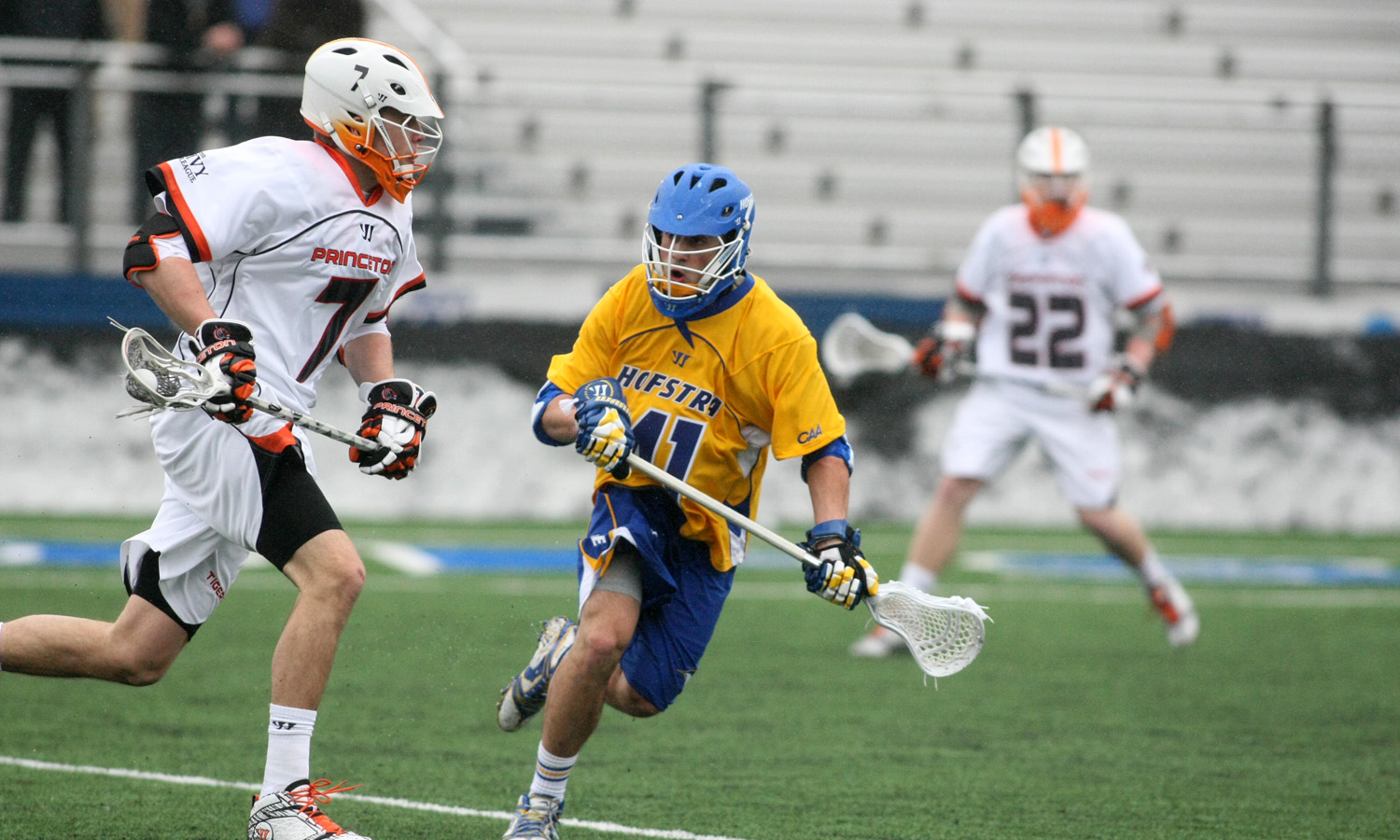
Photo courtesy of Hofstra Athletics
Anthony Zappone
“I was actually committed to go to Army West Point,” said Anthony Zappone. “I went to a military prep school to get ready for West Point. I was there for a year, but it just wasn’t for me. I called a friend of mine to see if Hofstra had any open spots. I was willing to walk on to the team if I had to. Thankfully, Hofstra had a recruit drop out in the last minutes, so Coach T brought me in.”
A native of upstate New York, Zappone made the team as a walk-on his freshman year. Because of his late addition to the team, Zappone was the last midfielder on the depth chart.
“In upstate New York, I was a pretty good midfielder, but Hofstra didn’t need me there,” Zappone said. “I was made a defensive midfielder and I was happy. I was willing to play anywhere. I quickly realized that defensive midfielders at Hofstra are like nowhere else in the world. D-midfielders are a staple in Hofstra lacrosse, and I bought in hard.”
Zappone found his footing in his new position and relished the opportunities he got. During his freshman year, Zappone looked up to DeNapoli—who was wearing No. 27 at the time—as well as Kevin Unterstein, a former teammate of Nick’s turned Hofstra assistant coach.
“We hopped on the bus to go to HEADstrong my freshman year, and I was naive to what it was,” Zappone said. “To me, it was a foundation created by a former player who had cancer. Coach Tierney plays us a video about Nick’s story. I’m sitting there on the bus fighting tears. After that, No. 27 became something I really wanted.”
Zappone became one of many great defensive midfielders to come through Hofstra, following in the likes of Unterstein, Swarson and DeNapoli. In 2014, his dream came true when it became his turn to wear No. 27.
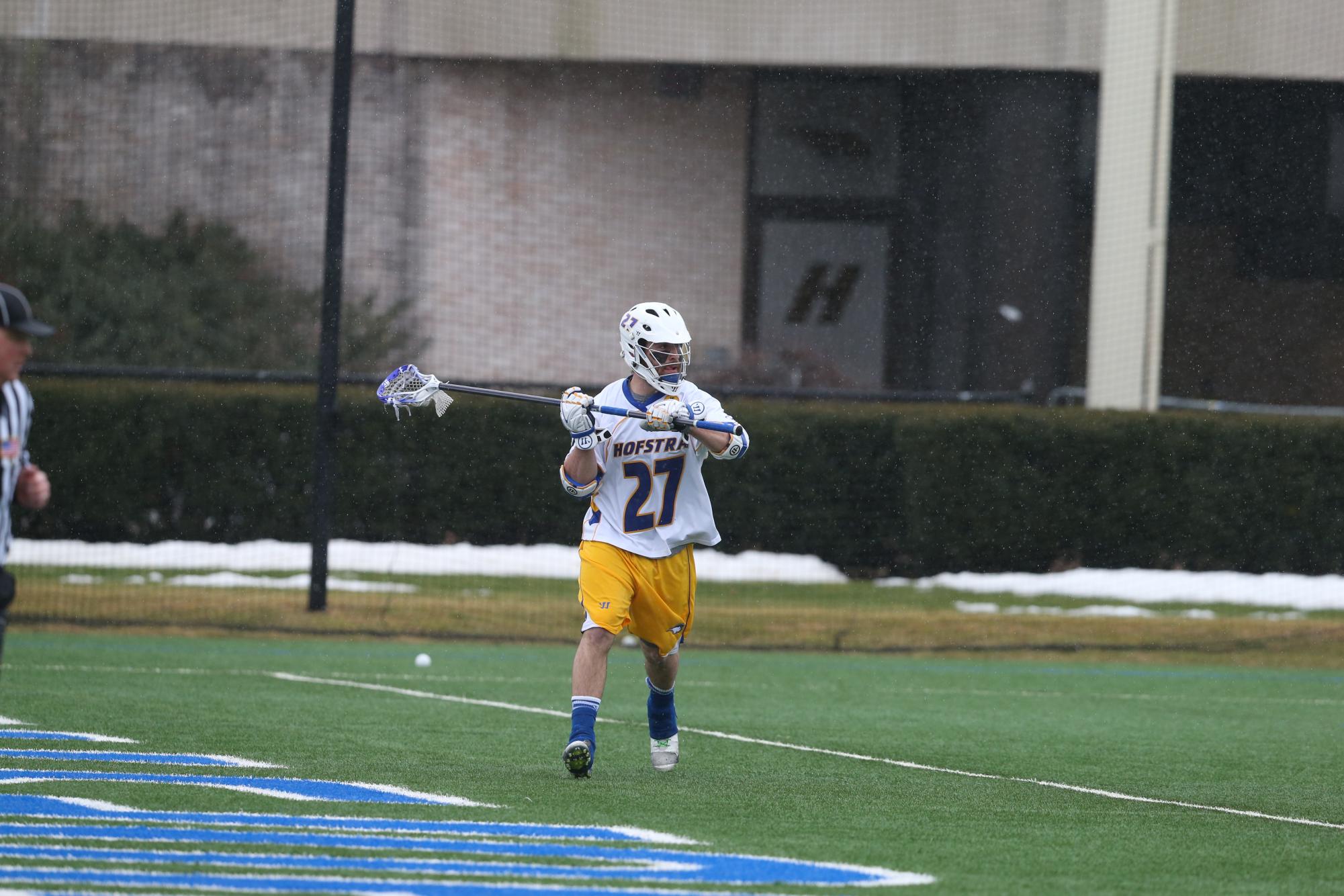
Photo courtesy of CAA Review/Hofstra Athletics
Ryan Rielly
“Hofstra always gets a lot of good recruits, maybe not the level of Duke, but these Hofstra kids are always tough,” said Ryan Rielly, who played for Hofstra from 2011 to 2015.
“They were blue-collar players. And I think if they didn’t know that going in, it would become pretty apparent pretty fast.”
Rielly grew up playing football first and lacrosse second. At 5’11 and 185 lbs., he wasn’t big enough to play college football. Size never mattered to Tierney, so when Rielly got serious about lacrosse his junior year of high school, he became a prototypical Hofstra defensive midfielder recruit.
“Ryan was one of the best poles in the country,” Zappone said. “He was able to shut down the best midfielders in the country game after game, but he never got national notoriety for it.”
Rielly followed Zappone as No. 27 in 2015. Early in the fall, Rielly broke his foot in practice and was sidelined until the spring for the regular season.
“I had never been hurt in college or missed a game, but I knew I couldn’t play through this one,” Rielly said. “I went hard in the weight room that fall because I wanted to still set an example as 27.”
The injury made Rielly’s tenure as No. 27 a little more difficult, but nothing could prepare him for the program’s next tragedy.
In Jan. 2015, a Hofstra lacrosse player named Joe Ferriso passed away due to injuries he sustained in a car crash. Losing Ferriso struck the Pride deep. He was a hard-working, team-first player who was described as the ultimate teammate. Rielly was tasked with leading the team through their pain.
“It was a shocker. At that point, I was fortunate to not have lost anyone so young,” Rielly said. “That year was tough. This happened when winter workouts were starting, and then it all became so much bigger than lacrosse. We were all out there playing for Joe.”
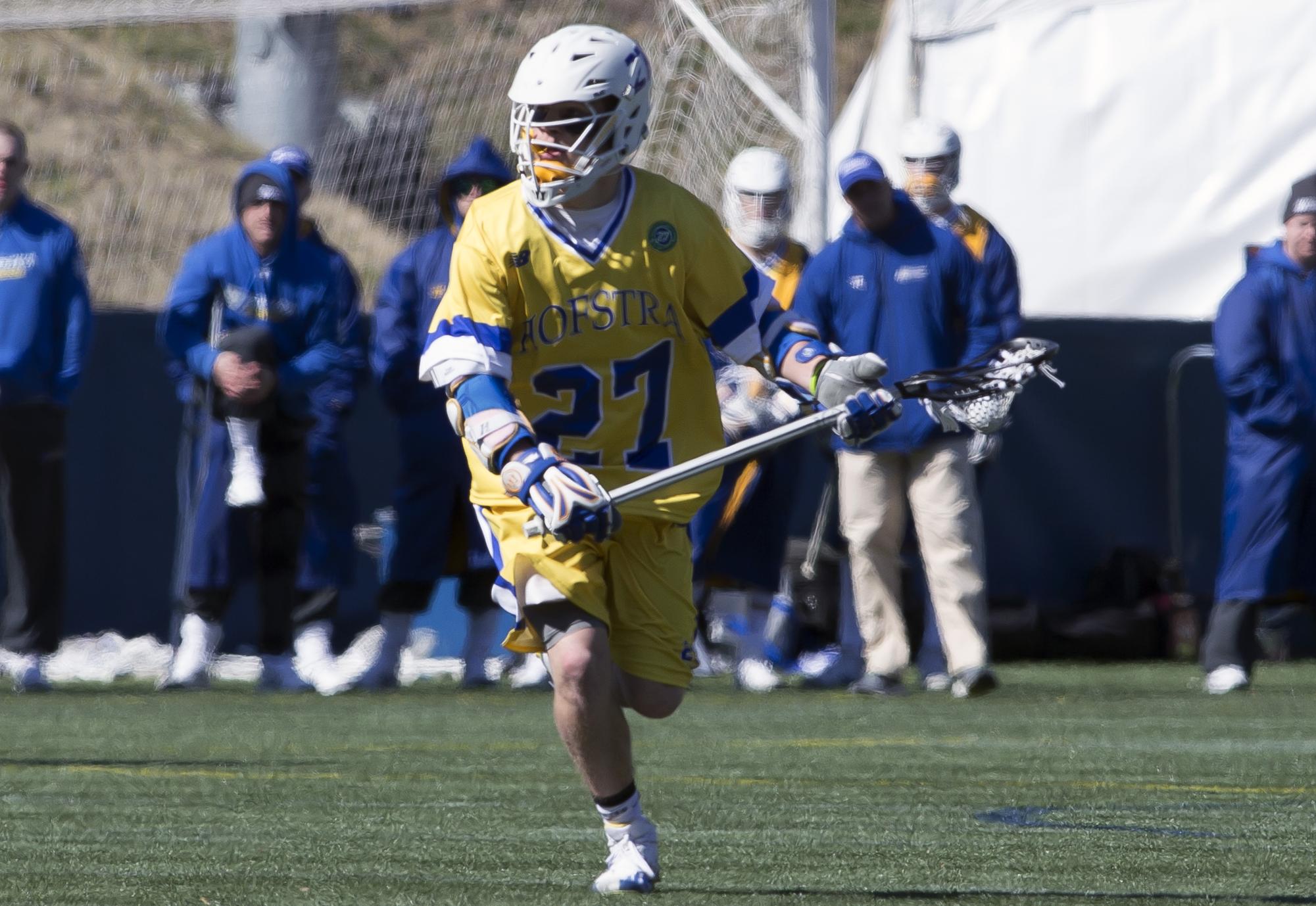
Photo courtesy of Hofstra Athletics
Brendan Kavanagh
Brendan Kavanagh was raised with a chip on his shoulder. Kavanagh grew up with four brothers. His older brother, Matt, played lacrosse at the University of Notre Dame and became one of the best players in school history. His two younger brothers, Chris and Pat, followed Matt to Notre Dame and won national titles.
“We flew into Chicago and drove to South Bend to see Matt’s games,” said Brendan Kavanagh. “It was a lot. I was always the guy who wanted to get away from Long Island. When it came down to decision time, I just fell in love with [Hofstra] and I wanted to lighten the load on my family.”
Brendan was an attacker at Kellenberg Memorial High School in Uniondale before coming to Hofstra. Standing at 5’8, Kavanagh was not the biggest player on the field, and he never led Hofstra in scoring during his career, but he had a workmanlike attitude.
At the college level, Brendan didn’t score as much as his brothers, posting a career high of 23 goals. But at Hofstra, you don’t have to be the most talented guy on the roster to be No. 27.
In 2016, Hofstra traveled to UMass for a regular-season game. Before the game, the Minutemen held a 10-year reunion for the 2006 squad that beat Hofstra in the NCAA quarterfinals.
“Those former players lined up on the fence and yelled stuff at us and Coach Unterstein,” Kavanagh said. “It was really cool to be in that hostile environment. The game went into overtime, and I was able to score the game-winning goal. I remember just running to the logo to celebrate on it and hugging Coach Unterstein after the game and seeing how much that win meant to him.”
Kavanagh’s game-winning goal came at the end of his sophomore year. He was surprised when he received a call from Tierney that summer asking him to be No. 27 for the 2017 campaign.
Kavanagh is one of just two juniors, and one of only two attackers to wear No. 27.
“I think wearing No. 27 was the coolest moment of my entire lacrosse career,” Kavanagh said. “Once you hear your name get called to wear that number, you feel an instant connection. I was wearing the number for the 10-year anniversary of Nick’s passing. We all gathered for that event, every guy who wore it before me. Looking at a room full of guys who were chosen to wear it and all the respect I had for them was amazing.”
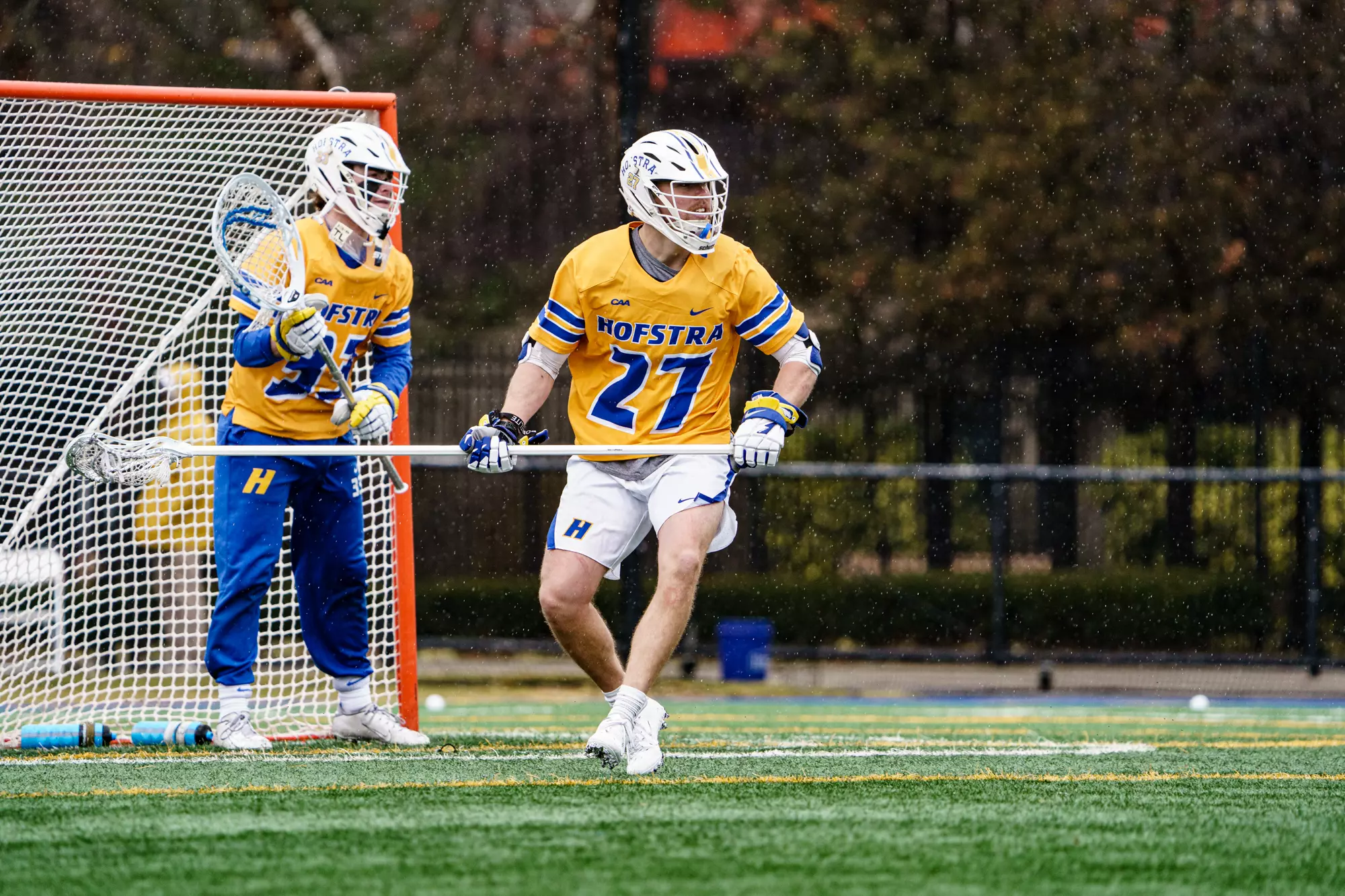
Photo courtesy of Hofstra Athletics
Tim Hegarty
“At Hofstra, we do a lot of blue chair meetings,” said Tim Hegarty, who played with the Pride from 2019 to 2023. “Basically, everyone sits in these blue lawn chairs and Tierney asks us questions about our background, our families and everything like that. It forces the rest of the team to know personal stuff about everyone to see what drives them and what got them here.”
Hegarty was resistant to the blue chair meetings at first, being scared of sharing his personal stories. But after hearing some of the guys go before him, he opened up to the idea of getting vulnerable.
“These meetings are huge for team culture,” Hegarty said. “You aren’t just playing with a guy who you practice and maybe have a class with. Everybody ends up opening up, and we become a lot closer for that. We were going to war for each other.”
In his final season, Hegarty grabbed 15 ground balls and had a +7 turnover ratio. After taking a graduate year in 2023, Hegarty joined the military in a medical role.
“Tim is protecting our soldiers who are protecting our country,” Tierney said. “When there is an issue or someone needs medical attention, he’s the one who takes care of them. It’s pretty impressive to see the kind of person Tim grew into.”
According to Tierney, Hegarty came into the program as one of the nicest kids to ever come out of Farmingdale. Being No. 27 taught Hegarty he didn’t need to change to be a leader.
“Nick’s life ended so abruptly,” Hegarty said. “I felt how fortunate I was to play games every Saturday and hit the weight room with my team. No. 27 steps into a leadership role, and I think it’s because they learn to appreciate how fragile human life can be. I think it helps guys become better teammates than they already are. To wear this number, they were already great people, but I think the number is a reminder to push them a little bit further.”
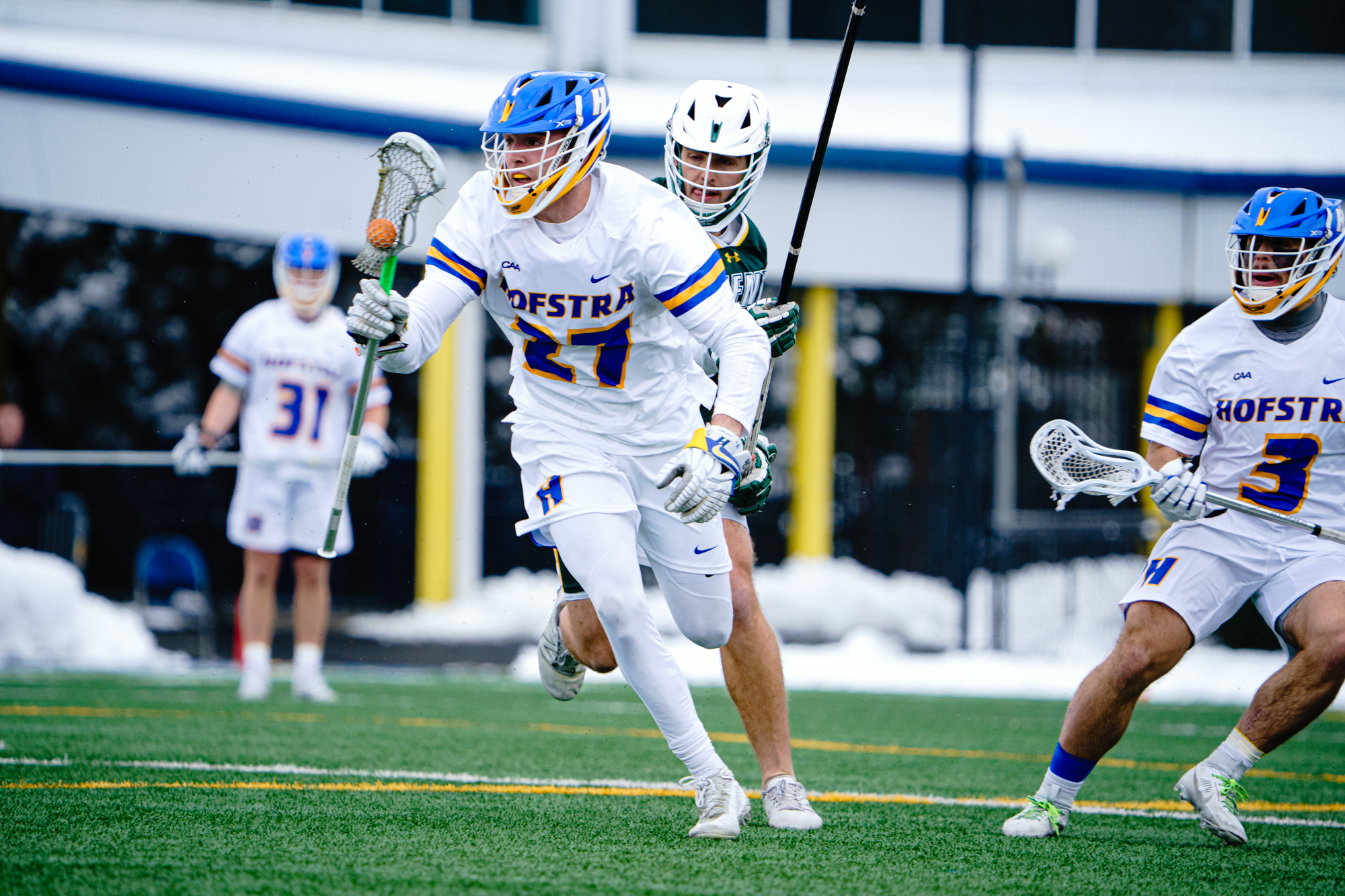
Photo courtesy of Hofstra Athletics/Evan Bernstein
Chase Patterson
“I still remember [getting the call] like it was yesterday,” said Chase Patterson, who wore No. 27 in 2023. “I was steel coating and filling driveways and got a call from Coach Tierney and Coach Gorman. They told me, and I couldn’t believe it. It was the biggest honor of my life, and I was gonna work every single day to continue Nick’s legacy the right way.”
Patterson was Hofstra’s faceoff specialist (FOGO) from 2020 to 2024, playing one of the most grueling positions in lacrosse. Every quarter and after every goal, the game restarts with a faceoff: a fast, violent scrap between two players crouched inches apart, fighting for a loose ball with speed, leverage, and sheer toughness. A FOGO’s job is crucial because winning a few in a row can swing the momentum of the game for your team. For Patterson, every whistle was a battle of wills.
Coming out of high school in Bucks County, Pennsylvania, Patterson was an overlooked recruit and was unknown in the Division I circuit until he won a faceoff showcase competition.
“I only went to it because my dad signed me up; I really had no expectations,” Patterson said. “When you’re overlooked and undervalued by everyone, it really puts a chip on your shoulder, and it drives you to compete.”
Patterson stayed with the Pride for five years and slowly developed into one of the best FOGOs in the country in his grad year, scoring eight points and winning 59% of his draws. Patterson flourished in an environment that challenged him to be better every day at Hofstra. Nobody pushed Patterson more than Colleluori.
“Nick is the guy everyone looks up to in the locker room even though we never met him,” Patterson said. “He’s the ideal role model that you want to live up to, but it’s hard to. Coach Tierney would bring him up a lot to keep his presence here, and it was definitely felt. Every time I see the number 27, even outside of lacrosse, the first thing I think of is Nick.”
No. 27 Today
It’s been nearly 20 years since Colleluori’s passing, and Hofstra men’s lacrosse continues to embody the values he represented. The program remains rooted in a blue-collar work ethic, where players earn everything on the field and hold each other accountable in every aspect of the game.
Today’s roster carries that legacy forward with Trevor Natalie, who was selected to wear No. 27 in 2025. Each player is reminded that wearing the Hofstra jersey—and especially No. 27—is not just about skill, but about selflessness, commitment and honoring those who came before.
This year’s Colleluori Classic games on Saturday and Sunday, Oct. 4-5, will do just that.
Colleluori’s spirit continues to inspire the program and its players. His message, which can be found engraved into the wall in Margiotta Hall, remains as relevant as ever: “Make use of the time you have and don’t stress the little things. Have a smile and enjoy what you can get out of life.”
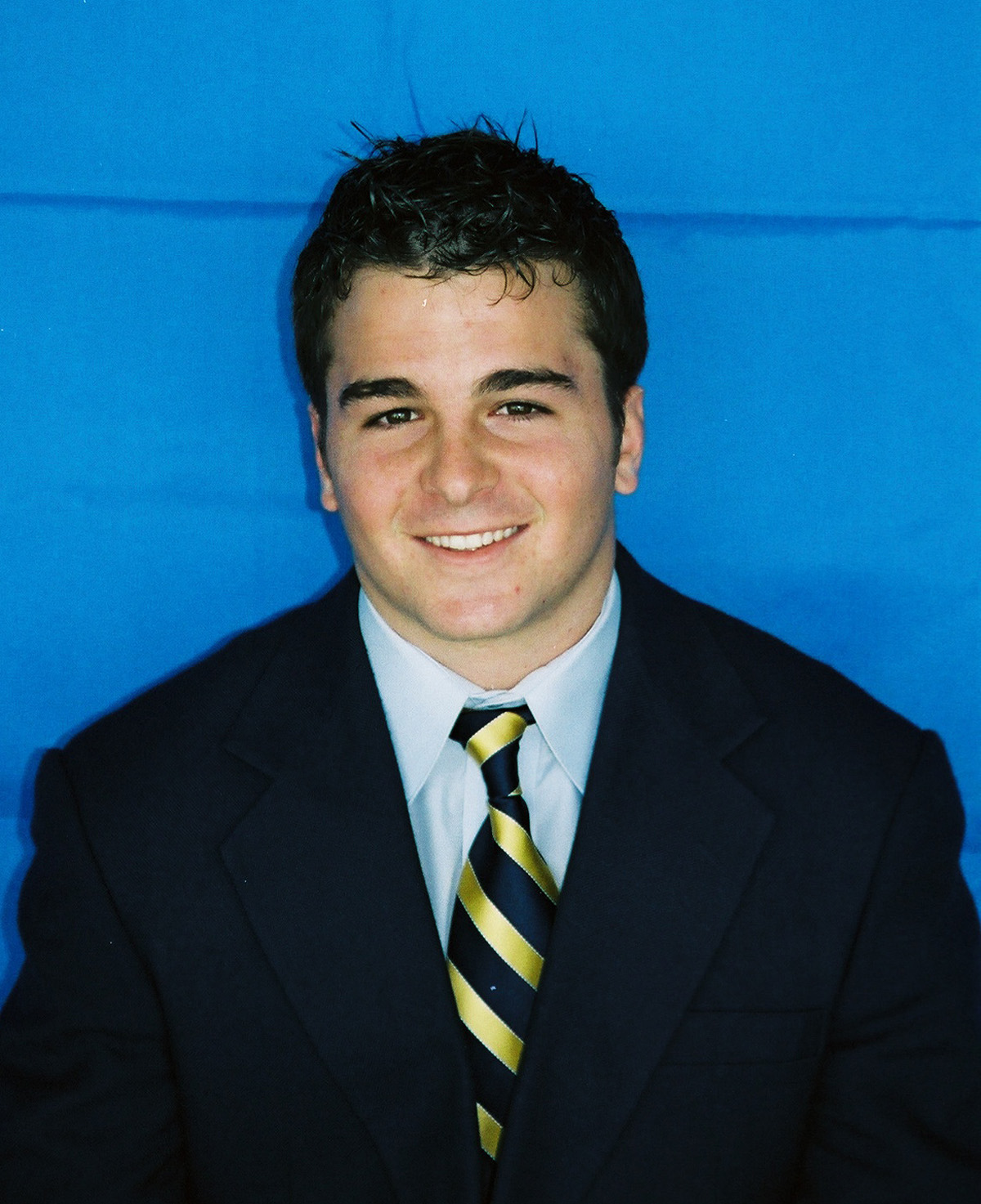
Photo courtesy of Hofstra Athletics