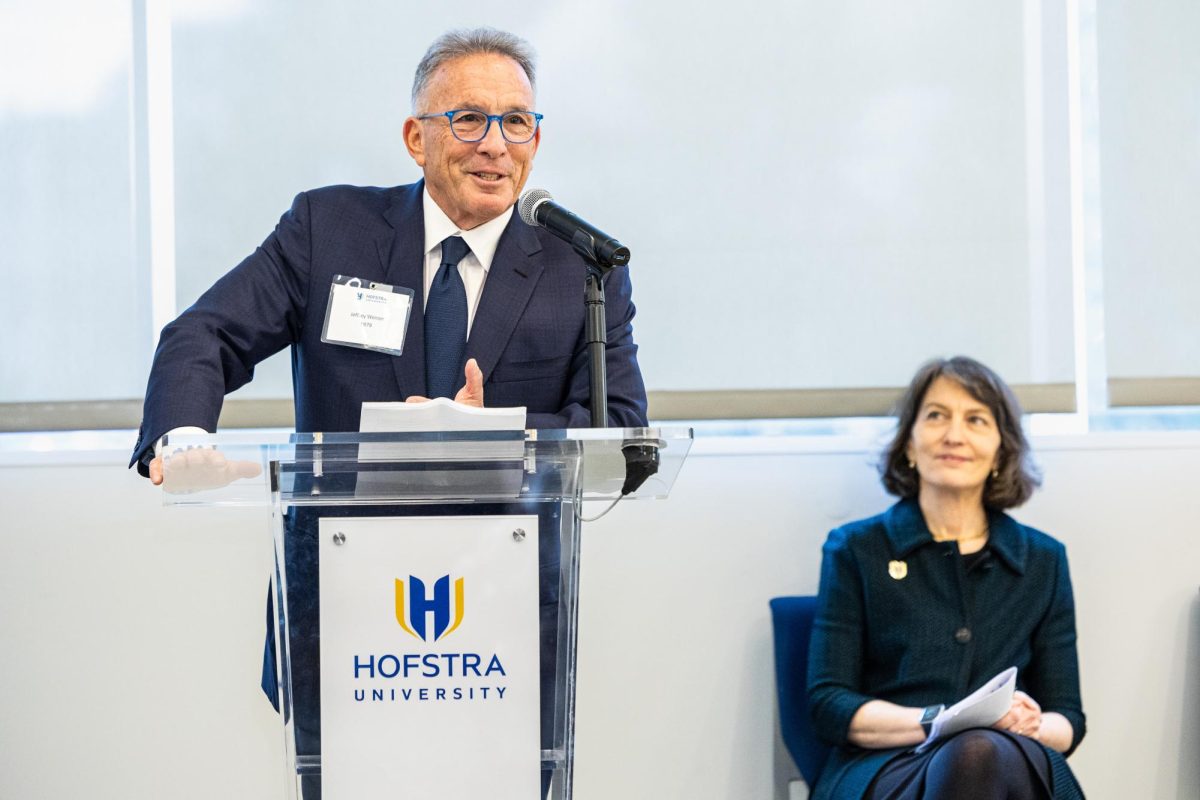
Hofstra University received a major donation from alumnus Jeffrey Weiner, who gave $5 million dollars to establish the Jeffrey M. Weiner Institute for Professional Services at the Frank G. Zarb School of Business, with an initiative aimed at preparing students for the evolving demands of the workplace.
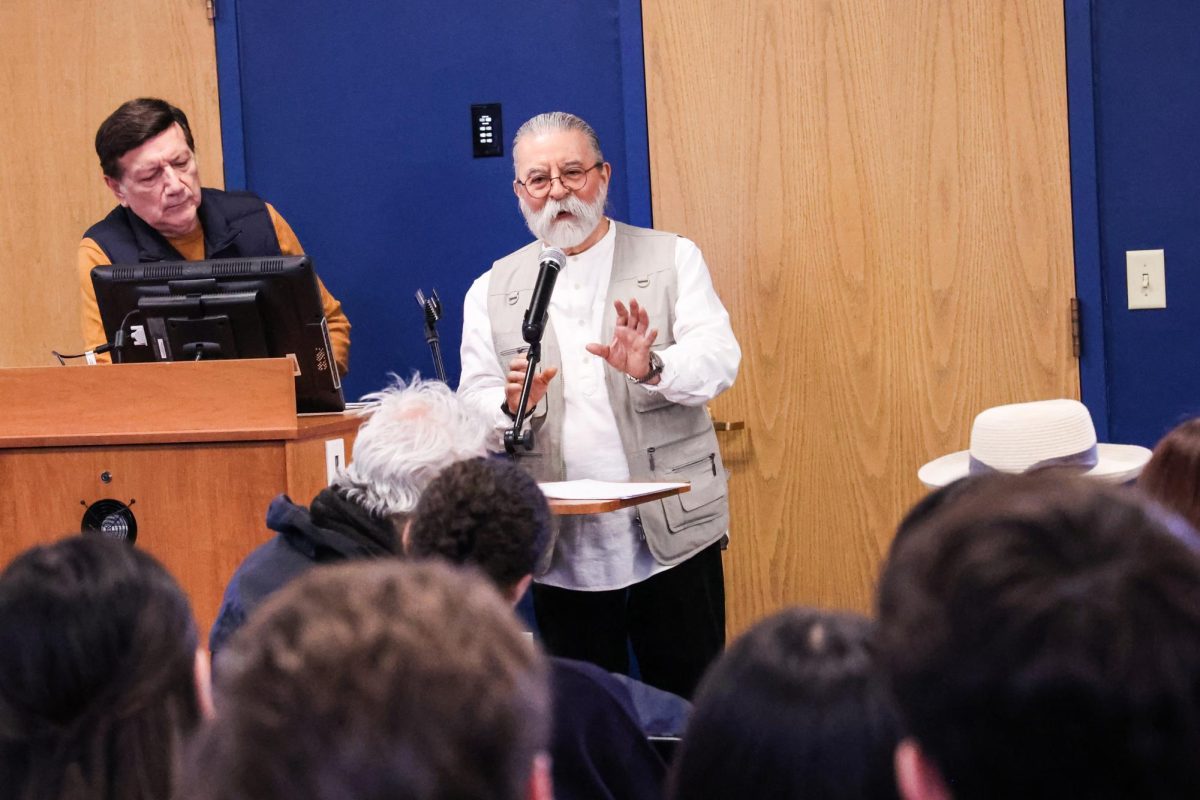
The dedication ceremony on Wednesday, March 11, opened with a speech from Hofstra’s President Susan Poser, where she emphasized the generosity of the gift and the long-term impact that it would have on students. Poser talked about how the institute represents Hofstra’s strength with alumni networks and commitment to interdisciplinary education.
The institute is funded by Weiner and his wife Tracy. It is designed to bridge the gap between academic learning and real-world professional experience. The program will integrate disciplines such as accounting, finance, technology, communications and law, tackling the challenges that students can face beyond the classroom.
Weiner, a 1979 Hofstra graduate and former chairman and chief executive officer of accounting firm Marcum LLP, reflected on his own journey and the role that Hofstra had played in the development of his career. As a first-generation college student, Weiner said that his education provided the foundation that led him to build a successful business.
“Education gives you a foundation, but there needs to be a bridge,” Weiner said. “The institute will provide that connection between what students are learning and what they’ll be doing.”
The institute will support faculty research, student scholarships and industry partnerships as well as will host an annual conference bringing together students and professional industry leaders. The key goal is to help students understand not only technical skills, but also the expectations and realities that come with these professional roles.
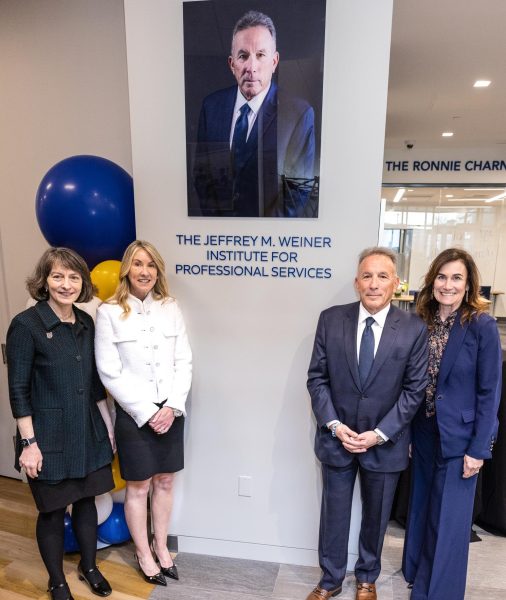
Dean Janet Lenaghan of the Zarb School of Business noted that the institute strengthens career readiness, particularly in industries that must adapt to emerging technologies like artificial intelligence (AI).
“It’s going to have a tremendous impact on how we prepare our students for the careers of tomorrow,” Lenaghan said. “What the institute is going to do is give them insights into what the profession really looks like day in and day out.”
Weiner echoed this sentiment, noting that while technology continues to evolve, it should be seen as a tool rather than a threat.
“I think AI is a tool,” Weiner said. “It’s not going to take jobs away the way people fear it will.”
Students also see the institute as an opportunity to gain hands-on experience. Sean Mullen, a student in the accounting masters program and intern for Weiner, said hands-on learning is essential in preparing for a career.
“You can learn the concepts in the classroom, but actually being faced with real-world problems is completely different,” Mullen said. “This institute is going to help students connect those two.”
Mullen looked back at his experience as an undergraduate with what he learned about being in a professional setting and how it truly made a difference.
“You’re only seeing it through textbooks or a test, but real-world problems are always going to come in different shapes,” Mullen said.
Mullen added that internships and experiential learning play a key role in understanding the profession, especially in fields like accounting where client relationships and problem-solving are critical.
“Accountants aren’t just people who sit behind a desk,” Mullen said. “We’re financial advisors, and clients rely on us to answer important questions.”
Other students at the event highlighted the importance of giving back. Maddie Stewart, a sophomore public relations major, described the donation as both impactful and inspiring.
“Generosity is such an amazing trait to have,” Stewart said. “It was an honor to be invited to this event and hear from an industry expert.”
For Weiner, the decision to give back was personal. He credited his wife with strengthening their family’s commitment to philanthropy and said he wanted the institute to create a lasting impact.
“I didn’t just want to write a check and put my name on a building,” Weiner said. “I wanted to do something that would be meaningful for students going forward.”
As Hofstra continues to expand interdisciplinary programs, university leaders believe the institute will serve as a hub for innovation, collaboration and career development.
“This is about preparing students, not just to get jobs, but to understand what those professions demand and how to succeed in them,” Lenaghan said.
*CORRECTION April 2, 2026: The article has been updated to correct the spelling of “Wiener” to “Weiner” in the online version.