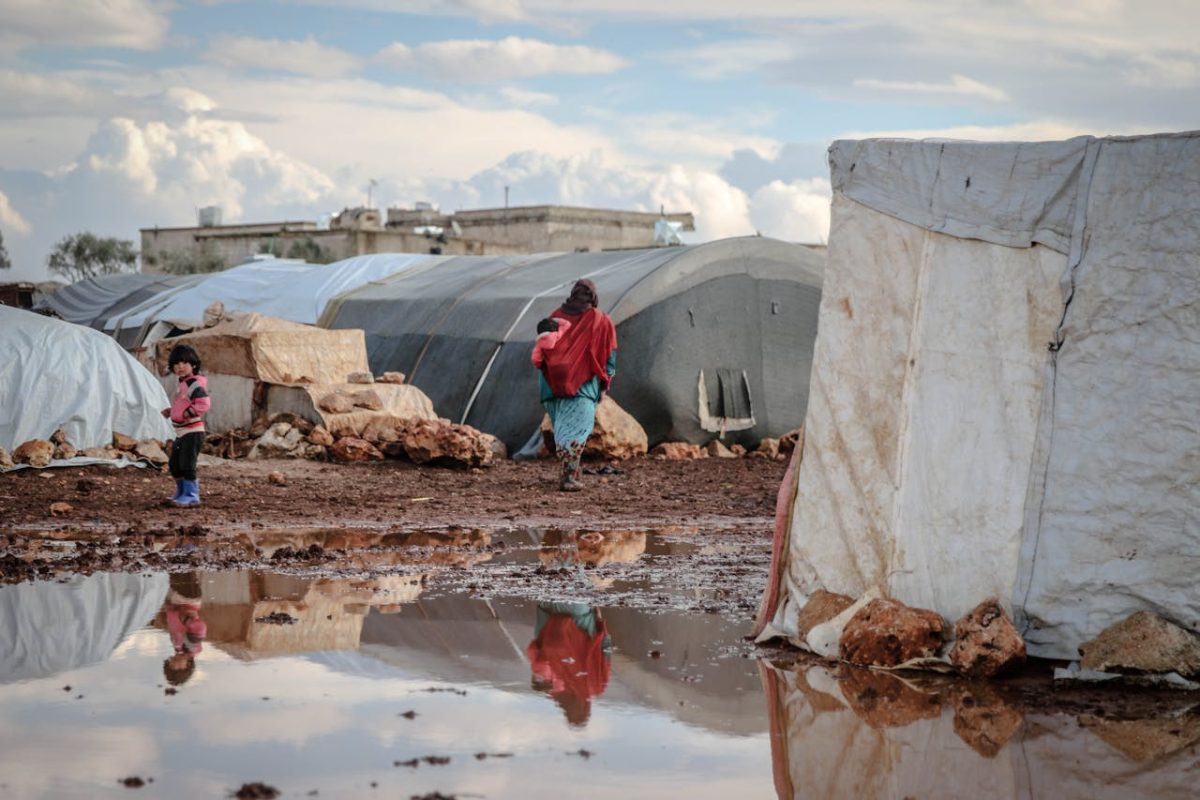

Waking up to news of another bombing led by images of destruction, lives lost and families torn apart, and then walking into my class only to overhear a conversation about the new, annoying cup lid they added at Dunkin’ creates a cognitive dissonance within me that is difficult to ignore. There is a strange disbelief in how easily attention shifts, how quickly global tragedy is replaced by everyday inconvenience and a return to normalcy. It raises an uncomfortable question: Why do some events feel so unspeakable in our daily lives while others, drastically less life-altering, dominate our conversations so effortlessly?
This disconnect reflects a deeper issue rooted not only in what we choose to talk about, but also in what we collectively avoid.
I’ve come to notice a pattern in the depth to which people feel comfortable speaking about political issues. It’s almost as if they were taboo or too uncomfortable to acknowledge to one another. Why are people who are unjustifiably dying anywhere in the world not a topic of conversation?
Unfortunately, empathy is not universally distributed but rather directed toward those who already align with one’s values and identity. Selective empathy is not a moral failure, but rather a structural feature of emotional cognition, holding its own implications in politics, media influence and public morality. It is not the fault of a person, but of a system.
According to a study by the University of Michigan Institute for Social Research, a 2011 analysis found a 40% decline in self-reported empathy among college students compared to students in the 1980s. This cannot be attributed to a single cause, but rather an overlapping of a variety of problems that coincide with one another. While one cannot blame someone for not feeling strongly for marginalized groups, it is worth questioning when people instantaneously categorize conflicts and refuse to address things with nuance. We must move beyond black and white thinking and instead begin to examine what drives our lack of obligation to speak up.
In Psychoanalytic Film Theory, Todd McGowan explains how we are part of a system derived from symbols. “Unwritten social rules” dictate what is spoken about and what is not, influencing how we interact, communicate and behave. These rules are enforced by a third entity, a force that makes us conform. If we, as a demographic of young individuals, are not taught that it is common sense to discuss global issues, then they will remain unspoken. The significance in this lies not only in what is said, but also in what is left unsaid.
Selective expression of empathy has broader social consequences that extend beyond individual behavior.
This emotional bias contributes to intergroup hatred, political polarization and double standards. Reactions to victims of war often differ based on nationality, ethnicity or religious differences that cannot be explained by media framing alone but point to deeper emotional structures. A more nuanced framework is needed to understand why empathy is directed selectively.
One way to better understand these differences is through the lens of intersectionality. Referring to how overlapping identities shape experiences, intersectionality encourages understanding individuals as products of their environments rather than viewing issues one-dimensionally. Empathy is ultimately encouraged by approaching conversations with openness and respect which allows for more meaningful dialogue and the exchange of ideas.
These ideas become even more apparent when examining real-world examples of how empathy is distributed. Moral psychology highlights the limits of empathy, especially its attention-driven nature. The viral spread of videos showing a baby monkey named Punch being mistreated drew millions of emotional responses online, while the bombing of Shajareh Tayyebeh, an all-girls elementary school in Iran that killed 120 children, received far less engagement. This contrast illustrates how our empathy is rarely guided by the severity of suffering and much more by visual appeal. People tend to be more empathetic to animals, viewing them as pure and innocent, yet they do not extend that same perception to children killed in crossfires.
We need the weight of global tragedy to once again make its way into everyday conversation. It is imperative that we protest the very conflicts that we are uncomfortable with and move to seek reform and change. Our empathy loses all meaning when selective, as its true value lies in its ability to reach beyond ourselves.