
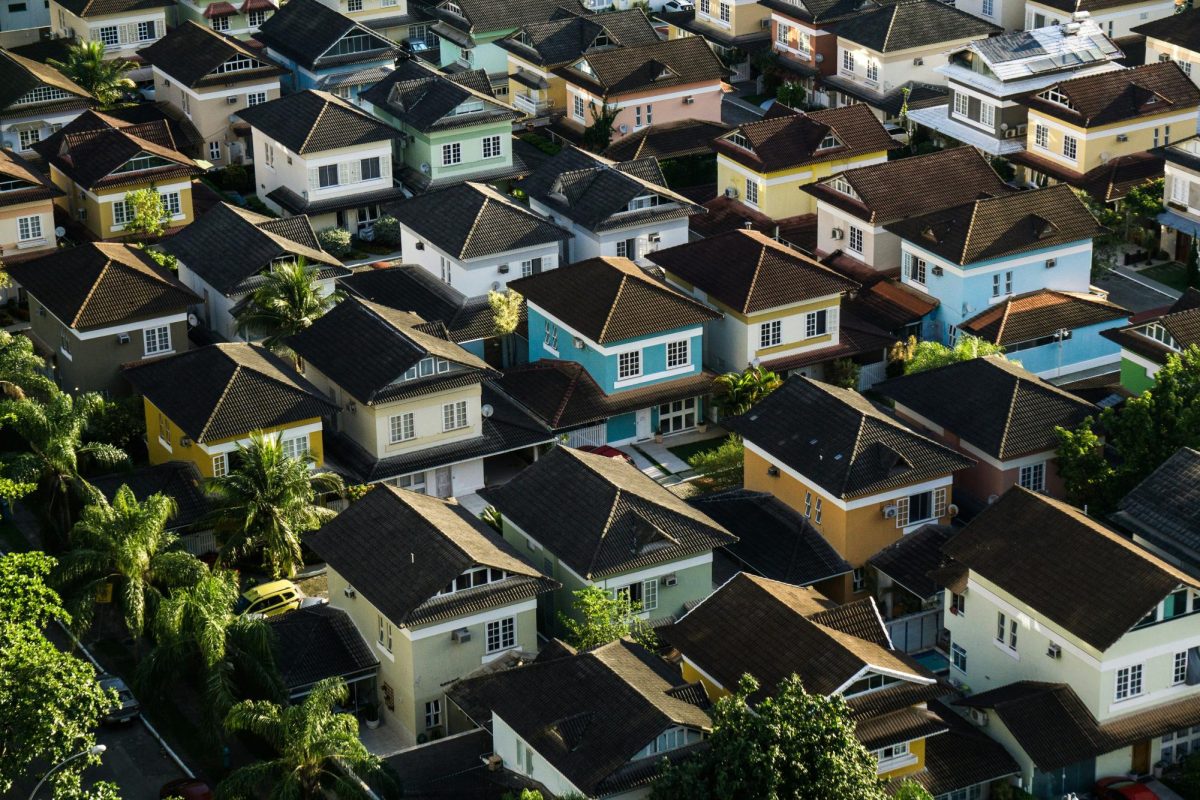
If you have lived on Long Island, you would probably agree with me when I say that it’s ridiculously expensive to live here. As someone who is currently apartment hunting, I can confidently say that the market for young renters is worse than my parents’ generation could have ever imagined.
When the Siena Research Institute surveyed Long Island residents last year, 85% of those who answered said that affordable housing was generally unavailable, with 94% of renters indicating the same. From my experience, renting a decent one-bedroom apartment near Hofstra University is going to cost around $3,000 per month if you want the luxury of a dishwasher (don’t even ask for an in-unit washer and dryer; you’d be looking for a unicorn). Let’s be honest, who has that kind of money starting out their career? Not me, and certainly not most people I know, but that line of thought made me ask myself: If living here is so undesirably expensive, how did people even end up on Long Island in the first place?
It turns out, Long Island used to be one of the best, most affordable places to live in the United States, with a standard family home in “America’s first suburb,” Levittown, costing families just $7,000 in the 1950s.
This is because Dwight Eisenhower, president at the time, saw the ease with which residents travelled while they were deployed overseas in Germany during World War II and signed the Federal Aid Highway Act when he was in office. This act began the development of safer, speedier and multi-lane highways. This meant that people could work in the cities without necessarily having to raise their families there.
The post-World War II baby boom and exodus to the suburbs increased populations on Long Island by 47%. The baby boom became a period when soldiers from World War II, who were set on living the American dream, bought progressively bigger and bigger houses to support their growing families as they headed into their middle age. With people putting down roots and jobs becoming increasingly available as a result, the economy soared.
But the tides have turned now, and I’m seeing exactly why people in my age bracket are in the economic crisis they’re in. Generation X may have been the last generation to reasonably afford Long Island. The children of baby boomers, Millennials and older Generation Z, have moved on and moved out, so it’s time for the Boomers to downsize from the mini-mansions and into cushy condominiums and apartments. The housing market for these large family homes has plummeted, and the next generations won’t be able to afford to buy them.
Unless your parents are willing to front the money for a down payment, it’s only financially possible to rent your first place. Adjusted for inflation, renting prices have increased by 17%, while incomes have declined by 2%, since the start of the 21st Century, according to the Regional Plan Association.
Curb your enthusiasm, folks. Most places expect you to show proof that you are making at least three times more than what your rent costs before the keys to the front door ever touch your hands. This is great if you have a whopping $144,000 salary right out of college; you, too, can get the keys to your very own $4,000 cushy one-bedroom apartment. Besides, 56% of renters in the United States end up paying more than the suggested 30% of their income anyway. Now, if you could point me to even one standard entry-level job that pays $144,000, consider me shocked
If you are old enough to afford a house on Long Island and you’re reading this, stop telling my generation that we’re not trying hard enough and look in the mirror at who caused these problems in the first place. And if you are in an entry-level job looking for an apartment, good luck.