
In 1951, after the devastation of World War II, the international community created the Refugee Convention with an ambitious promise: people fleeing persecution would have the right to seek protection beyond their borders. The idea was simple; no human being should be forced back into danger simply because they were born on the wrong side of a border.
More than 70 years later, that promise still exists on paper. In practice, however, the global refugee system increasingly looks like a carefully constructed contradiction. Wealthier countries publicly defend refugee rights while building systems designed to keep refugees away from their territory altogether.
We often describe the refugee system as “broken,” as though it once functioned fairly and simply stopped working. The deeper problem is more uncomfortable, for the system may be operating exactly as it was designed to. Protection exists in principle, while exclusion exists in practice.
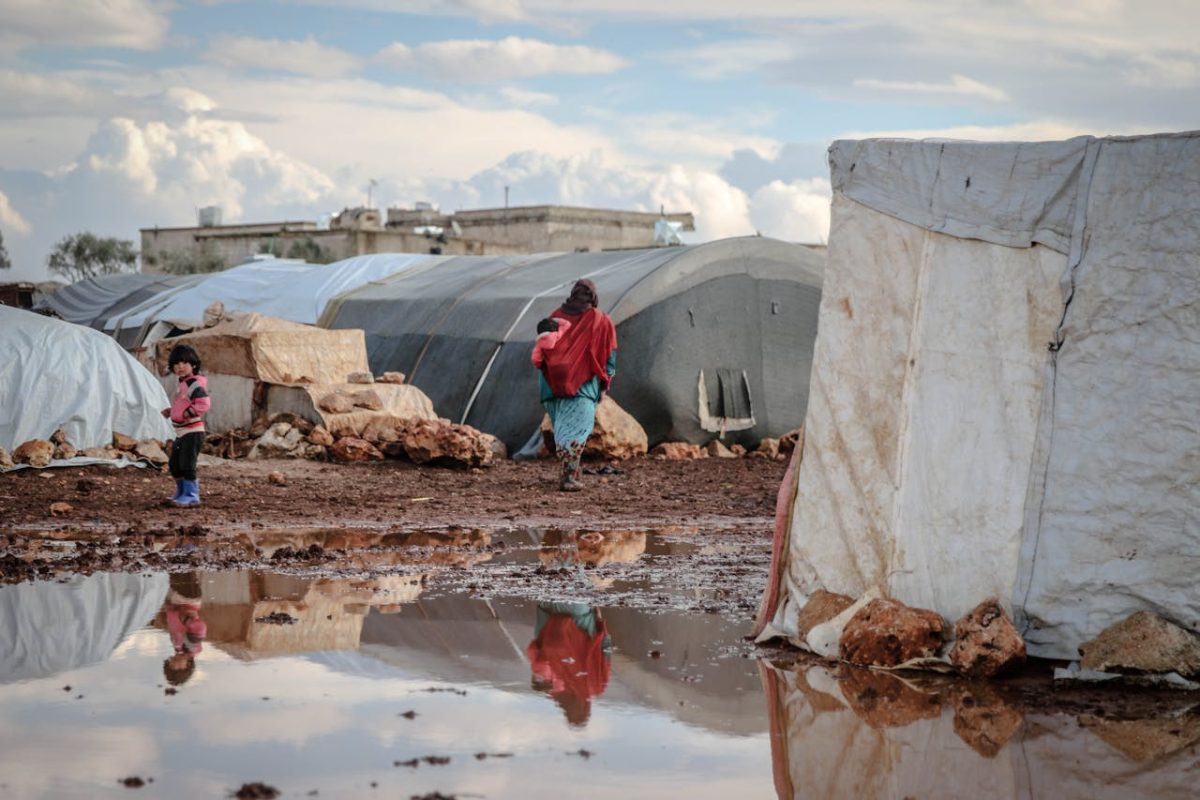
According to the United Nations High Commissioner for Refugees, more than 120 million people worldwide are currently displaced due to war, persecution and violence. Yet contrary to popular political rhetoric in Europe and North America, most refugees are not hosted by wealthy countries. Around 75% of refugees are hosted in low and middle-income countries.
Countries like Turkey, Pakistan and Uganda shoulder far greater refugee burdens than states with significantly larger economies. Meanwhile, many Western governments portray refugee arrivals as existential crises, despite taking in comparatively smaller numbers.
This imbalance is not accidental. International refugee law gives people the right to seek asylum, but it does not force countries to make achieving asylum physically possible. That loophole has become the foundation of modern refugee policy.
Wealthier states have become experts at preventing refugees from ever arriving in the first place. Instead of openly rejecting refugee protections, they outsource responsibility through offshore detention centers, third-country agreements and aggressive border enforcement.
Australia’s offshore processing system is one of the clearest examples. For years, asylum seekers attempting to reach Australia by boat were transferred to detention centers on islands like Nauru of Oceania and Manus of Papua New Guinea. The policy technically avoided directly denying asylum claims while making the process so punishing that it discouraged arrivals altogether. Human rights groups repeatedly documented poor conditions, mental health crises and indefinite detention within these facilities.
The European Union has pursued similar strategies through agreements with countries like Libya and Turkey, effectively paying neighboring states to stop migration before refugees can reach European soil. In the United States, asylum restrictions at the southern border increasingly rely on deterrence rather than protection.
Legally, these policies often exist in grey areas. Politically, however, their purpose is obvious: keep refugee obligations at a distance.
The contradiction is everywhere. Refugees are celebrated symbolically but criminalized operationally.
A person fleeing war may technically possess the legal right to seek asylum. However, if airlines face penalties for transporting undocumented passengers, if visa systems prevent legal travel and if borders are militarized long before refugees can file claims, then the “right” becomes largely theoretical.
It is difficult to claim that everyone deserves protection when the systems are designed to prevent people from reaching protection at all.
What makes this even more striking is how unevenly these policies are judged globally. When lower-income countries struggle with refugee inflows, the conversation usually centers around limited resources and humanitarian strain. When wealthy countries impose harsh deterrence policies, the conversation often shifts toward sovereignty, border security and national interest.
The same refugee is viewed differently depending on which border they arrive at.
This double standard became especially visible during the Russo-Ukrainian war. European countries moved quickly to provide temporary protections, housing and mobility rights to millions of displaced Ukrainians. Many of these responses were humane and necessary, but the speed and scale of that response also raised uncomfortable questions about why similar urgency has rarely been extended to refugees from places like Syria, Afghanistan or Sudan.
The issue is not that Ukrainians received protection. It is that the global system suddenly proved capable of compassion, flexibility and rapid coordination after years of insisting such responses were unrealistic.
Refugee debates are also shaped heavily by language. Politicians frequently describe migrants as “waves,” “floods” or “surges,” turning human beings into natural disasters. These metaphors matter because they shift public perception from humanitarian responsibility to defensive reaction. A refugee stops being seen as a person escaping violence and instead becomes a problem to contain.
At the same time, wealthier countries continue benefiting from the global inequalities that contribute to displacement in the first place. Wars, climate instability, arms trading, economic extraction and foreign intervention all play roles in forcing people from their homes. Yet the burden of hosting displaced populations falls disproportionately on countries with fewer resources and weaker infrastructure.
The refugee system does not simply fail because there are “too many refugees.” It fails because responsibility itself has been unevenly distributed.
Despite constant rhetoric about border crises, refugees are not the primary beneficiaries of the current system – states are. Governments are able to maintain the moral legitimacy of supporting human rights while politically benefiting from restrictive migration policies. The system allows both messages to coexist: compassion in speeches, exclusion in practice.
International law depends heavily on legitimacy. Its power comes from the belief that rules will apply consistently across borders. However, when powerful countries selectively interpret humanitarian obligations, international law begins to look less universal and more transactional.
This erosion has consequences far beyond migration. If human rights protections only function when politically convenient, the credibility of the broader international legal system weakens as well.
None of this means borders should not exist or that states cannot regulate migration. Countries have legitimate security concerns and limited administrative capacities. There is a difference, however, between managing migration and structurally preventing vulnerable people from accessing legal protection altogether.
Right now, the global refugee system increasingly rewards avoidance over responsibility.
If wealthy countries genuinely believe in refugee rights, then protection cannot remain something that exists only after impossible journeys, detention camps or years of legal limbo. Refugee protections must include safe pathways, fair burden-sharing and systems that treat asylum as a legal obligation rather than a political inconvenience.
Otherwise, the world will continue defending a refugee system that sounds humane in theory but functions selectively in reality. Perhaps that is the most uncomfortable truth of all: the refugee system is not collapsing under pressure; it is revealing what it was built to prioritize from the beginning.