
The place of Jewish people in the world has always been complicated. We have faced prejudice throughout written history – the Romans stripped us of our rights and worked to convert us, we were scapegoats during The Black Death and the Nazi Party killed over 6 million of us in the largest genocide in human history. Point being, to be Jewish is to stare down the barrel of over two millennia of generational trauma. We are in a unique spot: always persecuted and never in power. Well, we were never in power until the Balfour Declaration in 1917.
The question of what it means to harbor this trauma is a deeply complex one. How do we come to terms with a history of prejudice? What communities are actually safe for us? And, most importantly, how do we ensure that systemic extermination never happens to us – or to any other group – ever again?
I’d argue there are dozens of adequate and necessary responses to these questions. Some Jews, like authors and Holocaust survivors Ellie Wiesel, Viktor Frankl or Primo Levi, used their stories to educate about the Holocaust. Others, like politicians Bernie Sanders or Brad Lander, place themselves in government positions to ensure we have a voice in policymaking. And thousands more use their voices every day to combat antisemitism. Now, that’s all well and good, but the real question is: where does Israel fall in all of this?
Israel is a complex country. Of all the answers to the generational trauma question, it is certainly among the least nuanced and most separated from our history. Because of what we have gone through, as Jewish people, we have a responsibility to our community and the world to be the first and loudest whistleblowers whenever there is a chance – no matter how big or small – that genocide would be on the table. So, it is unthinkable that a state founded by British colonial declaration, established through the horrors of the Nakba and sustained via nearly a century of violence would claim to be our homeland.
Israel – a state whose flag proudly features the Star of David – is committing a genocide against Palestinians. Backed up by Amnesty International, the United Nations Human Rights Office and the International Association of Genocide Scholars, this is an indisputable fact.
There is very little vagueness here, yet we artificially graft complexity onto this conflict. Have Jewish people lacked a homeland for our entire history? Yes. Have we been on the receiving end of violence for our entire history? Also, yes. However, neither of those things justifies using violence to strip another group of their homeland.
The point here is that we’ve taken the complexity of Jewish people’s place in the world and conflated that with the simplicity of whether giving us a homeland justifies Israel’s actions.
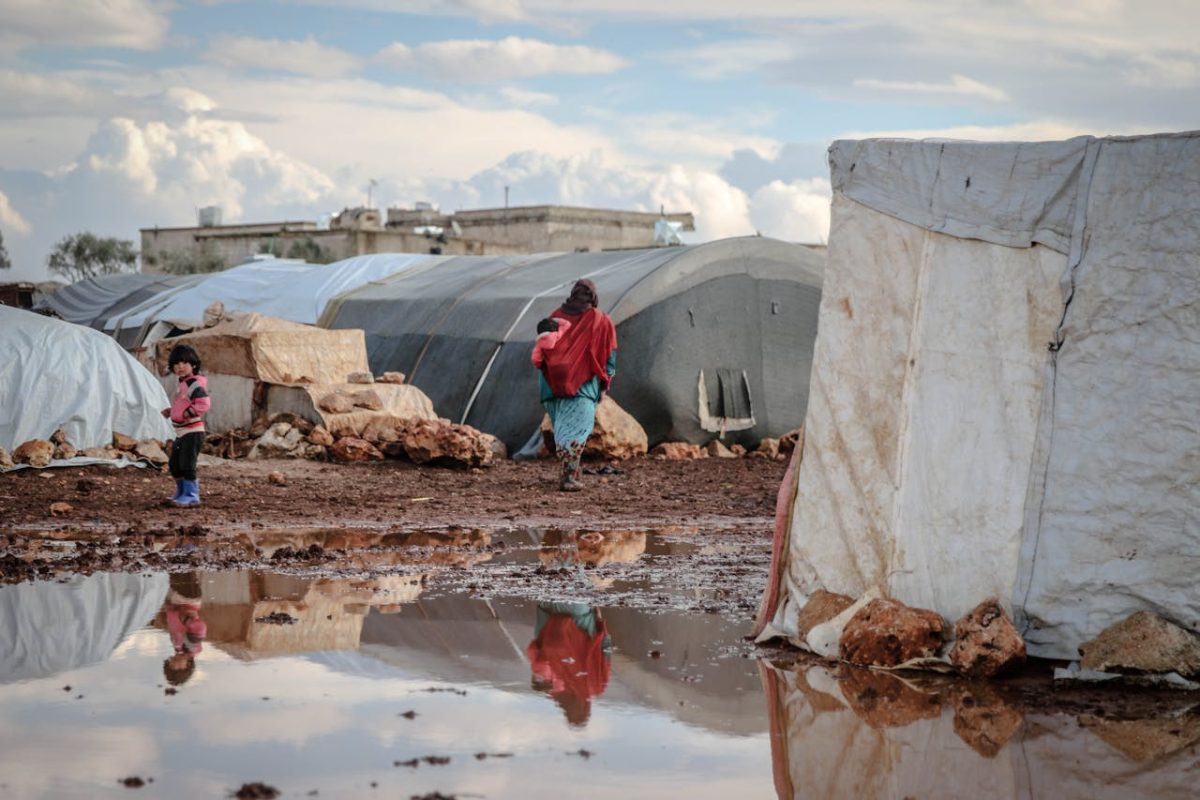
The fallout of this conflation has been disastrous as shown by the inability of the United States to lead an adequate relief initiative or enforce the ceasefire it helped broker this October. Although there is no exact death toll for this war, some estimates indicate that, since Oct. 7, 2023, over 100,000 Palestinians have died, and dozens more perish each day under Israel’s government.
This means that an unthinkable number of people have died because we have accepted that the Jewish homeland must be in Palestine, and we have wrongfully accepted that the actions taken by Israel to establish that homeland are justified by the antisemitism Jews face and have faced. The issue is cut and dry, really: Israel is committing a genocide against Palestinians, and that must end. The complexity of our generational trauma does not project complexity onto Israel’s actions here.
What it means to be Jewish in the 21st century is complicated. You stare down the barrel of millennia of generational trauma, navigate rising antisemitism and bear a responsibility to your community – Jewish or not – to prevent systemic discrimination. You must recognize that that complexity and your reactions to it can be far more nuanced than advocating for a homeland. And certainly, don’t let that complexity be a justification for a state that, while it may have nothing to do with you, is committing a genocide.