
With the upcoming expiration of the current Collective Bargaining Agreement (CBA) on the horizon in 2027, the MLB will soon be faced with an important question regarding the way the league operates: Is it time for a salary cap?
The owners seem to think so, citing competitive imbalance and how every other major sports league in the country has a salary cap. The Major League Baseball Players Association could not disagree more, threatening to strike if the idea of a cap is brought up during CBA negotiations.
Those “in the know” seem to agree on one thing: if a cap is pitched, it is not a question of if there will be a lockout in 2027, but rather “how long will it last?” When it comes to this particular argument, I must side with the players. A salary cap will not magically fix all of baseball’s problems.
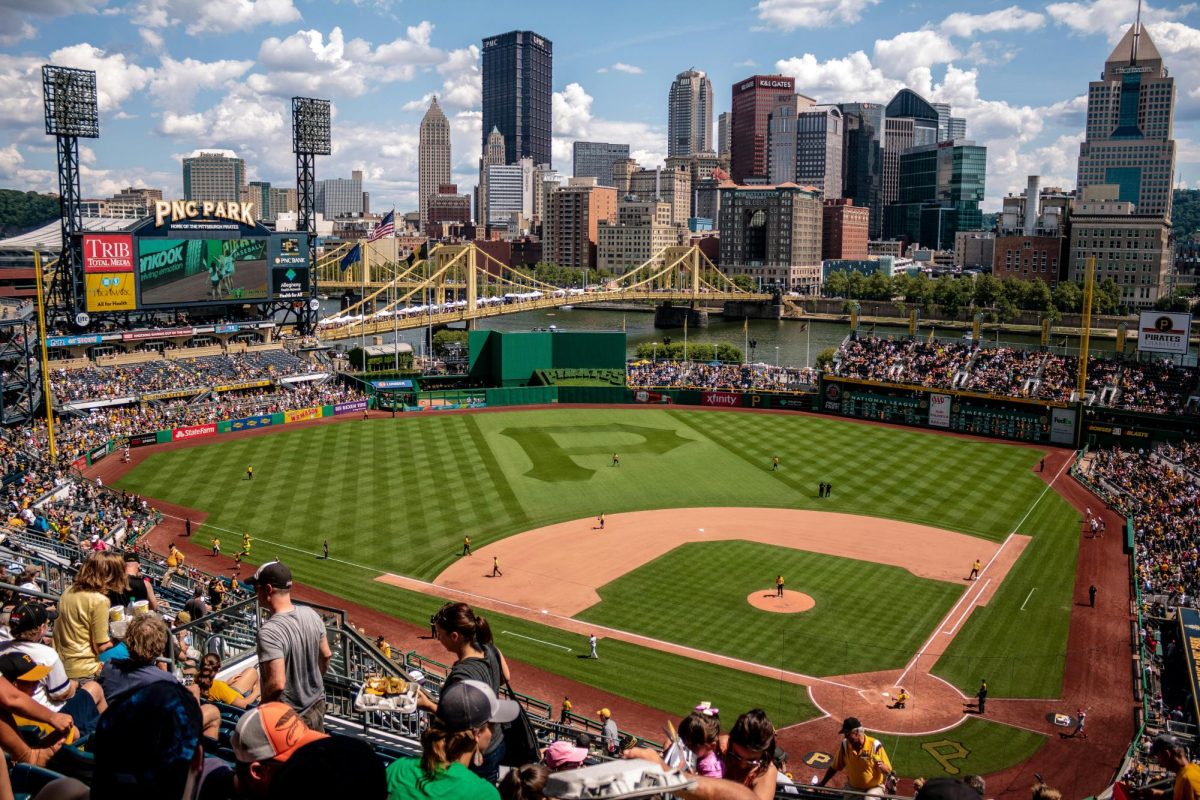
To start, the idea of there being a competitive imbalance in baseball based on spending is not unfounded. On the surface, it would seem that the Pittsburgh Pirates and the $84 million they spent on their payroll in 2025 is almost laughable compared to the over $350 million spent by the Los Angeles Dodgers.
However, it is hard to feel bad for the Pirates when their owner, Bob Nutting, is a billionaire who actively refuses to spend money on improving his baseball team. Who is really at fault for the Pirates being irrelevant: the Dodgers spending as much as they do or Nutting’s largest free agent acquisition being Francisco Liriano in 2013? I understand the comparison is not apples to apples, but let’s not pretend a salary cap would convince some owners to start caring suddenly.
Speaking of the Dodgers, many in favor of a cap cite the Dodgers as the sole reason for needing one. They have indeed won back-to-back championships while sporting a top three payroll in the sport for both years, and they seem to have infinite money to spend on whoever the top free agent available is.
The Dodgers may spend more than anyone else, but that has historically not been directly responsible for winning. As a matter of fact, their winning back-to-back World Series in 2024 and 2025 is the first time MLB has had a repeat champion since the New York Yankees won three in a row from 1998-2000. For a league in a state where some believe that “buying championships” is possible, it doesn’t seem to ring true. Additionally, the New York Mets, who spent more than anyone besides the Dodgers in 2025, did not even make the playoffs. If success were solely dependent on spending, how would you explain their failures?
For 2025, in particular, the Dodgers’ ride to a second consecutive title was not without its bumps in the road. They had a middling record – for their standards, at least – at 93-69 during the regular season, which forced them to play in a Wild Card Series. It also took them seven games and late-game heroics from two unassuming players to barely edge out the Toronto Blue Jays in the decisive Game 7 of the World Series. To act like their path to baseball immortality was smooth sailing would be disingenuous.
There is also the point of market size that plays a factor in every free agent’s decision. A salary cap would not change the fact that some players just want to play in Los Angeles, New York or some other big-time market. This problem seeps its way into sports that feature a salary cap as well. If I named all the star players that somehow managed to find themselves playing for the Los Angeles Lakers, we would be here all day.
A salary cap would be a negative for MLB, especially if the players are willing to lose the entire 2027 season over it. Though there is a problem with spending imbalance in baseball, a cap would not be the proper resolution.