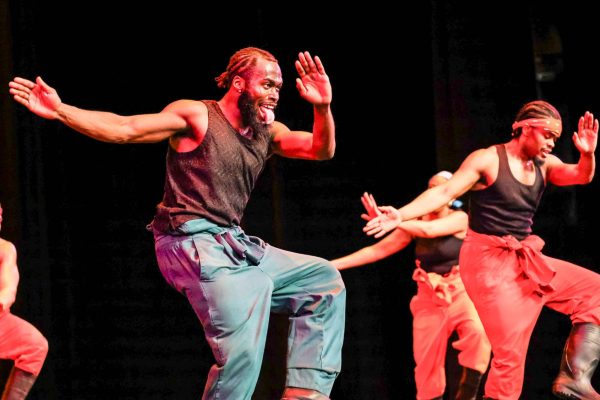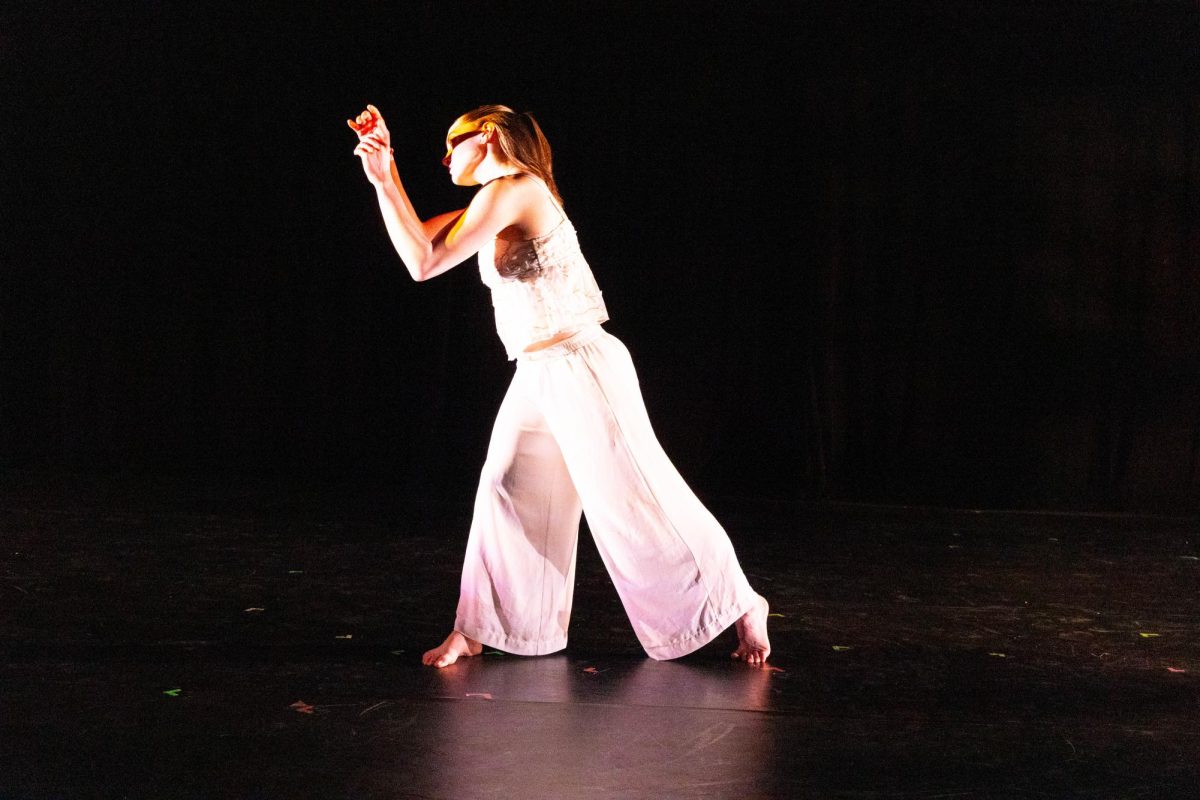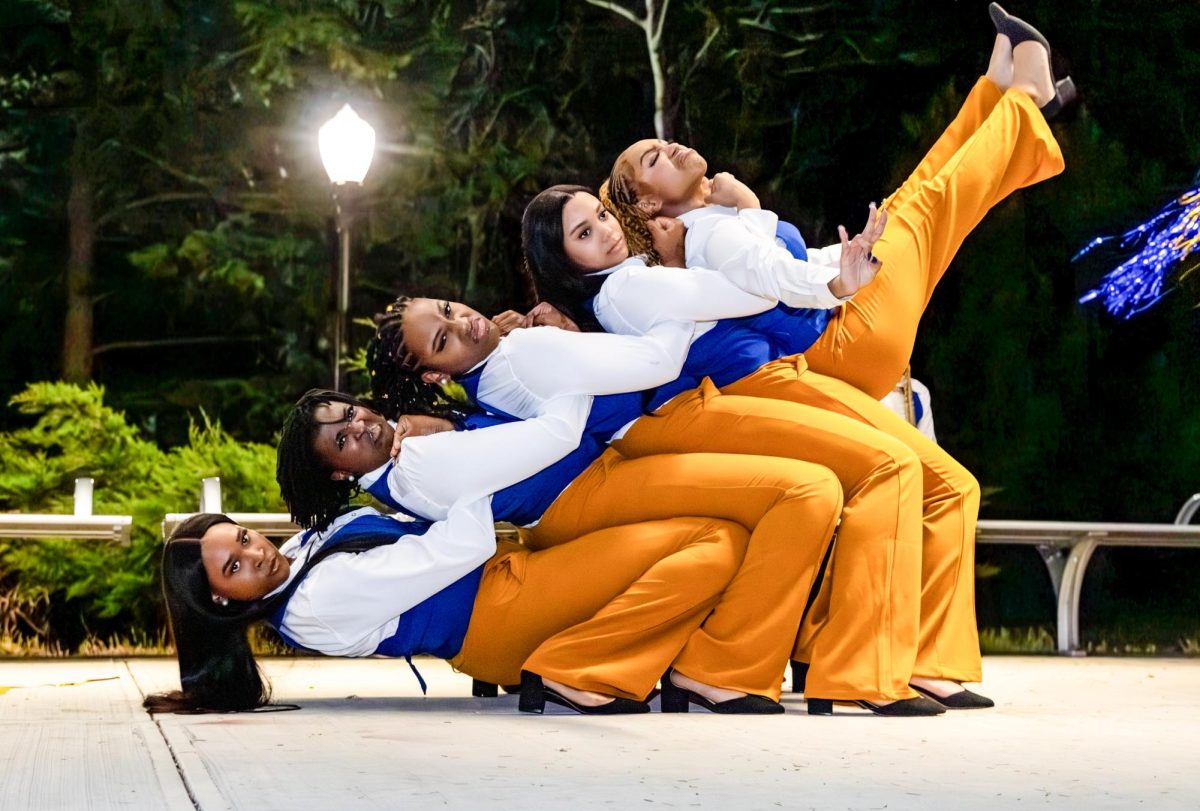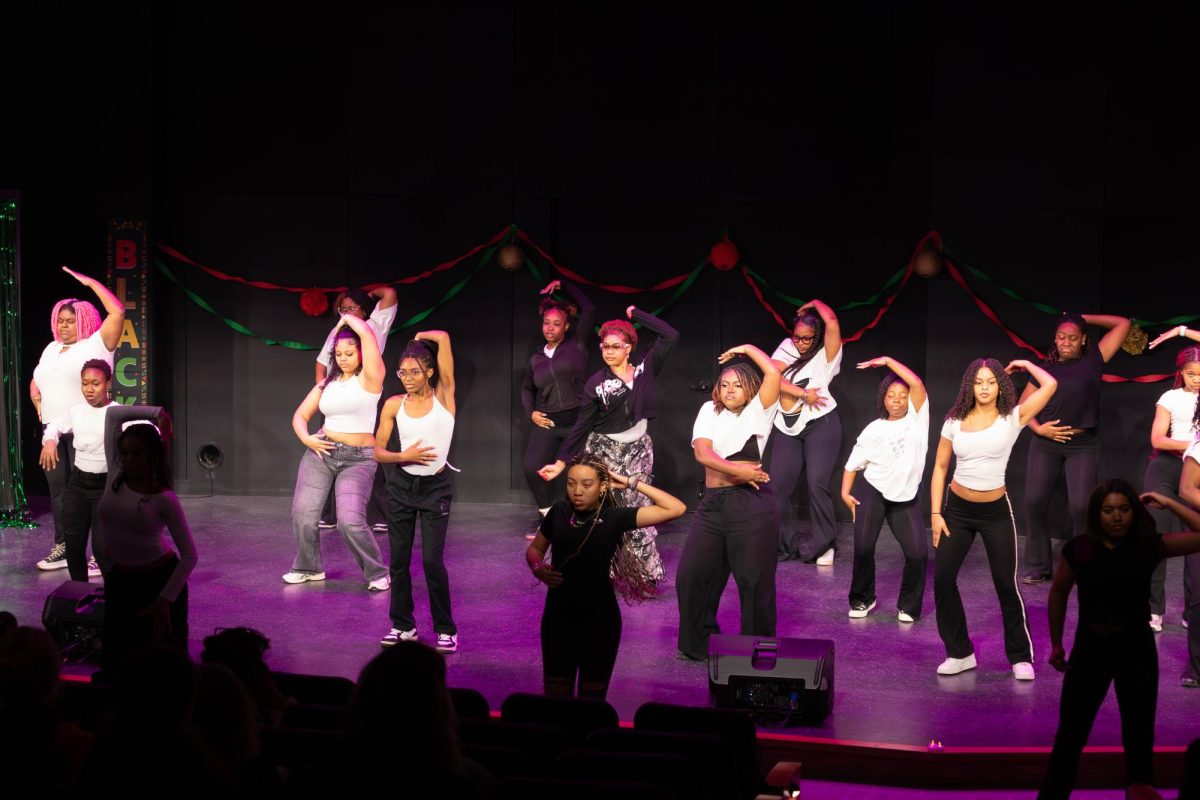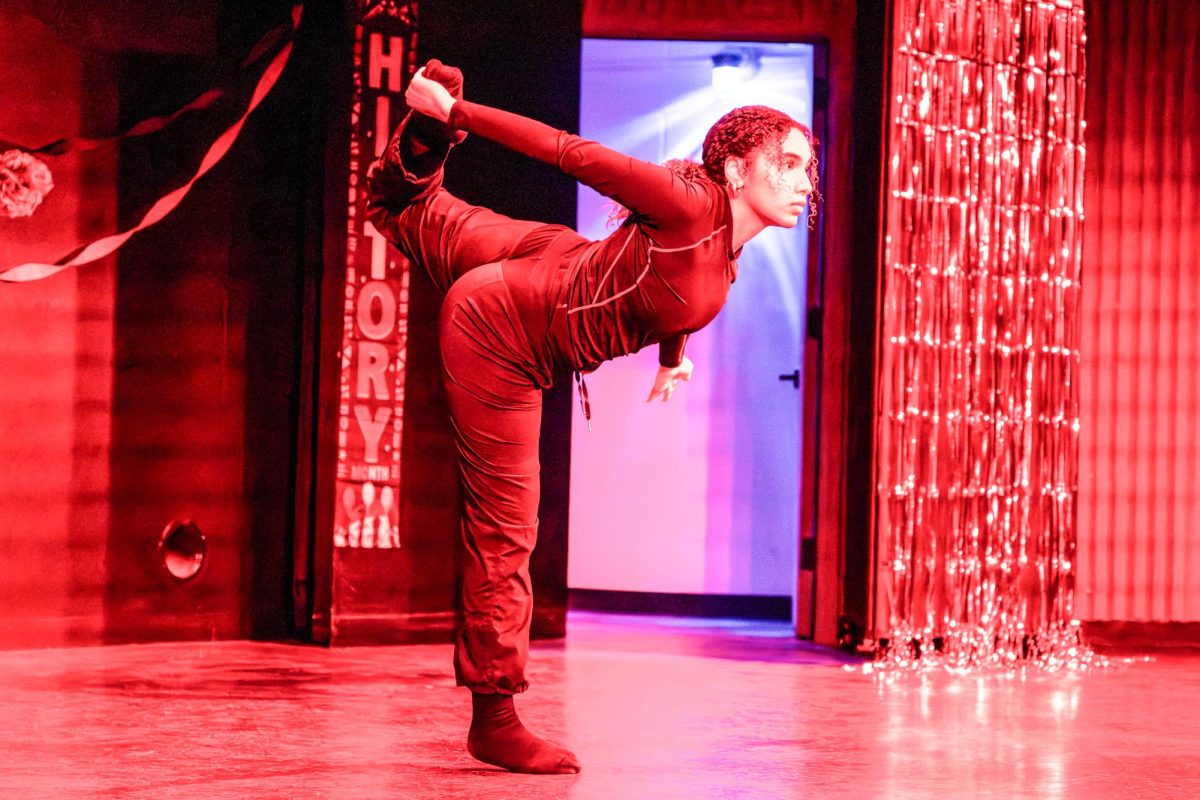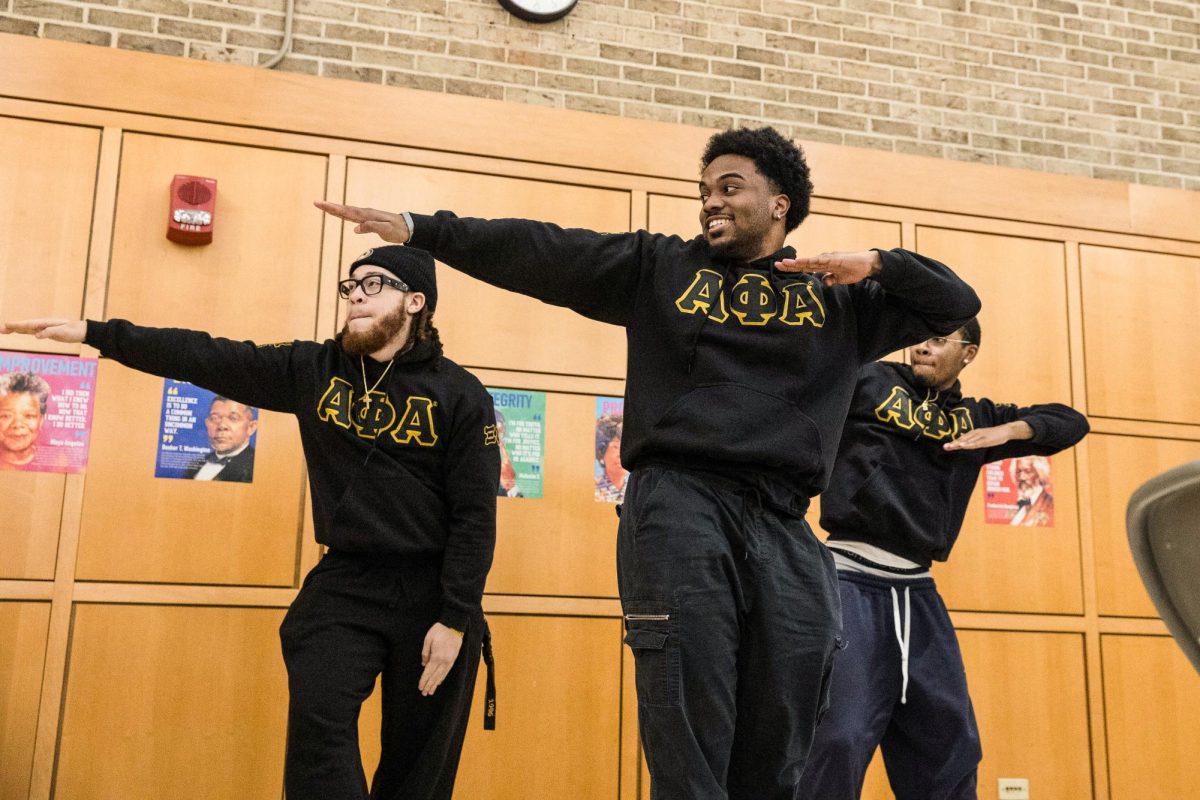

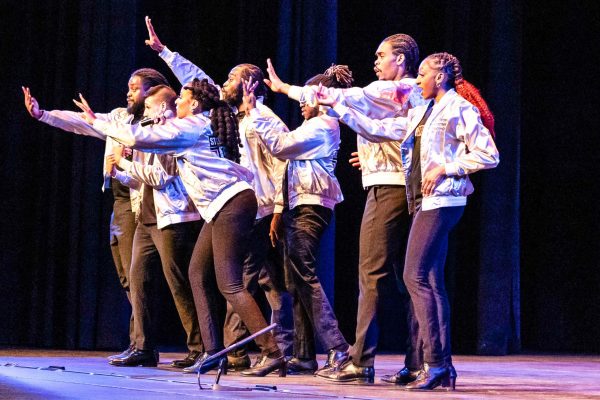
To kick off Black History Month, “stepping” group Step Afrika! engaged Hofstra University students with a high energy, percussive dance performance on Sunday, Feb. 8, at the John Cranford Adams Playhouse. While the event was free, attendees were encouraged to bring non-perishable food items to go toward the Hofstra Pantry and the Mary Brennan INN Soup Kitchen.
The 90-minute-performance involved guest participation, something that has been a part of the step tradition since the 1990s. Members of the audience were invited to clap, stomp and cheer with the performers on stage.
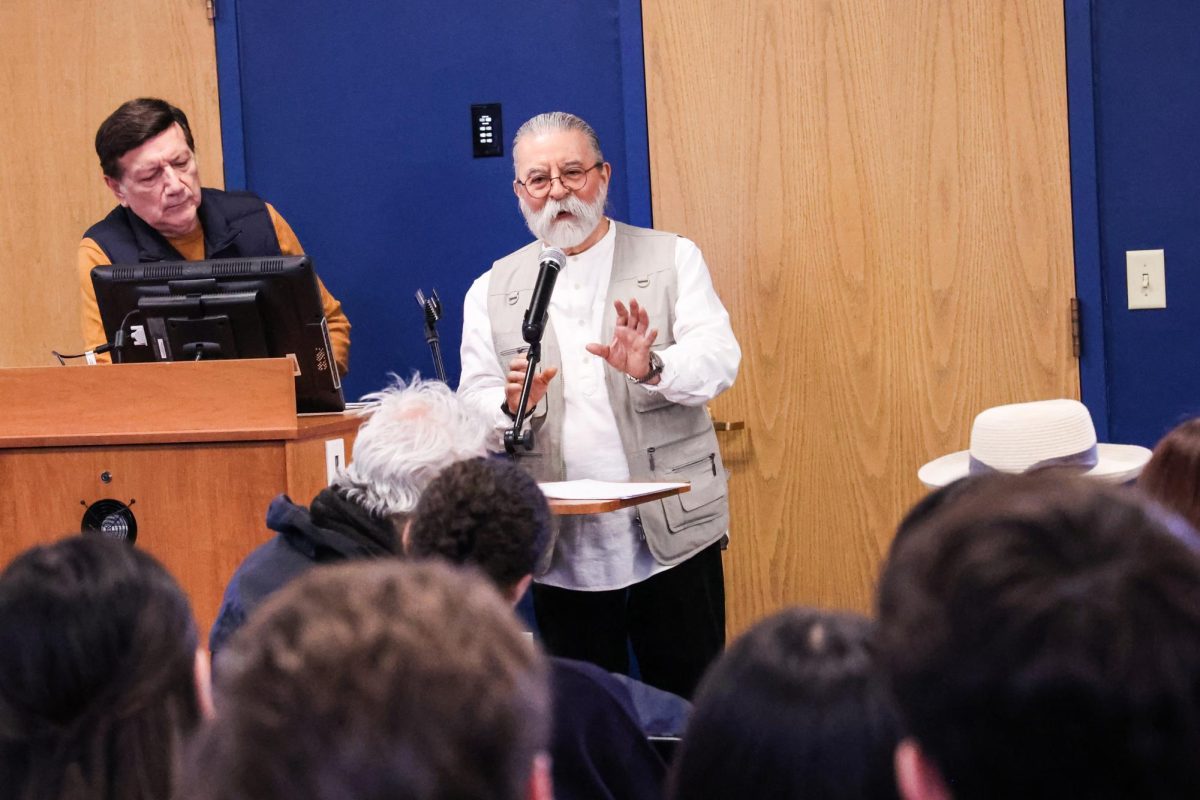
Anthony Collins, executive director of Hofstra’s Cultural Center (HCC), inaugurated the event by thanking the staff involved, along with telling a brief history of stepping and Step Afrika!
“Stepping was created by African American fraternities and sororities and today is celebrated by thousands upon thousands. Since its inception in 1994, Step Afrika!’s mission has been to establish, preserve and extend the most dynamic dance form,” Collins said.

Stepping focuses on pride, love and respect that is derived from community. To highlight that, members of Step Afrika! regularly engaged with the audience, asking them to make as much noise as possible when they enjoyed specific parts of the performance.
Each segment of stepping was followed by jokes and history from the members of Step Afrika!
Before the gumboot dance, a story about African workers and how they used boots and stomping to communicate with each other in the mines was shared. Step Afrika! told the crowd they were fortunate enough to travel back to South Africa and work with the Soweto Dance Theater to perfect their gumboot dance skills.
Third year member of Step Afrika!, Jerod Coleman, highlighted the importance of sharing culture, specifically through dance.
“We want to spread knowledge of this art form and how it’s connected to basically the world. So, it’s so similar to the South African Gumboot dance that you see in the show, it opens your mind to what other percussive art forms [there are] that are similar, but have never come into contact with each other,” Coleman said. “So, it’s like a full cultural exchange from top to bottom.”
Step Afrika! members travel around the world performing and spend long hours practicing and perfecting the dances and movements.
“Every day, for the most part when we’re back at home in Washington D.C., we rehearse from 10 a.m. to 5 p.m.,” Coleman said. “When we’re on the road, hours vary from: ‘We need to wake up at 2 a.m. to rehearse real quick,’ or we wake up and we space when we get to the
place.”
Many members from Step Afrika! come from Black Greek organizations. Joseph Vasquez, a member of Lambda Sigma Upsilon Latino Fraternity, Inc. at Rutgers University, became a member of Step Afrika! four years ago and tours around the world.
“There’s something about doing the college shows that kind of gives like a family-oriented space,” Vasquez said. “[Sometimes], we get to bring people up on stage and be in people’s faces, so that’s the fun part. That’s what’s different about this show.”
A huge segment of the performance involved several volunteers joining the dancers on stage. Vasquez highlighted the importance of feeling liberated.
“Being comfortable with being uncomfortable, just being okay with being loud, being okay with talking, getting loud and speaking up. It should be fun. Life is so difficult at times, you just gotta scream,” Vasquez said.
HCC continues to host events oriented towards Black History Month.
“We look at our office as a classroom without boards. It’s our responsibility as a university, not only to educate our students, but also to share what we’re doing here on campus with the community,” Collins said.