
At a community listening session for Hofstra University’s Frameworks of Community class on Feb. 11, Hofstra students and faculty listened to ongoing concerns and conversations from community members of Hempstead and Uniondale. The discussion included discourse on the Immigration and Customs Enforcement (ICE) and United States Customs and Border Protection (CBP).
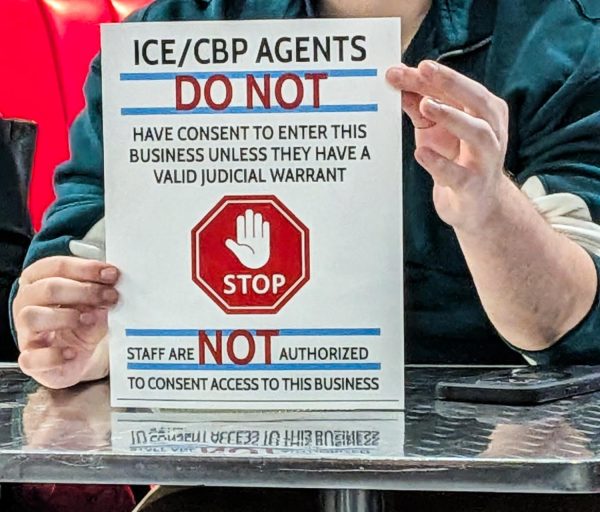
Community member and local business owner Nelson Hernandez attended the meeting. He spoke of signs he had made to provide to local businesses, which read “ICE/CBP Agents do not have consent to enter this business unless they have a valid judicial warrant.” Additionally, the poster noted, “Staff are not authorized to consent access to this business.”
“We have a big role as a business community to get involved with what’s going on because, especially [within] Hempstead communities right now, I talked to at least 50 businesses in Hempstead and they’re going through so much pain,” Hernandez said.
Businesses throughout the area have seen significant losses, especially as of late. Hernandez approached businesses in several streets, offering them signs and speaking with them about the losses they have faced.
“I took a few streets, and I went [into] every single one of [the businesses]. There were some delis, restaurants, multi-services, clothing stores [and] phone stores … Especially one of them that mentioned to me that they had two stores, one on Main Street and the other one right by Home Depot. They said that both of those stores, they used to be very busy, and after this situation with ICE, their business dropped like 60%,” Hernandez said.
As of earlier this year, Nassau County has engaged in assisting ICE. Under the 287(g) agreement, ICE Enforcement and Removal Operations is allowed to partner with state, local and tribal law enforcement agencies.
This means law enforcement officers are allowed to “perform specified immigration officer functions under ICE’s direction and oversight.”
“The business community needs to become very conscious and aware of becoming involved in the political arena [and] in understanding what’s going on, how it’s going to be affecting us deeply if we’re not speaking about the real issues and contacting electing officials,” Hernandez said.
Signs are not the only way that the local business community is fighting back. Many businesses in the Hempstead and Uniondale area have banded together to create a louder and more noticeable voice through engaging with officials like Laura Gillen, U.S. representative for New York’s 4th Congressional District and former town supervisor for the Town of Hempstead.
“There might be a meeting that we’re gonna have with [Gillen]. We’ve been looking to meet with these elected officials and put some pressure [on them],” Hernandez said.
Hernandez expressed getting in contact with Gillen, as well as Tom Suozzi, representative for New York’s 3rd Congressional District. Currently, Hernandez is looking to press the issue of ICE in a meeting supposed to take place on Thursday, March 5.
“The message that we are conveying is to have passion, some love for communities and understanding that what [ICE is] doing is going to affect everybody at some point,” Hernandez said.
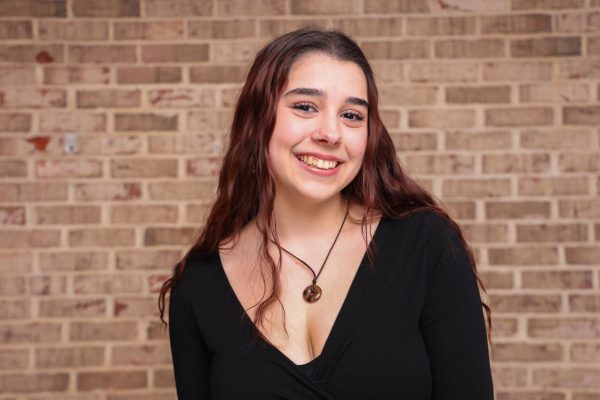
Graduate journalism student Annie Siddique attended the community listening session.
“It was really interesting and heartbreaking, honestly, to see what’s going on in the community,” Siddique said. “It’s like we hear these things on the news but to see it at such a large level – how involved community members are to protect their people – it’s really moving, touching [and] shocking.”
Siddique went on to highlight the importance of both community and student involvement during times like these, emphasizing the crucial role of student journalism.
“I think community and student involvement in this situation is so important because students are basically the future right now and it’s up to us to do the right thing,” Siddique said. “Then within students, there are student journalists also and it’s our duty to report on the truth.”
Hernandez believes the events in Minneapolis, Minnesota, are a prime example of conveying a message, one that is important in the protest against ICE.
“I believe we need to convey to all humanity, that understanding [of] what happened in Minneapolis, how people stood up against ICE, the crimes that they committed, they’ve been committing,” Hernandez said. “I believe that’s the way that we need to convey those messages. [If we unify], we’ll be able to overcome this crime that [ICE is] creating in our communities.”
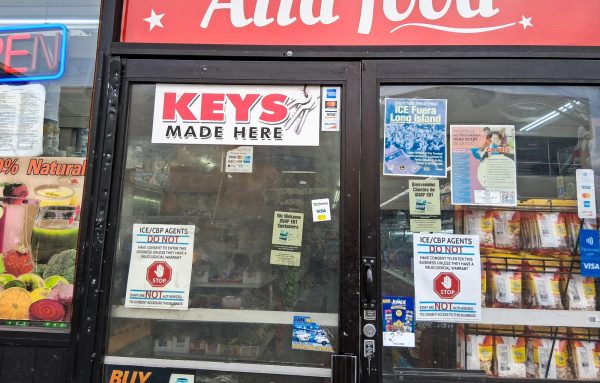
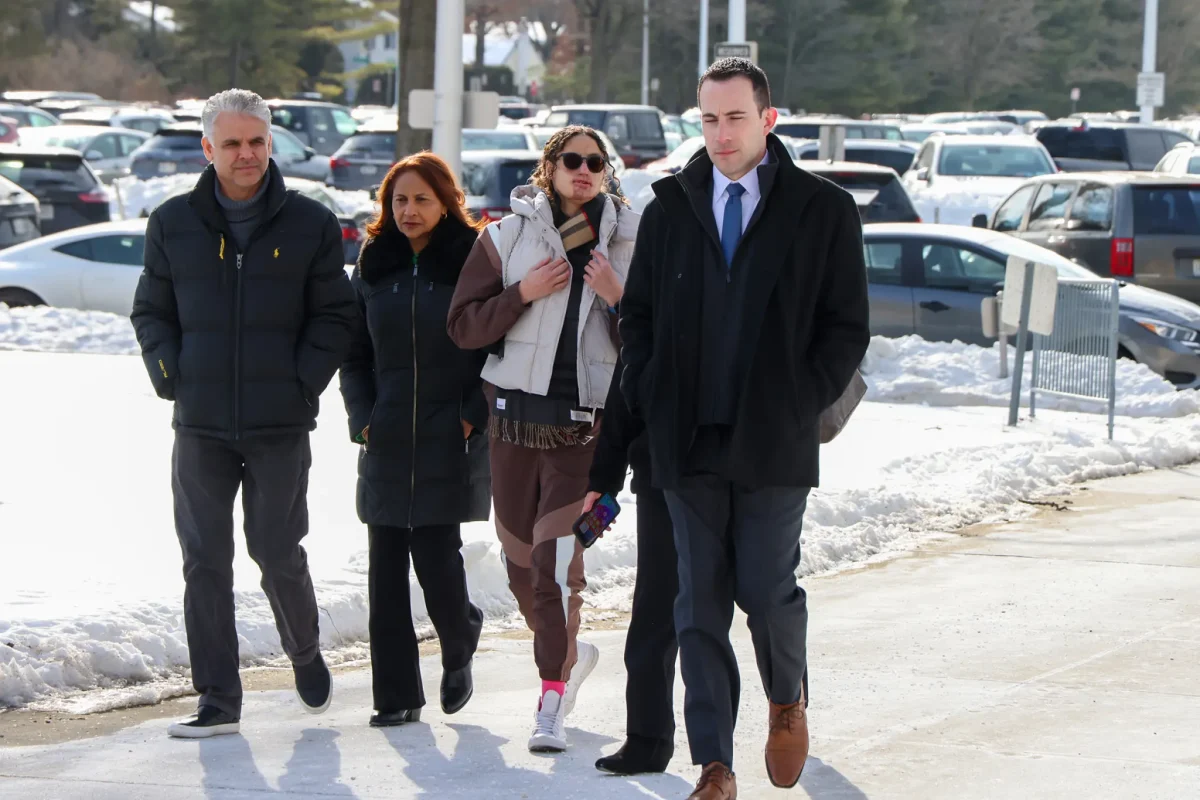
*CORRECTION March 3, 2026: The printed version of this article misattributed the first photo. The photo is courtesy of Nelson Hernandez.
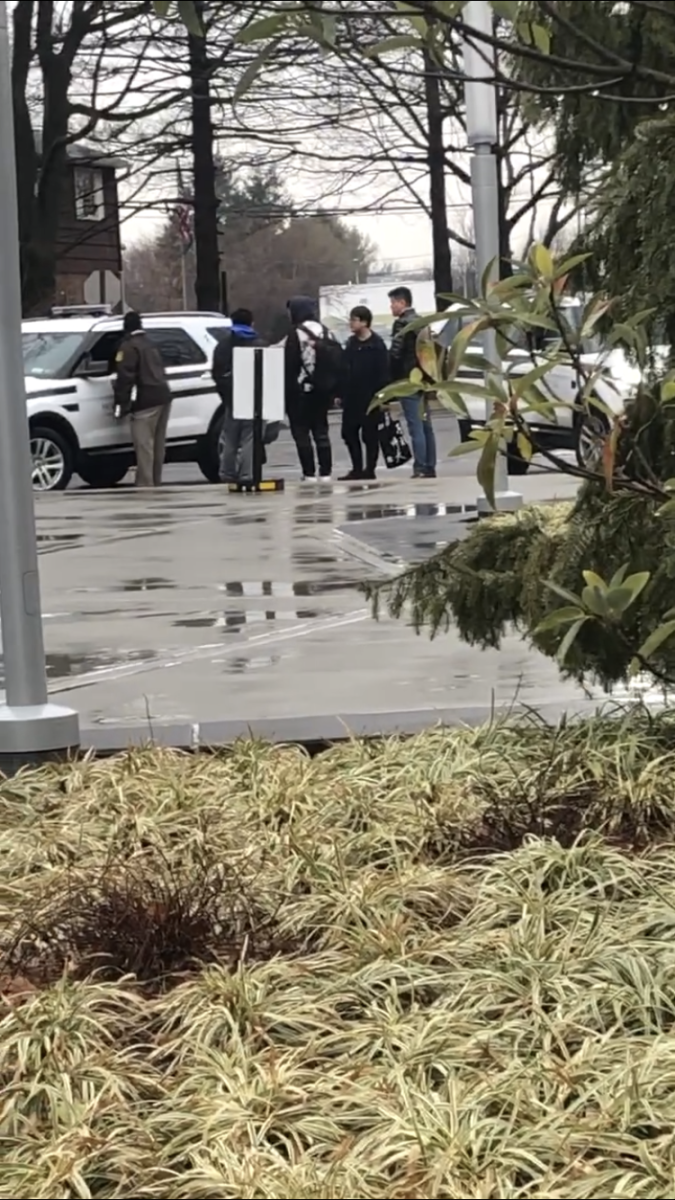
*CORRECTION March 4, 2026: The printed version of this article misattributed the second photo of the Anti-ICE sign. The photo is courtesy of Kumba Jagne.