On March 23, Hofstra University junior and computer science major Devin Peters uploaded a post on the anonymous forum application Fizz. The post, which received 1.4k upvotes and several reposts by other concerned students, showcased a video of a crow exhibiting odd behavior. It indicates a larger issue of seasonal avian influenza, more commonly known as avian flu or bird flu, especially considering that there is a spike in cases this year.
Avian flu is a contagious infection known to be present in wild birds and poultry. Although human cases are rare, the disease can spread to humans if they come into contact with an infected animal.
Donna Willenbrock, executive director of Student Health provided a statement on the issue of “bird flu” on campus.
“Earlier this semester, two dead birds found on campus tested positive for avian flu,” Willenbrock said.
The Fizz post included a video of a crow acting strangely with the caption, “Genuinely terrifying … I keep seeing infected crows do this for a few minutes and then suddenly die.”
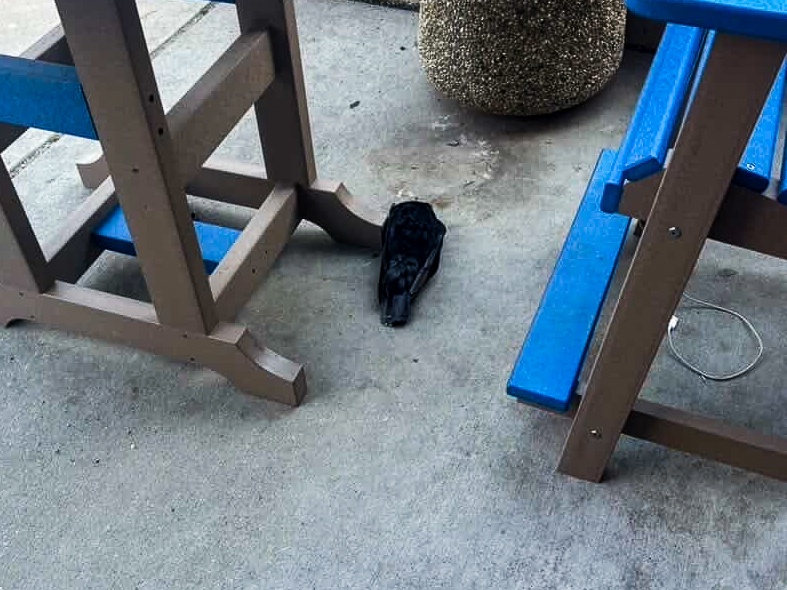
Peters documented his sightings with videos and pictures of birds’ corpses found scattered around trees and near outdoor furniture near Hofstra’s residential towers on North Campus.
“I took that video in the parking lot behind Constitution Hall,” Peters said. “A few hours later, I saw three dead crows – one on the ground outside of Constitution and two on the grass between the towers.”
Peters reached out to campus Public Safety to inform them of the several deceased bird sightings.
“I called the non-emergency line about it,” Peters said. “They said they’d send someone over and left it at that.”
The sightings of ill birds on campus are a part of a larger issue known to rise during the winter months – the avian flu. According to an article published by Mongabay, “Scientists and local wildlife rehabilitators in New York City have reported a sharp uptick in suspected avian influenza cases this past winter.”
Director for Community Engagement, Special Project and Campus Transportation Jovanni Ortiz said that the department was made aware of the issue and had taken proper measures to handle the situation.
“They did have the Department of Environmental Conservation come to campus to examine those birds, and they kind of take it from there,” Ortiz said. “It moves on from public safety. I want to say Student Enrollment, Engagement and Success put out a notice about avoiding touching any sick or dead birds because of the possibility of bird flu.”
While there has been no official public announcement put out, Willenbrock provided a statement on the issue.
“Human infections of avian flu are rare and the risk to the Hofstra community is very low,” Willenbrock said. “Practicing basic health precautions will support the safety of our campus and ensure the well-being of others.”
Some students criticized the lack of a campus announcement.
“Hofstra hasn’t made an official announcement about the dead birds on campus,” Peters said. “I’m aware of at least one instance of a well-meaning person handling a dying bird because they didn’t know it was sick. And with students unaware of the risk that avian flu poses to humans, the growing number of dead and dying birds at Hofstra will likely lead to an increase in these situations.”
One of these well-meaning students is Veronica Leinenbach, a sophomore psychology major, who wasn’t aware of bird flu and wanted to help an ill crow on campus.
“I was on my way to class, and I was passing the hitchhiker statue when I saw a crow hobbling around like it was hurt or something,” Leinenbach said. “I was scared it would waddle into the road and get hit so I crouched and gave it the opportunity to either run away from me or approach. He approached me, so I took my jacket off and grabbed him with that. I called my [boyfriend] and told him I had a crow that had something wrong with him, and he immediately started calling all the available wildlife rescues asking for help and advice.”
After searching for a place to take the bird, Leinenbach spoke to a bird rehabber. After several hours of waiting, the clinic euthanized the bird due to the severity of the flu. Leinenbach visited the health center after several others had told her to do so.
Public safety advised, “if you see [an infected bird], you can call and report it, but you shouldn’t touch it or pick it up or anything like that.”