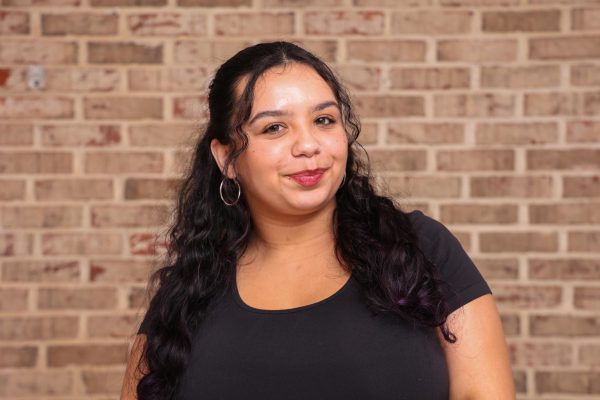
Hofstra University held a special conference to celebrate the achievement of Resa Nelson, a senior biology major, on Friday, Nov. 14. Nelson was awarded the Rhodes Scholarship for her research on seaweed, cells and T-cells, combined with her deep commitment to community service work.
The Rhodes Scholarship is an extremely competitive scholarship that awards students two years of postgraduate study at the University of Oxford in the United Kingdom to continue their education and research. One hundred six awards were given this year from 25 countries around the world.
Nelson is from St. Peter, Antigua, and she is a representative chosen from the Commonwealth Caribbean. She is only the second person from Antigua to win the Rhodes Scholarship, with the first person to win it being 24 years ago.
Nelson originally entered Hofstra planning to go to medical school, but the university’s early research opportunities shifted her direction.
“A lot of schools don’t take freshmen, and they’re not necessarily focused on undergrad research,” Nelson said. “But at Hofstra, everybody has to do research. I just happened to start mine early, and that was really influential.”
Nelson’s early lab experience opened the door for other research opportunities granted at other universities.
“That’s where the travel came in,” Nelson said. “I had the opportunity to go to North Carolina and to California. Had I not started off at Hofstra, I wouldn’t have known I liked research or had the beginning skills to even apply to these programs.”
Nelson shared information about her research on how plant material becomes renewable energy.
“We have this really complicated plant matter that isn’t easily digestible,” Nelson said. “So, we’re using a community of bacteria that’s really good at breaking down the big seaweed into smaller things. Biofuels should be one of those byproducts. We have some strains that are particularly good at it. We’re trying to catch them now.”
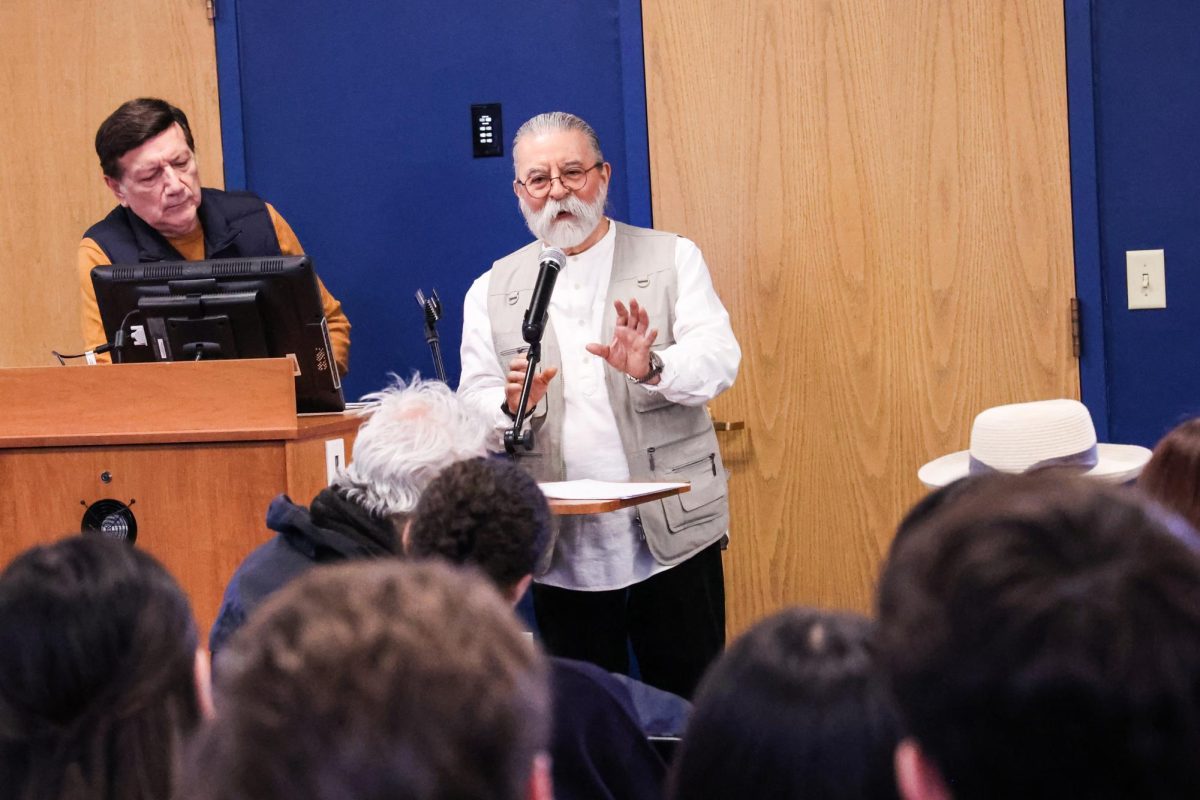
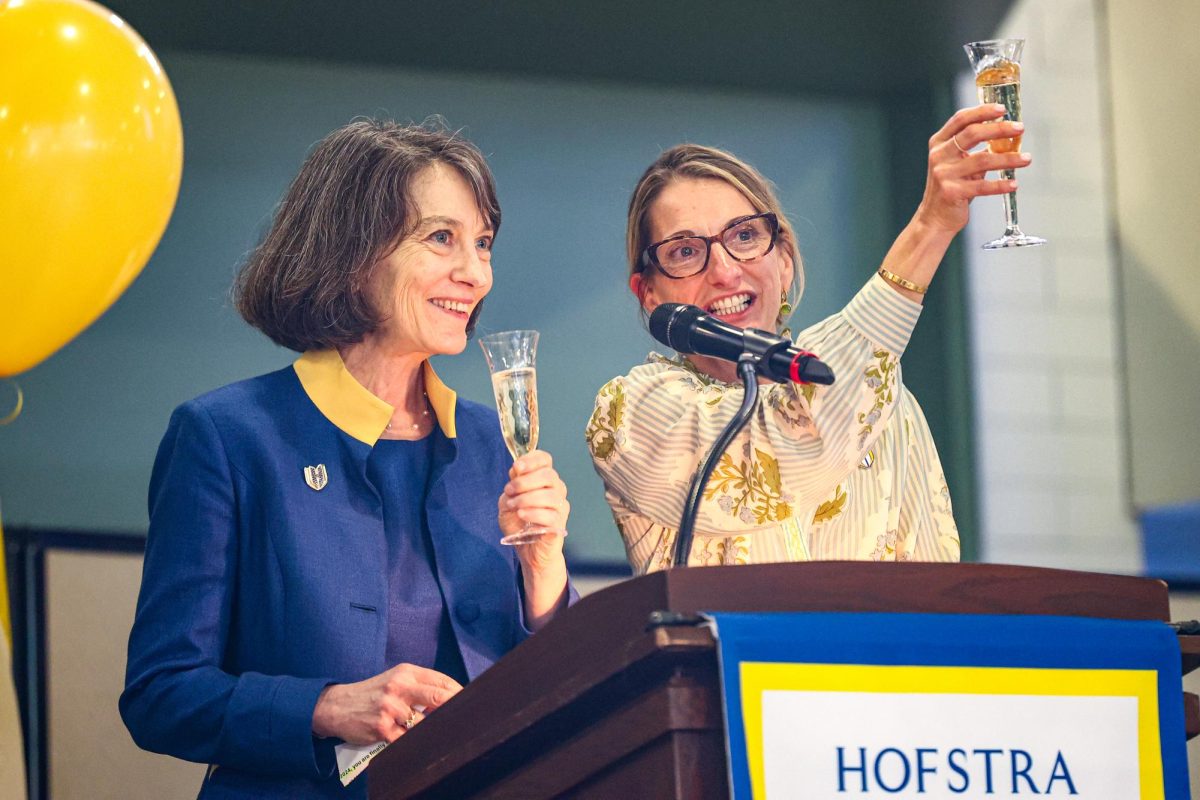
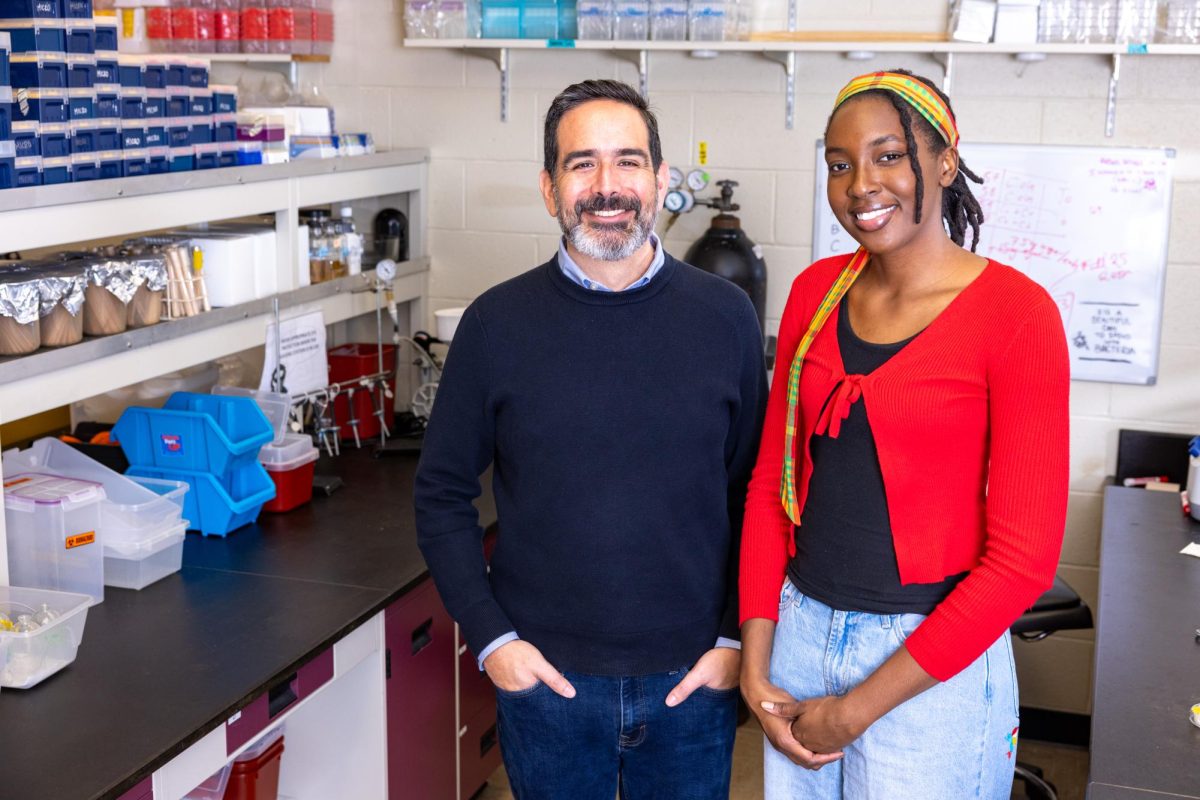
Hofstra celebrated her accomplishment with a press conference. In attendance, in addition to the media, was Professor Javier Izquierdo, who has been working with Nelson on her seaweed research.
“She’s not just academically strong,” Izquierdo said. “She has also done a lot of service and a lot of important things for the Hofstra community. All of that comes together in the package that is [Nelson], and that is what made her a fantastic candidate for the Rhodes.”
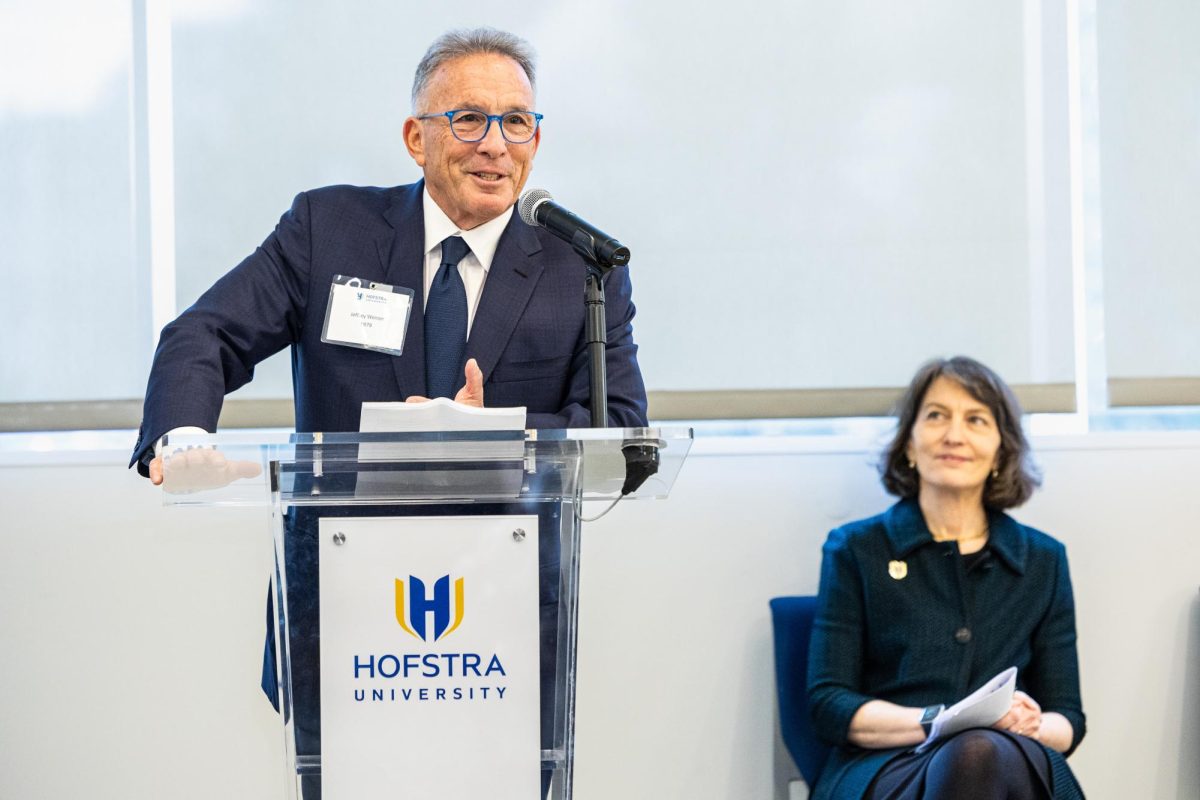
President Susan Poser also attended. She delivered a speech highlighting the work Nelson has done.
“I am absolutely delighted that Hofstra has its first Rhodes Scholar,” Poser said. “And I congratulate [Nelson] on this momentous achievement. Identifying and supporting students for national and international prestige awards is one of the implementation steps of Hofstra 100 – the university’s new strategic plan – and I thank Provost Charlie Riordan and Associate Provost for Academic Support and Global Initiatives Suzanne Pike for their work in supporting students in pursuit of these awards.”
Nelson highlighted that it is not just her work in academic spaces that fuels her passion, but also her service work with communities.
“For the past two years I’ve volunteered at a middle school, working one-on-one with students,” Nelson said. “Seeing how they changed the way they viewed academics – going from discouraged to engaged – was amazing.”
She also mentioned how she helped make a game about cells and genes.
“Cells and genes are hard for anyone to understand, even college students,” Nelson said. “But through the game, these middle schoolers were having fun and answering the questions right.”
As she prepares to begin her post-graduate studies at Oxford, Nelson said she hopes her research will bring real benefits to the Caribbean and inspire young scientists from her region.
“My work is not just for ‘funsies,’” Nelson said. “There are people back home who I want to benefit from what I do.”