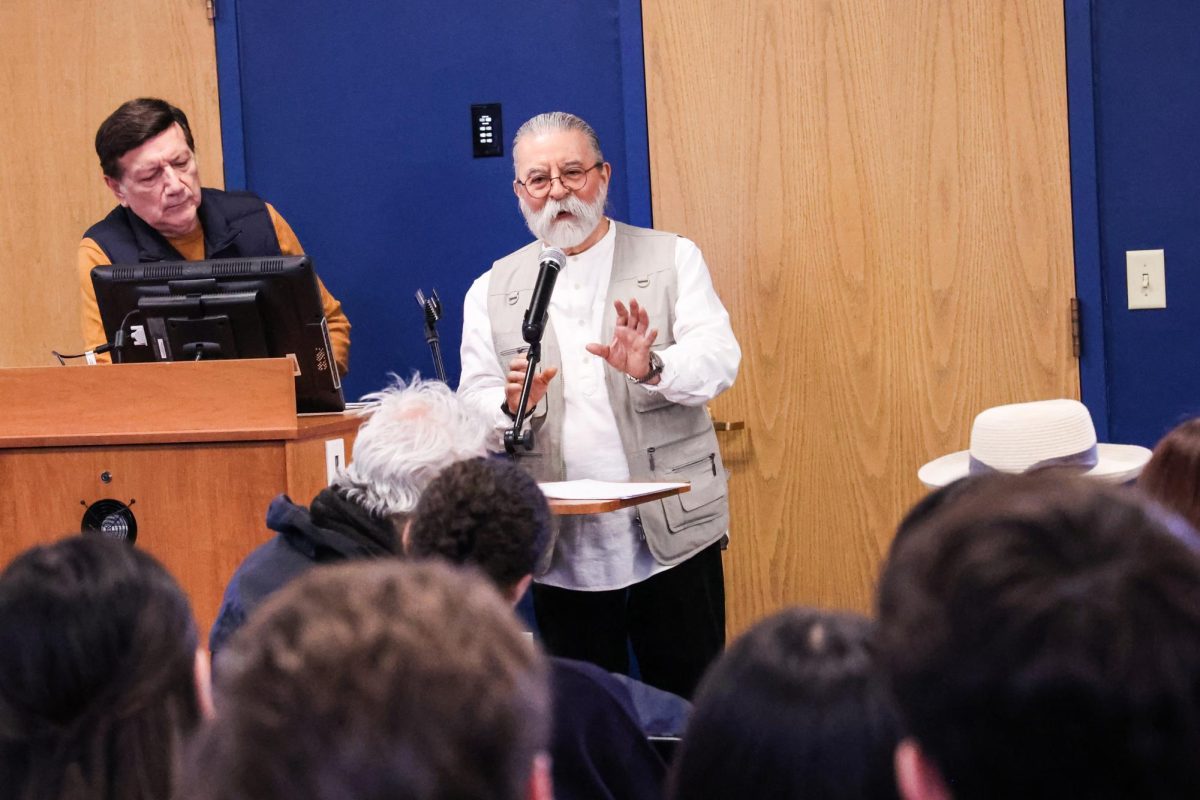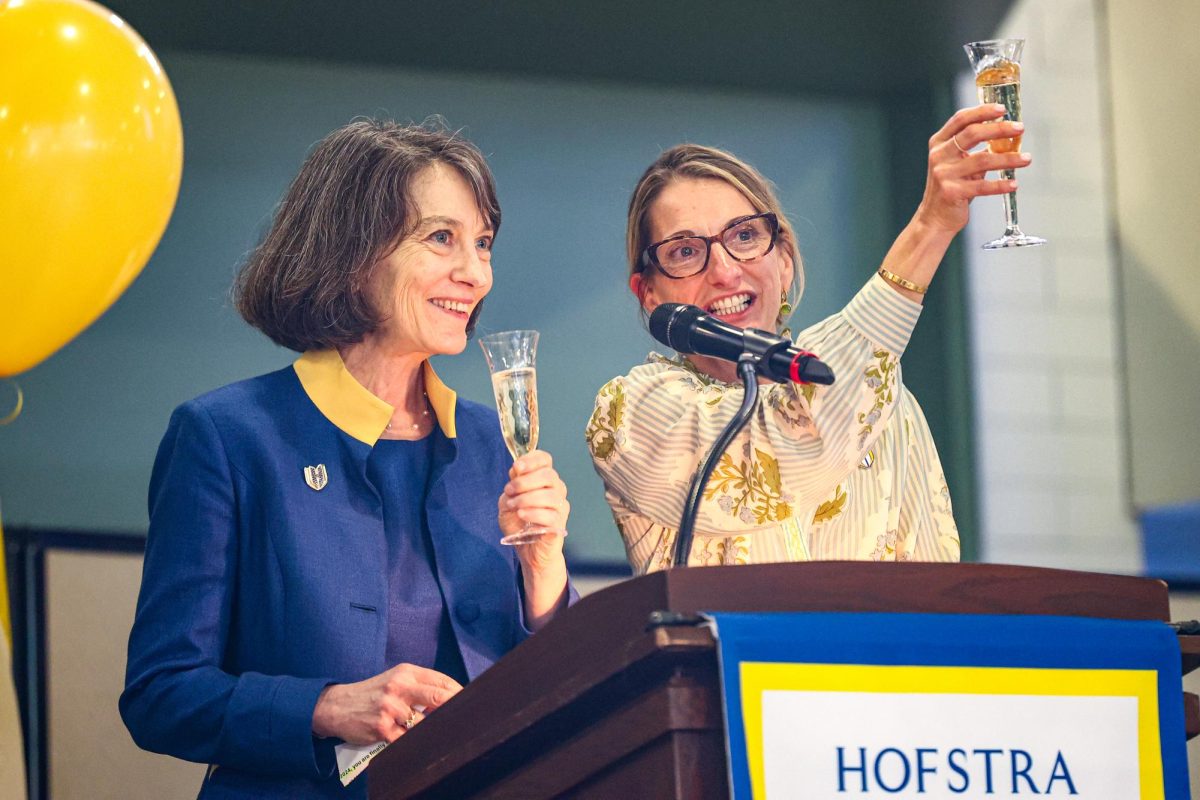
General Education Task Force 100 of Hofstra University held a town hall meeting on Nov. 21, to discuss their ideas for changing the general education curriculum as it pertains to incoming students.
Heading the task force are three Hofstra professors: Brenda Elsey, professor of history, Craig Rustici, professor of disability studies, and Matthew Smylie, associate professor of physics and astronomy.
The co-chairs spoke on behalf of the organization to discuss some of the challenges regarding the general education curriculum and some of the solutions they plan on implementing for the following school years.
“With all those consultations – all the listening – we heard some sense of dissatisfaction with the existing general [education] curriculum,” Rustici said. “It’s a great deal of concern that it is too complex and too confusing.”
Rustici added that many students feel dissatisfied with the current written and oral communication assignments and that they are not being provided with enough engagement to satisfy their learning capabilities.
Rustici also highlighted some other concerns people have had with the general education curriculum pertaining to class sizes being too large and therefore time consuming when it comes to oral presentations.
Another area of concern deals with the loss of accidental discovery. Suppose the curriculum was shortened or made even more precise to each specific major studies, then students may miss out on classes or experiences that may have benefitted them.
In response to some of these concerns about the current general education curriculum, the task force highlighted five key points to improve the curriculum for the upcoming school year: literacy, inquiry, expression, engagement and agility. Each point is meant to tackle highlighted concerns and teach students to overcome obstacles, so they can walk away from their general education careers with a mentality and skillset to tackle all of life’s challenges.
All five key points are meant to foster personal growth and engagement within one’s community. Although the key points are meant to tackle the challenges that are currently a result of the general education curriculum, they are also a set of building blocks for creating a more effective and diverse curriculum for future students. Much of the process for creating a better curriculum is still in its early stages and subject to change.
Smylie explained that the true value of the general education curriculum is that it teaches students how to deal with people.
“All the core fields of the humanities and the liberal arts – think history, political science, language, culture [and] philosophy – [are] different aspects of the same thing, understanding how people work and how people interact with each other,” Smylie said.
Artificial intelligence (AI) was also an issue brought forth to the task force. Both Smylie and Rustici explained that the goal of a general education has never been to predict what new emerging technologies people are using or how to implement them, but rather how to understand people and what their needs are when it comes to AI.
The town hall was an opportunity for transparency and to collect thoughts on how people were receiving the task force’s ideas. The task force said they are eager to discuss more of their findings with their staff in December and plan to hear more thoughts through faculty surveys and future Hofstra College of Liberal Arts and Sciences meetings. They also said they plan on having a set plan for the general education curriculum by Spring 2027.